Physical Address
304 North Cardinal St.
Dorchester Center, MA 02124
Physical Address
304 North Cardinal St.
Dorchester Center, MA 02124

Religions News Around the World
Religions News Around the World
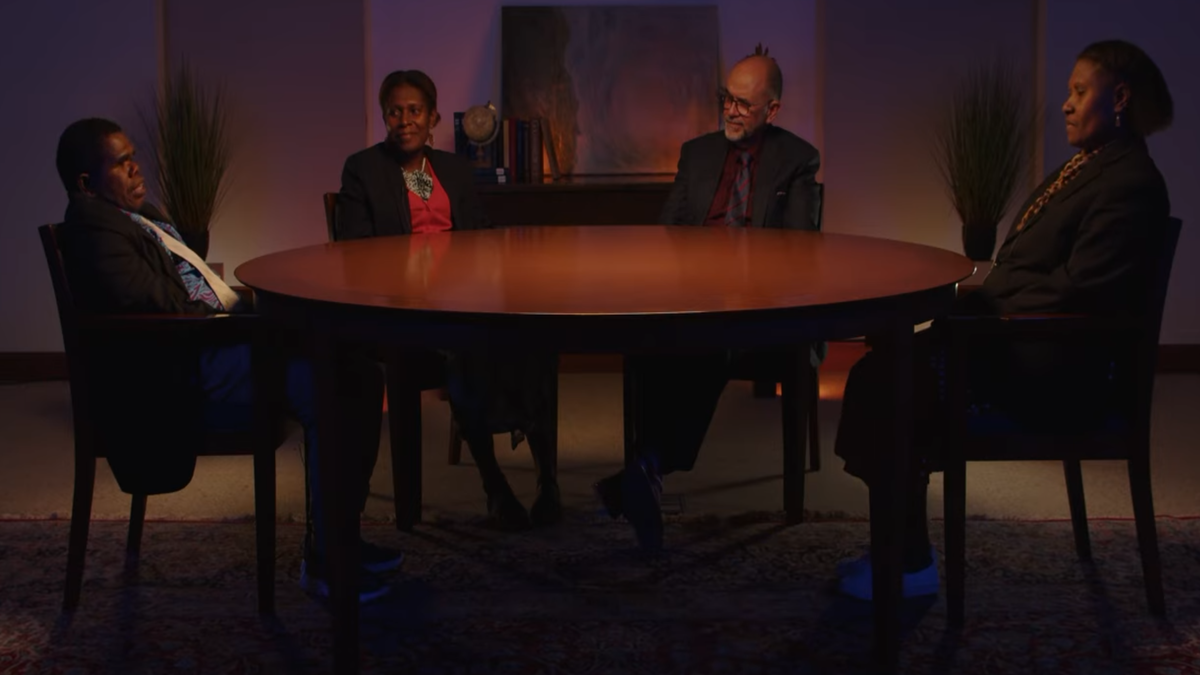
Papua New Guinea – ABN News: Papua New Guinea communities are using prayer, consultation and daily action to respond to social challenges and strengthen community life, but how are these principles being translated into practical work?

Guests from across Papua New Guinea discussed the growing role of consultation, the equality of women and men, and the integration of worship and service in helping communities identify local needs and respond collectively.
The discussion formed part of the “In Conversation” podcast series, which explores the practical application of Bahá’í principles in efforts to build peaceful societies.

Jalal Mills, who was serving as a member of the Continental Board of Counsellors in Australasia when the conversation took place, described a growing sense of shared responsibility for community well-being in settings across Papua New Guinea.
According to Mr. Mills, this concern is increasingly being taken up by people of different ages, as well as by individuals and institutions.
He pointed to Hohola, a suburb of Port Moresby, where the education of children has developed into a collective community effort.
“Everyone in the street is coming together,” Mr. Mills said, describing the shared commitment as being driven by “a common purpose.”
Marylouise Michael, a member of the Auxiliary Board in Papua New Guinea, explained that the initiative began with one neighbor who attended the inauguration of the House of Worship and began considering how she could contribute to the education of children in her locality.
“She went home, got cardboard, wrote notices, and put them in front of the canteen,” Mrs. Michael recounted.
The notices attracted community participation in classes focused on moral and spiritual education.
At first, some neighbors were uncertain about the classes. Their attitude changed as they observed the development and growth of the children taking part.
The original class eventually expanded into two groups, according to Mrs. Michael.
One group met in the morning for children who had not yet entered school, while another took place in the afternoon for older children attending the local elementary school.
As participation increased, the classes moved into a small structure built beside the street. According to the account, the space has remained there as an open and welcoming setting for the community.
The experience in Hohola illustrates how an initiative that began with one person’s effort developed into a broader activity involving neighbors and children.
The conversation also highlighted the role of collective consultation in community decision-making.
In the village of Moria, Benedine Lavu, another member of the Auxiliary Board in Papua New Guinea, described Mondays as an important part of community life.
Each week, the Local Spiritual Assembly and the Council of the Village host a gathering where community members participate in collective decision-making.
The purpose, Mrs. Lavu explained, is to consult and reflect on how residents are working together to transform their community.
“We all are seeing each other as one family. To transform our village into a peaceful place so we can live together,” she said.
The speakers acknowledged that developing new patterns of community life can also bring difficulties.
Bererin Barnabas, who now serves as a member of the Continental Board of Counsellors in Australasia, said that challenges arise when communities begin something new and work to determine “how the environment would look like.”
Mr. Barnabas described the pattern of community action that has developed in his locality of Daga.
He said Bahá’í community-building educational initiatives provide a structured way for people of different ages to contribute to the life of their village.
The activities described include strengthening community education and organizing cleanups along riverbanks.
During the pandemic, the community also worked alongside the local health center to speak with families about public health.
For Mr. Barnabas, prayer has played an important role in sustaining these efforts.
“Prayer is the food of the soul. You go everywhere in Daga, you will find this spirit of devotion,” he said.
The examples discussed in the episode show how prayer, consultation, education and service are being connected with practical efforts at the local level.
The discussion also emphasized the participation of young and older people, individuals and institutions, in addressing community needs.
It is a podcast series exploring the practical application of Bahá’í principles to the building of peaceful societies.
Community members came together to support classes providing moral and spiritual education for children.
The Local Spiritual Assembly and the Council of the Village host weekly gatherings where community members participate in collective decision-making.
Activities described include community education, riverbank cleanups and cooperation with a local health center on public health during the pandemic