Physical Address
304 North Cardinal St.
Dorchester Center, MA 02124
Physical Address
304 North Cardinal St.
Dorchester Center, MA 02124
Religions News Around the World
Religions News Around the World
Canberra – ABN News: The Role of Religion in Modern Australia

Australia’s religious landscape is being reshaped by demographic change, migration, secularisation and renewed debate over religious freedom. Recent developments surrounding the national Census, disputes over religious expression and concerns about antisemitism have placed faith back at the centre of public discussion. At the same time, official statistics show a country where Christianity remains the largest religious affiliation, while those reporting no religion have grown substantially and Islam, Hinduism and Buddhism have become increasingly visible. So, what role does religion now play in modern Australia?
The latest national debate over religion is unfolding against a major demographic shift. According to the Australian Bureau of Statistics, the 2021 Census found that 43.9 per cent of Australians identified with Christianity, while 38.9 per cent reported no religion. Islam accounted for 3.2 per cent, Hinduism for 2.7 per cent and Buddhism for 2.4 per cent.

Those figures illustrate the central tension in contemporary Australian society. Christianity remains the country’s largest religious grouping, but its share of the population has declined steadily over the past five decades. At the same time, the proportion of people identifying with no religion has increased, particularly during the past two decades.
The change does not mean religion has disappeared from Australian public life. Instead, faith has become part of a more complex social landscape in which religious and non-religious identities exist alongside one another.
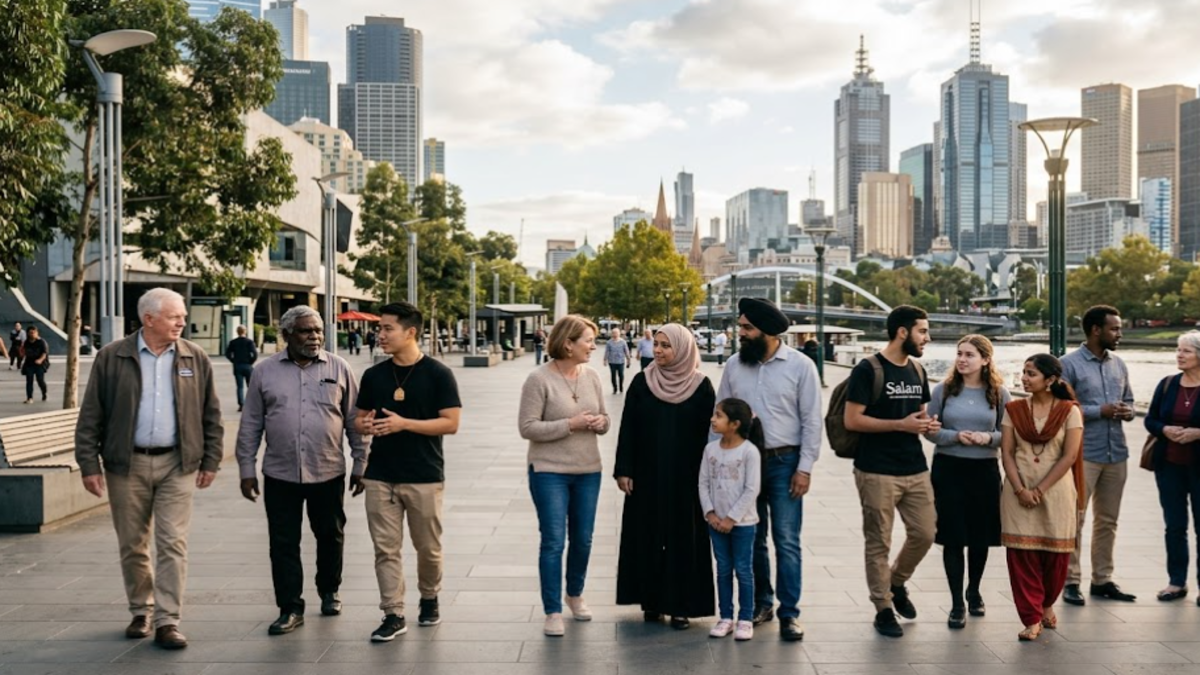
Migration has played an important role in that transformation. Australia’s population now includes communities representing a wide range of religious traditions, including Islam, Hinduism, Buddhism, Sikhism, Judaism and numerous other faiths.
The diversity is also reflected in the growth of smaller religious communities. The ABS reported that the Yezidi population increased from 63 people in 2016 to 4,123 in 2021, a rise of 6,444 per cent. Most members of that community arrived in Australia during 2017 and 2018, following persecution and displacement in their countries of origin.
The changing picture means that religion can no longer be understood simply through the traditional divide between Christian denominations. Modern Australia is increasingly shaped by a combination of established churches, migrant faith communities, new religious identities and a growing population that describes itself as non-religious.
The debate over religion has intensified as Australia prepares for its next national Census. The Australian Bureau of Statistics has confirmed that the religion question will remain in the Census after a review of the topic and question design.
The question is optional, but the ABS has said it has been answered by nearly all respondents. Religion has appeared in Australia’s Census since 1911, making it one of the longest-running measures of religious affiliation in the country’s national statistical record.
The Census question has become politically and socially significant because the results influence how Australians understand the country’s changing identity. Religious organisations use the data to demonstrate the size and diversity of their communities, while governments and researchers use it to understand population trends and plan services.
The issue has recently generated competing campaigns. Religious leaders have encouraged Australians to accurately record their religious affiliation, while secular organisations have urged people who do not identify with a religion to select the “no religion” option.
The disagreement reflects a deeper question: should the Census measure formal affiliation, personal belief, religious practice or a person’s current sense of identity?
That distinction matters because a person may identify with a religion culturally without regularly attending services or observing religious practices. Another person may have grown up in a religious household but now describe themselves as non-religious.
The Australian Bureau of Statistics has retained the existing question design following its review, ensuring that the latest Census data can be compared with earlier results.
The Census debate therefore extends beyond statistics. It has become part of a wider national conversation about how Australia defines religion and how religious identity fits into an increasingly secular and multicultural society.
Despite the rise of secularism, religious institutions continue to play important roles in Australian communities.
Churches, mosques, temples, synagogues and other places of worship frequently provide services that extend beyond religious ceremonies. Many operate schools, charities, food programs, community centres and support services.
For migrants and refugees, faith communities can also provide social networks and a sense of belonging. Religious organisations often help newcomers build relationships, find support and maintain cultural traditions while adapting to life in Australia.
Christian organisations remain particularly prominent because of their long history in the country. Catholic, Anglican, Orthodox, Protestant and independent churches continue to operate across Australia’s cities and regional communities.
At the same time, the growing presence of Muslim, Hindu, Buddhist, Sikh and Jewish communities has broadened the country’s religious institutions and public conversations.
Religion also remains relevant during moments of crisis. Faith-based organisations have participated in charitable responses to disasters, homelessness and social disadvantage. Their networks can mobilise volunteers and resources quickly, often working alongside government agencies and secular charities.
This role demonstrates why declining religious affiliation does not automatically translate into declining social influence. A religious organisation may have fewer members than in previous generations while still maintaining significant institutions and community networks.
The modern Australian experience is therefore more complicated than a simple story of religious decline. Traditional forms of participation may be changing, but religion continues to operate through community work, cultural identity, education and public debate.
Religion’s role in modern Australia has also become closely connected to debates over freedom of belief and expression.
The issue has gained fresh attention amid disagreements about how governments should balance religious freedom with other rights, including equality, anti-discrimination protections and freedom from hatred.
A recent report on the experience of Christians in Australia has argued that religious freedom faces growing pressure. Such claims are contested, but they demonstrate the concern among some religious groups that changing social attitudes and legal frameworks could restrict their ability to express and practise their beliefs.
The debate is not limited to Christianity. Australia’s Jewish community has also faced intense concerns about antisemitism and safety.
A Royal Commission examining antisemitism and social cohesion recently heard evidence about the impact of a protest at the Sydney Opera House in October 2023. Community representatives told the inquiry that the event affected the sense of safety among Jewish Australians, while the broader discussion has raised difficult questions about protest rights, offensive speech and public order.
These issues reveal one of the central challenges for a pluralistic democracy. Australia must protect the right of people to hold and express religious beliefs while also addressing discrimination, intimidation and hate.
The challenge becomes more complicated when religious beliefs intersect with debates about sexuality, gender, immigration, international conflicts and political activism.
In these areas, Australians increasingly disagree about where the boundary should lie between legitimate expression and harmful conduct. Religious communities want their beliefs protected, while advocates for minority and vulnerable groups seek strong safeguards against discrimination.
The result is a continuing national debate about how competing rights should coexist.
The transformation of Australia’s religious landscape is closely linked to immigration.
Over recent decades, migration has brought communities from South Asia, the Middle East, Africa and other parts of the world, contributing to the growth of religions that were once less visible in Australian public life.
The ABS has identified Islam, Hinduism and Buddhism among the country’s largest non-Christian religious affiliations. Their growth reflects both migration and the changing composition of Australia’s population.
This diversity can be seen in Australia’s major cities, where religious communities have established places of worship, schools, cultural organisations and community networks.
The change has also encouraged greater attention to interfaith relationships. Religious leaders from different traditions increasingly participate in public discussions about social cohesion, multiculturalism and community safety.
However, greater diversity can also create new challenges. Communities may have different traditions, beliefs and approaches to public issues. Misunderstandings can arise when religious practices meet unfamiliar cultural expectations.
The experience of Australia’s Jewish community illustrates another dimension of the issue. Rising concern about antisemitism has intensified calls for stronger social cohesion, while Muslim Australians have also faced discrimination and hostility in different periods.
The challenge for modern Australia is therefore not simply to accommodate religious diversity but to create a social environment in which different communities can participate without fear.
That requires more than legislation. It also depends on education, community engagement and the willingness of people from different backgrounds to understand one another.
The rise of people identifying as having no religion is one of the most significant changes in Australia’s social landscape.
In the 2021 Census, the no-religion category reached 38.9 per cent, placing it close to Christianity at 43.9 per cent. The gap between the two groups was much narrower than in previous decades.
The trend has particularly affected younger generations, although religious identity varies considerably between age groups and communities.
For some Australians, identifying as non-religious reflects atheism or agnosticism. Others may describe themselves as spiritual but not religious. Some retain cultural connections to a religious tradition without participating actively in religious institutions.
This diversity makes the category “no religion” difficult to interpret as a single social group.
The rise of secularism has nevertheless influenced Australian public life. Political leaders increasingly operate in an environment where voters hold widely different beliefs, including religious convictions and secular worldviews.
Public institutions must therefore navigate questions involving education, healthcare, family policy and social services while respecting freedom of religion and freedom from religious coercion.
The growing secular population has also changed expectations about the place of religion in public debate. Some Australians believe religious organisations should have a strong voice on moral and social questions. Others argue that public policy should be based primarily on secular principles accessible to citizens regardless of belief.
Neither position has completely displaced the other.
Instead, modern Australia has developed a continuing negotiation between religious traditions and secular values.
Religion remains relevant to Australian politics, although its influence is less straightforward than it once was.
Religious organisations and leaders continue to make submissions on proposed laws and participate in discussions about social policy. Their views can influence debates on education, discrimination, family policy, bioethics and religious freedom.
At the same time, political parties must appeal to a population that is increasingly diverse in both religious affiliation and personal belief.
The result is a political environment in which religious arguments can attract strong support in some communities while generating resistance in others.
Recent debates over religious freedom illustrate this complexity. Religious organisations may seek legal protections that allow them to operate according to their beliefs, while critics worry that broad exemptions could undermine equality protections.
The same tension appears in debates over speech. Religious groups often defend the right to express traditional teachings, while others argue that public institutions should not tolerate speech that contributes to discrimination or exclusion.
These disagreements are unlikely to disappear. They reflect fundamental questions about how a democratic society balances individual rights and collective responsibilities.
The role of religion in Australian politics is therefore evolving rather than simply disappearing.
The latest debates suggest that Australia is not moving from a religious society to a completely secular one in a simple or linear process.
Instead, the country is becoming more religiously diverse while also becoming less attached to traditional religious institutions.
Christianity remains the largest affiliation, but its share of the population has declined. The no-religion population has expanded. Other faiths have grown through migration and demographic change.
At the same time, religious organisations remain active in communities, politics and public debate.
The current discussion about the Census illustrates the importance of these changes. How Australians describe themselves will influence the statistical portrait of the nation and shape future debates about identity, community needs and public policy.
The broader question is whether Australia can maintain social cohesion as religious diversity increases and secularism becomes more prominent.
The answer will depend partly on how successfully Australians protect freedom of belief while confronting discrimination and hatred.
Religion is therefore likely to remain part of Australia’s national conversation—not necessarily because the country is becoming more religious, but because faith and non-belief are both increasingly important parts of understanding who Australians are.
For a nation built through migration and shaped by cultural change, the future of religion may ultimately be less about one dominant tradition and more about how different beliefs and worldviews coexist.
Australia has experienced a long-term decline in the proportion of people identifying with Christianity, while the number reporting no religion has increased. However, other religions have also grown, making the overall picture more diverse.
Christianity remains the largest religious affiliation in Australia. The 2021 Census recorded 43.9 per cent of Australians as Christian.
The no-religion category was the second-largest response in the 2021 Census, at 38.9 per cent.
Religion continues to influence community life, charity, cultural identity, migration, politics and debates about freedom of belief, discrimination and social cohesion.