Physical Address
304 North Cardinal St.
Dorchester Center, MA 02124
Physical Address
304 North Cardinal St.
Dorchester Center, MA 02124

Religions News Around the World
Religions News Around the World
LONDON – ABN News: Young People and Religion Today: Why Some Young People Are Leaving Faith While Others Are Rediscovering It

The relationship between young people and religion is undergoing a significant transformation across many parts of the world. While surveys continue to show that growing numbers of young adults are moving away from organized religion, recent reports also point to a different trend: some members of Generation Z are embracing faith in new and often unconventional ways. What is driving these seemingly opposite movements?
For decades, researchers documented a steady decline in religious affiliation among younger generations, particularly in North America and Europe. Many young adults now describe themselves as having “no religion,” preferring personal spirituality over formal religious institutions.

However, recent studies and news reports suggest the picture is becoming more complex.
Researchers say younger people are growing up in a world shaped by economic uncertainty, political polarization, social media pressures and mental health challenges. For some, these conditions have encouraged greater skepticism toward religious institutions.
Others, however, are turning to faith as a source of stability, purpose and community.
A recent Gallup analysis found that religiosity among young American men has increased compared with previous years, narrowing a gender gap that had existed for decades. The survey found more young men describing religion as important in their lives and attending religious services more regularly.
Similar discussions have emerged in the United Kingdom, where several churches have reported growing attendance among younger adults, although researchers caution that more long-term data is needed before describing the trend as a broad religious revival.
Experts point to several reasons behind the continuing decline in religious affiliation among many young adults.
One major factor is declining trust in institutions generally—not only religious organizations but also governments, political parties and traditional media.
Many younger people also say they disagree with religious teachings on social issues or have become disconnected because they were raised in less religious households than previous generations.
Recent reporting also highlights changing attitudes among young Latino communities in the United States, where religious disaffiliation has continued to rise, particularly among younger women. Analysts attribute the shift to generational change, cultural assimilation and evolving social values.
Leaving organized religion does not always mean abandoning spirituality.
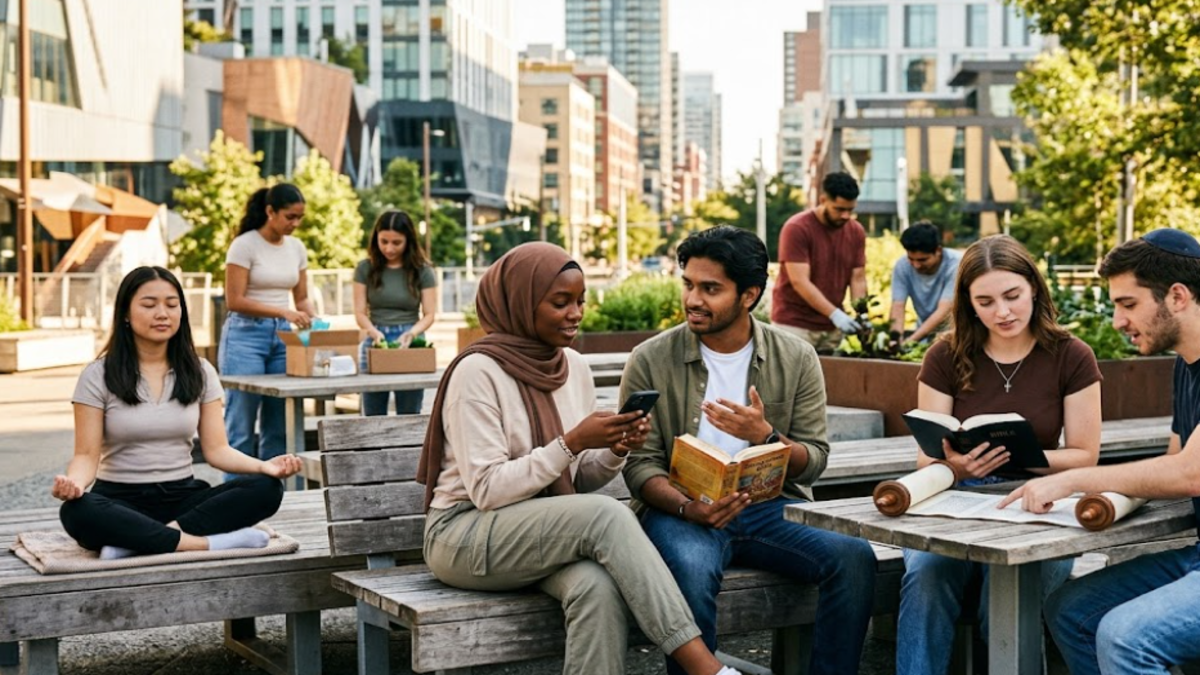
Many young adults are exploring faith through online communities, podcasts, Bible study groups, meditation, volunteer work and digital worship rather than traditional weekly services.
Religious leaders have increasingly embraced platforms such as TikTok, Instagram and YouTube to engage younger audiences, offering short videos, livestreams and interactive discussions.
Researchers say today’s young believers are often looking for authentic conversations rather than formal religious structures.
Large youth religious events continue to attract significant participation despite broader secular trends.
In Houston, nearly 2,000 Catholic teenagers and young adults recently gathered for a three-day youth conference organized by the Archdiocese of Galveston-Houston. Participants attended worship sessions, discussions on relationships and careers, and workshops focused on applying faith to everyday life.
Many attendees described the event as evidence that young people remain interested in building religious communities despite changing patterns of worship.
Elsewhere, church leaders in Ireland have also reported signs of renewed engagement among some young adults while acknowledging that overall religious practice continues to evolve.
Religion scholars increasingly describe today’s generation as less focused on denominational identity and more interested in personal spiritual experience.
Rather than following traditional religious expectations, many young people are choosing flexible ways to practice their beliefs through community service, small-group gatherings or digital faith communities.
This shift suggests that while institutional participation may be changing, interest in questions about purpose, morality and spirituality remains strong.
As societies continue to evolve, the story of young people and religion appears less about simple decline and more about transformation—one in which faith is being redefined for a new generation.
: Why Some Young People Are Leaving Faith While Others Are Rediscovering It
The relationship between young people and religion is undergoing a significant transformation across many parts of the world. While surveys continue to show that growing numbers of young adults are moving away from organized religion, recent reports also point to a different trend: some members of Generation Z are embracing faith in new and often unconventional ways. What is driving these seemingly opposite movements?
For decades, researchers documented a steady decline in religious affiliation among younger generations, particularly in North America and Europe. Many young adults now describe themselves as having “no religion,” preferring personal spirituality over formal religious institutions.
However, recent studies and news reports suggest the picture is becoming more complex.
Researchers say younger people are growing up in a world shaped by economic uncertainty, political polarization, social media pressures and mental health challenges. For some, these conditions have encouraged greater skepticism toward religious institutions.
Others, however, are turning to faith as a source of stability, purpose and community.
A recent Gallup analysis found that religiosity among young American men has increased compared with previous years, narrowing a gender gap that had existed for decades. The survey found more young men describing religion as important in their lives and attending religious services more regularly.
Similar discussions have emerged in the United Kingdom, where several churches have reported growing attendance among younger adults, although researchers caution that more long-term data is needed before describing the trend as a broad religious revival.
Experts point to several reasons behind the continuing decline in religious affiliation among many young adults.
One major factor is declining trust in institutions generally—not only religious organizations but also governments, political parties and traditional media.
Many younger people also say they disagree with religious teachings on social issues or have become disconnected because they were raised in less religious households than previous generations.
Recent reporting also highlights changing attitudes among young Latino communities in the United States, where religious disaffiliation has continued to rise, particularly among younger women. Analysts attribute the shift to generational change, cultural assimilation and evolving social values.
Leaving organized religion does not always mean abandoning spirituality.
Many young adults are exploring faith through online communities, podcasts, Bible study groups, meditation, volunteer work and digital worship rather than traditional weekly services.
Religious leaders have increasingly embraced platforms such as TikTok, Instagram and YouTube to engage younger audiences, offering short videos, livestreams and interactive discussions.
Researchers say today’s young believers are often looking for authentic conversations rather than formal religious structures.
Large youth religious events continue to attract significant participation despite broader secular trends.
In Houston, nearly 2,000 Catholic teenagers and young adults recently gathered for a three-day youth conference organized by the Archdiocese of Galveston-Houston. Participants attended worship sessions, discussions on relationships and careers, and workshops focused on applying faith to everyday life.
Many attendees described the event as evidence that young people remain interested in building religious communities despite changing patterns of worship.
Elsewhere, church leaders in Ireland have also reported signs of renewed engagement among some young adults while acknowledging that overall religious practice continues to evolve.
Religion scholars increasingly describe today’s generation as less focused on denominational identity and more interested in personal spiritual experience.
Rather than following traditional religious expectations, many young people are choosing flexible ways to practice their beliefs through community service, small-group gatherings or digital faith communities.
This shift suggests that while institutional participation may be changing, interest in questions about purpose, morality and spirituality remains strong.
As societies continue to evolve, the story of young people and religion appears less about simple decline and more about transformation—one in which faith is being redefined for a new generation.
The digital age has transformed how many young people experience religion. Instead of relying solely on weekly services, many now access sermons, prayer groups, religious podcasts and faith-based discussions through smartphones and social media platforms.
Religious organizations across different faiths have expanded their online presence in response to changing habits. Churches, mosques, synagogues and temples are increasingly livestreaming services and creating short-form content designed to engage younger audiences.
Experts say digital engagement offers greater accessibility, especially for students and young professionals with demanding schedules. At the same time, they note that online participation rarely replaces the sense of belonging that comes from meeting face-to-face.
Sociologists continue to emphasize that one of the strongest reasons young people stay connected to religion is the sense of community it provides.
Many faith groups have developed programs that go beyond traditional worship, offering mentoring, mental health support, volunteer opportunities and social activities designed specifically for young adults.
These initiatives have become especially important following the COVID-19 pandemic, when many young people reported feeling isolated and disconnected from their communities.
Researchers say faith organizations that focus on listening, inclusion and practical support tend to attract greater participation from younger generations than those relying solely on traditional forms of outreach.
Interviews with young believers published by several media outlets reveal a common theme: authenticity matters.
Many say they are looking for spaces where difficult questions can be discussed openly, including topics such as mental health, identity, relationships and social justice.
Rather than expecting religious leaders to have all the answers, many young adults value honest dialogue and communities willing to address contemporary challenges.
Faith leaders have increasingly acknowledged this shift, encouraging discussions that connect religious teachings with everyday experiences.
The relationship between young people and religion varies widely depending on the region.
In parts of Africa and Latin America, Christianity continues to attract large numbers of young followers, although churches are also adapting to changing social expectations.
Across Europe, secularization remains a dominant trend in many countries, with younger generations generally reporting lower levels of religious affiliation than older adults.
In Asia and the Middle East, religious identity often remains closely linked to culture and family traditions, although younger generations are also finding new ways to express their beliefs through digital platforms and community initiatives.
These regional differences suggest there is no single global pattern. Instead, religion among young people continues to evolve according to local cultures, economic conditions and social change.
Academics studying religion caution against describing today’s younger generation as either abandoning faith or returning to it in large numbers.
Instead, they argue that the evidence points to a more nuanced picture.
While membership in traditional religious institutions has declined in many developed countries, interest in spirituality, meaning and purpose remains significant among younger adults.
Some choose established religions, others create personalized spiritual practices, and many move between different forms of belief throughout their lives.
This flexibility represents a major departure from previous generations, when religious identity was often inherited from family and remained relatively stable.
The changing relationship between young people and religion reflects broader shifts in society.
Technology, globalization, education and evolving cultural values have all influenced how younger generations understand spirituality and community.
For some, religion continues to offer certainty, hope and belonging during uncertain times.
For others, personal values and individual spirituality have replaced formal religious affiliation.
Despite these differences, researchers agree on one point: questions about meaning, identity and purpose remain important for many young people.
Rather than disappearing, faith is being reshaped by a generation that is seeking new ways to connect with both tradition and the modern world.
Why are some young people becoming less religious?
Many cite declining trust in institutions, changing social values and a preference for personal spirituality over organized religion.
Are young people still interested in faith?
Yes. Although participation in traditional religious institutions has declined in many places, some young adults are actively exploring faith through new forms of worship and community.
How has technology changed religious practice?
Digital platforms allow young people to participate in online services, prayer groups, podcasts and discussions from virtually anywhere.
What do experts expect in the future?
Researchers believe religion will continue evolving, with younger generations combining traditional beliefs, digital engagement and personalized spiritual practices in diverse ways.