Physical Address
304 North Cardinal St.
Dorchester Center, MA 02124
Physical Address
304 North Cardinal St.
Dorchester Center, MA 02124

Religions News Around the World
Religions News Around the World
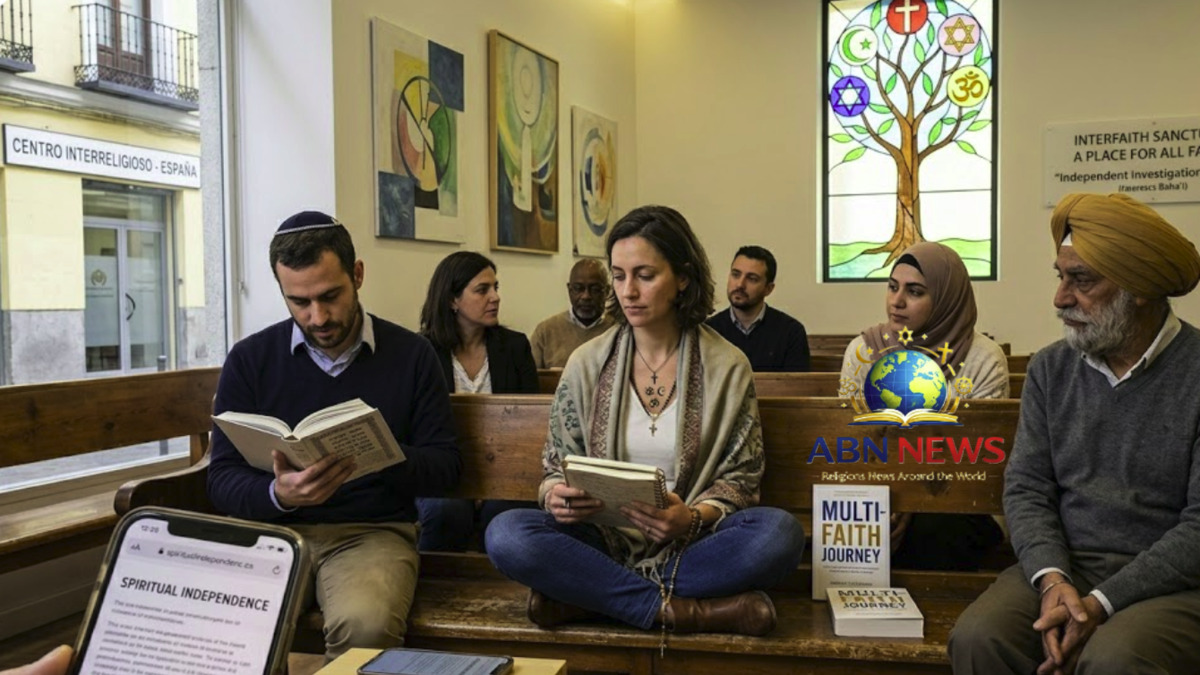
In an era of instant global travel and digital connection, the ancient walls between cultures are crumbling. People no longer live their entire lives in the neighborhood where they were born. This shifting landscape forces a challenging question: Can you truly hold multiple religious identities at the same time? It is a debate that is keeping theologians and ordinary believers up at night.

What once seemed like a simple choice—following the path of your parents—has become a complex journey of exploration. You read a bit of Buddhism, appreciate the ethics of Islam, or find comfort in Christian traditions. Does this make you a “multi-faith” believer, or are you just drifting without a compass? ABN NEWS explores why this question is causing such a stir in the modern world.
Religious belonging is rarely just about attending a service or repeating a creed. It is a worldview, a lens through which you see the universe and your place in it. Because of this, the idea of splitting your loyalty between two religions often feels like a logical impossibility. How can you hold two different truths simultaneously?

Many believers see this as a contradiction. For them, faith is an anchor, and moving that anchor creates instability. Yet, there is a quieter reality at play. Many people are deeply affected by multiple traditions without signing an official membership card. They borrow wisdom, practice mindfulness, or embrace ethical codes from various sources.
Some of this friction is actually man-made. It is often fueled by religious gatekeepers who cling to their positions of power. These leaders often prioritize their institutional control, love of the spotlight, and the need to remain the sole authority, rather than fostering genuine spiritual growth for their followers.
The reaction to the idea of holding multiple religious identities varies wildly depending on the tradition.
Islam: At its core, the faith is built on the concept of Tawhid, or the absolute oneness of God. Most scholars agree that holding another religious identity alongside Islam fundamentally clashes with this foundational doctrine. Still, the faith places a heavy emphasis on treating followers of other religions with justice and kindness.
Christianity: Most denominations maintain that salvation is tied to the teachings of Christ. While traditional churches see little room for overlapping identities, modern, more progressive movements are increasingly open to interfaith dialogue and cooperation.
Judaism: This tradition is deeply rooted in a specific covenant between God and the Jewish people. Consequently, blending other religious identities is generally viewed as incompatible with traditional Jewish law, though some modern, reformist movements are slowly shifting toward more flexible approaches.
The landscape looks quite different when we move East or toward newer spiritual movements.
Buddhism: Many schools of Buddhism don’t mandate the worship of a singular, exclusive creator god. This lack of rigidity makes it easier for some individuals to blend Buddhist practices with other spiritual or religious paths without feeling like they are committing a betrayal.
Hinduism: Often cited as the ultimate example of spiritual plurality. Its vast array of philosophical schools and rituals allows for the belief that there are many different roads leading to the same mountain peak.
The Baha’i Faith: As a relatively young religion, it emphasizes the importance of independent investigation of truth. While it has clear tenets, it encourages followers to view other religions with “love and harmony.” A unique aspect here is the expectation that young people must personally choose their faith when they reach maturity, reflecting a respect for individual autonomy.
Despite the objections from rigid institutions, the world is seeing a massive surge in people who label themselves as “spiritual” rather than religious. They do not want to be confined to one box. ABN NEWS has observed that these seekers might practice meditation from the East while celebrating Western holidays.
They see human wisdom as a collective heritage, not a restricted property. Social media and the internet have accelerated this trend. Younger generations, in particular, are favoring intellectual independence. They are less interested in rigid dogma and more focused on finding personal peace and meaning.
If you decide to embrace multiple religious identities, do not expect an easy path. Society, especially in conservative circles, is often built to categorize people.
The Identity Crisis: You might find yourself caught between a desire for spiritual freedom and the human need to belong to a stable community.
Social Rejection: Do not be surprised if your community views your fluidity as a sign of confusion or, worse, a betrayal of your roots.
Internal Conflict: There will be times when the teachings of one path directly contradict the other. That mental struggle is the price of trying to build a bridge where others have built walls.
Can we move past this? Most major religions share deep, common values: mercy, justice, and helping the vulnerable. The real task isn’t merging all religions into one, but fostering a culture where respect for another’s belief is treated as a moral obligation. Coexistence doesn’t mean abandoning your own faith; it simply means recognizing that you do not own the monopoly on truth.
Is it actually possible to follow two religions at once? It depends on how you define “following.” If you mean official membership, most religions forbid it. If you mean drawing spiritual wisdom from different sources, millions of people do it daily.
Why do religious leaders often oppose the blending of faiths? Many leaders fear that blending faiths dilutes the core message and creates confusion. Others are concerned about losing authority, as a diverse spiritual life makes people less dependent on institutional leadership.
Do Eastern religions like Buddhism offer more flexibility? Generally, yes. Because some of these traditions focus more on the internal journey and state of mind rather than exclusive dogma, they are often more accommodating to practitioners who also engage with other traditions.
What is the biggest challenge for someone with multiple identities? The social pressure is usually the biggest hurdle. Being misunderstood by your own family or religious community can lead to isolation and a sense of not truly belonging anywhere.