Physical Address
304 North Cardinal St.
Dorchester Center, MA 02124
Physical Address
304 North Cardinal St.
Dorchester Center, MA 02124
Religions News Around the World
Religions News Around the World
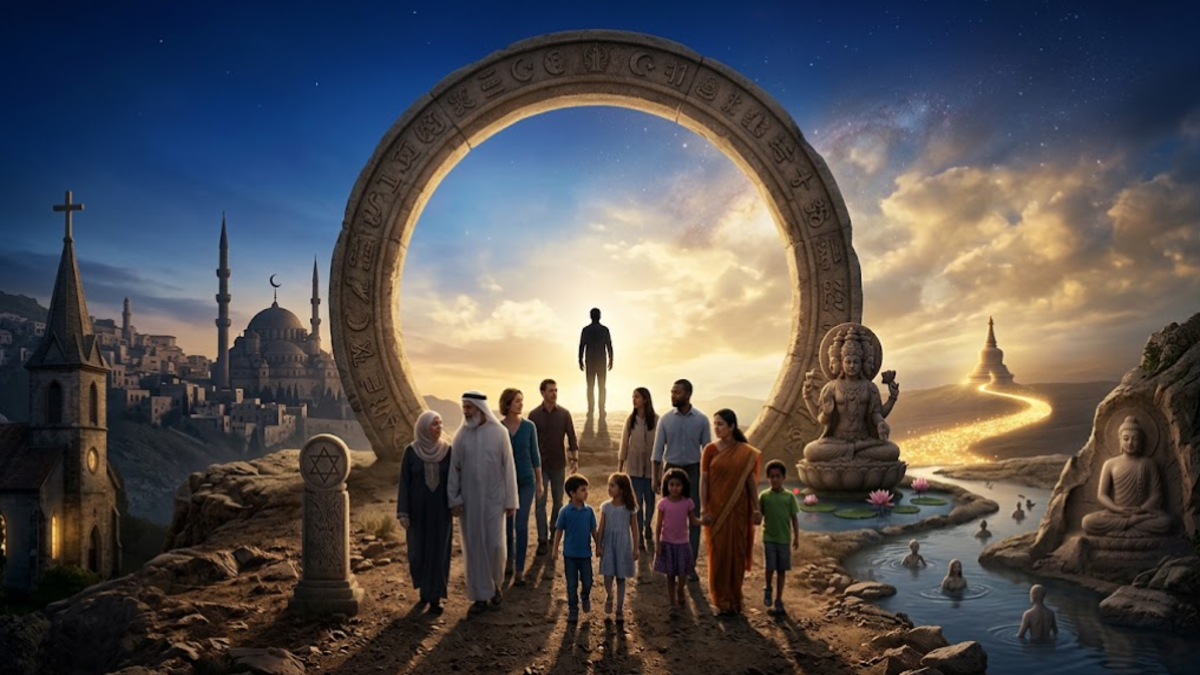
BRASÍLIA – ABN News: Life After Death Across Religions enters a new debate between faith, grief and science

The question of what happens after death remains one of humanity’s oldest and most personal mysteries. Across Christianity, Islam, Judaism, Hinduism, Buddhism and other traditions, believers have developed very different explanations for what lies beyond the grave, while modern medicine and neuroscience continue to examine the experiences of people who return from the edge of death.
Today’s religious news offers a timely reminder of how closely ideas about mortality remain connected to faith, compassion and the way communities respond to loss. A global religion bulletin is highlighting humanitarian work by Muslim and Christian organisations following catastrophic flooding in Nepal, while Christian communities are marking the feast day of Saint Augustine, whose writings profoundly influenced Western ideas about death, judgment and eternal life. At the same time, scientific researchers continue to debate whether reported near-death experiences can tell us anything about consciousness beyond the body. So, what do the world’s major religions actually teach about life after death, and where does science draw the line?

Death ends biological life, but religious traditions rarely regard it simply as an ending. Instead, most major faiths place death within a larger story involving judgment, resurrection, rebirth, spiritual transformation or union with the divine.
A major Pew Research Center survey of more than 50,000 people across 35 countries found that belief in life after death remains widespread. In nearly every country surveyed, at least half of adults said there is definitely or probably life after death. The figures varied sharply, from 85% in Indonesia to 38% in Sweden.
The survey also found significant differences among religious groups. Large shares of Christians and Muslims believe in an afterlife, while Buddhists and Hindus are generally more likely to believe in reincarnation. Jewish views vary, and people without a religious affiliation are usually less likely to affirm belief in life after death, although their views differ considerably from one country to another.
Those numbers matter because they show that the afterlife is not merely an ancient theological concern. It remains a living belief for millions of people and continues to shape how families understand mourning, remembrance and moral responsibility.
Yet the language changes from one tradition to another.
For Christians, death is commonly understood in relation to resurrection and eternal life. Islam teaches bodily resurrection and divine judgment. Hinduism places existence within a cycle of death and rebirth governed by karma. Buddhism speaks of rebirth while rejecting the idea of a permanent, unchanging self. Judaism contains a range of interpretations, with different historical traditions placing varying emphasis on the world to come, resurrection and spiritual continuity.
The differences are profound. So are the similarities.
Most of these traditions ask believers to consider how the way they live now relates to what comes next.
Christianity places resurrection at the centre of its understanding of death. The resurrection of Jesus is foundational to Christian belief, and the promise of resurrection shapes the way many churches interpret human mortality.
Today’s calendar gives that teaching an additional contemporary resonance. Christian communities are observing the memorial of Saint Augustine, the influential bishop and theologian whose writings addressed human nature, sin, salvation, time and the destiny of the soul. The Vatican’s official account notes his importance as a Doctor of the Church and recalls his intellectual battle with competing religious ideas in late antiquity.
The significance of Augustine goes beyond his biography. His work helped shape Christian thinking in the centuries that followed, including the idea that earthly life cannot be understood separately from humanity’s relationship with God.
Christian traditions are not completely identical on the precise state of the dead. Some emphasise the immediate presence of the believer with God, while Catholic teaching also includes purgatory as a process of purification. Most mainstream Christian traditions, however, place final hope in resurrection and eternal communion with God.
Today’s Catholic readings also place strong emphasis on the cross, salvation and the Christian promise of life beyond death. EWTN’s daily readings for the memorial of Augustine centre on the First Letter to the Corinthians and the Christian message of Christ crucified.
That is one reason the Christian understanding of death often combines grief with hope. The death of a loved one is treated as a profound loss, but believers are encouraged to understand death within a larger promise of resurrection.
The idea has also influenced Christian funeral traditions, prayers for the dead and memorial practices that keep the deceased within the life of the community.
The current religious news cycle reflects that wider relationship between death and faith. A Religion Media Centre bulletin reports that Muslim and Christian aid organisations are working together in Nepal after devastating floods caused widespread loss of life and displacement. Islamic Relief is providing emergency shelter and supplies, while Tearfund and Christian Aid are also working with agencies on the ground.
The story is not specifically about theology, but it shows how religious beliefs about human dignity, mortality and responsibility can become practical action when communities face mass death and suffering.
Islam presents one of the clearest structured accounts of what follows death. Muslim belief generally holds that death is not annihilation. The soul enters an intermediate state, traditionally known as barzakh, before the resurrection and final judgment.
The Day of Judgment is central. Muslims believe that humanity will be resurrected and judged by God, with accountability linked to faith, deeds and moral responsibility.
This produces an important ethical connection between present life and future destiny. The afterlife is not simply a destination. It is also a reason to live responsibly in the world.
The Islamic tradition likewise contains powerful practices surrounding death and mourning. Families pray for the deceased, perform funeral rites and remember the temporary nature of earthly existence.
That perspective can also be seen in the humanitarian response highlighted in today’s religion news. When disaster destroys homes and takes lives, Muslim organisations often frame assistance through principles of charity, compassion and responsibility toward vulnerable communities. The emergency response in Nepal illustrates that religious belief can shape conduct in the present even when its deepest theological concern points toward the life to come.
Judaism presents a more diverse picture.
Unlike some later Christian and Islamic traditions, Jewish thought has never rested on one universally accepted description of the afterlife. Biblical texts, rabbinic writings and later Jewish philosophers developed different ideas concerning resurrection, the world to come, the soul and divine judgment.
For many Jews, questions about how to live in this world have historically received greater emphasis than detailed descriptions of the next. Religious life focuses strongly on covenant, justice, ethical action, repentance and community.
That does not mean Jewish tradition rejects the possibility of existence beyond death. Rather, it reflects a broader pattern in which different strands of Judaism have interpreted the subject in different ways.
The contrast with Christianity and Islam is revealing. All three Abrahamic faiths share ideas of divine accountability, yet their descriptions of what happens after death are not interchangeable.
That distinction matters in any serious report about religion. Broad labels can hide major theological differences within traditions themselves.
Hinduism approaches death through the concept of samsara, the continuing cycle of birth, death and rebirth.
Rather than imagining one earthly life followed by one permanent destination, Hindu traditions often understand existence as a repeated process. Karma plays a central role, connecting actions and consequences across successive lives.
Liberation from that cycle is known as moksha. Although Hindu schools differ greatly in philosophy and theology, the concept of liberation points toward freedom from the repeated cycle of worldly existence.
That is one reason reincarnation should not simply be described as an alternative version of heaven. The underlying structure is different.
The Pew survey found that Hindus and Buddhists consistently stand out in the countries surveyed for their relatively strong belief in reincarnation, reflecting its importance in both traditions.
Buddhism introduces an even more distinctive framework.
Buddhist traditions commonly teach rebirth, but Buddhism generally rejects the idea of a permanent soul or self that travels unchanged from one body to another.
Instead, Buddhist explanations focus on continuity through causes and conditions. Actions, intentions and mental states contribute to the process that leads to future existence.
The ultimate goal is not eternal residence in a heavenly realm. It is liberation from suffering and the cycle of rebirth, traditionally expressed through nirvana.
That difference helps explain why the phrase “life after death” can be misleading when applied indiscriminately to every religion. Some traditions imagine a continuing personal existence. Others focus on resurrection. Others describe rebirth without a permanent self.
The same question therefore produces radically different theological answers.
Religious belief is not the only field investigating the mystery.
Recent scientific reporting has revived debate over whether near-death experiences might provide evidence of consciousness continuing after bodily death. El País recently reported on doctors, neuroscientists and physicists studying subjects including near-death experiences, reincarnation and the possibility of an immortal soul.
Near-death experiences can include reports of leaving the body, moving through a tunnel, encountering intense light or experiencing a striking sense of peace. Such accounts have attracted scientific interest for decades.
Some researchers interpret these experiences as evidence that consciousness may not depend entirely on normal brain function. Others argue that the experiences can be explained through neurobiological processes associated with extreme physiological stress.
One study discussed in the recent reporting proposes that near-death experiences may result from a cascade of processes occurring in a brain under severe stress. That interpretation does not establish that an afterlife exists, but it offers a possible natural explanation for experiences that people often describe in spiritual terms.
This is where journalism must distinguish belief from evidence.
A person who survives cardiac arrest and describes a vivid experience is reporting something that happened to them. That experience may be psychologically or spiritually significant without proving a supernatural explanation.
Science can investigate measurable brain activity, physiology, memory and behaviour. Religious traditions address questions of meaning, purpose, divine reality and spiritual destiny that may not be testable in the same manner.
The two perspectives therefore do not always answer the same question.
The persistence of these beliefs is striking at a time when many societies have become more secular.
Pew’s international research found that younger adults are sometimes just as likely as older adults to hold spiritual beliefs, even though beliefs about God can show a different age pattern. The survey also found that daily prayer is often associated with stronger belief in life after death.
That suggests modernisation has not erased humanity’s interest in mortality.
Instead, people continue to look for explanations in religion, philosophy, psychology and science.
Grief may be one of the strongest reasons.
When someone dies unexpectedly, families often ask questions that cannot be answered by a medical certificate. Where is the person now? Does consciousness continue? Can the dead be reunited with the living? Is death a final boundary or a transition?
These questions are emotional as much as intellectual.
A recent public-radio feature followed a mother searching for answers about the possibility of an afterlife after the death of her daughter. Her journey included conversations with religious thinkers, death professionals, authors and mediums. The story illustrates how personal grief can draw people toward questions that have resisted definitive answers for centuries.
Religion provides one set of answers. Science provides another kind of inquiry. Neither has eliminated the mystery.
Despite their differences, the major traditions examined here share several broad themes.
First, death has moral significance. Christianity links human destiny to faith and divine judgment. Islam stresses accountability before God. Hindu traditions connect action to karma. Buddhism links conduct and mental states to future rebirth and liberation.
Second, death does not automatically erase meaning. Religious communities often understand the deceased as remaining connected to family, memory, ritual, community or a larger spiritual order.
Third, beliefs about the afterlife influence how people live before death.
The promise of resurrection can inspire hope. Belief in judgment can strengthen ethical discipline. Belief in reincarnation can encourage reflection on karma and conduct. The Buddhist path to liberation places emphasis on reducing attachment and suffering.
And fourth, death frequently strengthens communal bonds.
Funerals, memorials, prayers, charity and acts of remembrance transform private grief into shared ritual. The humanitarian response to disaster seen in today’s religious reporting is an example of another side of this same process: religious communities confronting mortality not only through theology, but through practical service.
That may be the most important point in the continuing debate.
People do not discuss the afterlife only because they are curious about what happens after the final heartbeat. They discuss it because ideas about death influence how they treat the living.
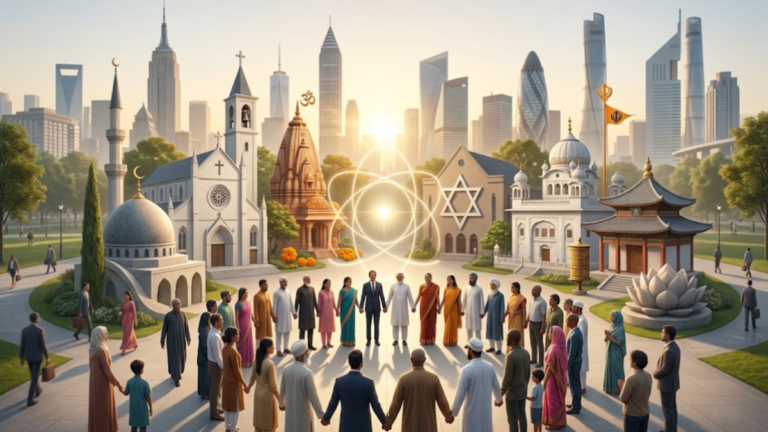
No single religious tradition can be treated as the universal answer to humanity’s question about death. Christianity, Islam, Judaism, Hinduism and Buddhism offer distinct theological systems, while other world religions and indigenous traditions provide additional models of continuity, ancestry, rebirth and spiritual transformation.
Scientific research has expanded what is known about the dying brain, consciousness and near-death experiences, but it has not settled the question of whether an afterlife exists.
That leaves a boundary between what can be measured and what people believe.
For believers, death can represent transition rather than extinction. For skeptics, the evidence may remain inconclusive. For researchers, the subject remains a difficult frontier involving consciousness, memory and physiology.
What today’s religious news makes clear is that the question has not disappeared.
From Saint Augustine’s enduring influence on Christian thought to Muslim and Christian humanitarian efforts after a deadly disaster, from global survey data to laboratories examining near-death experiences, the conversation continues to move between faith, culture, grief and science.
The ultimate question remains as old as humanity itself: is death the end of consciousness, or the beginning of something we have yet to understand?
Christians generally believe in resurrection and eternal life, with different denominations varying in their teachings about the state of the soul, judgment and purification.
Islam teaches that people will be resurrected and judged by God, with eternal consequences linked to faith, deeds and divine judgment.
Both traditions have major teachings concerning rebirth. Hindu traditions commonly describe reincarnation within samsara, while Buddhism teaches rebirth without a permanent, unchanging self.
No. Scientists study near-death experiences and related phenomena, but there is no scientific consensus establishing that consciousness survives death.
… Read more
Contact: info@abnnews.net