Physical Address
304 North Cardinal St.
Dorchester Center, MA 02124
Physical Address
304 North Cardinal St.
Dorchester Center, MA 02124

Religions News Around the World
Religions News Around the World
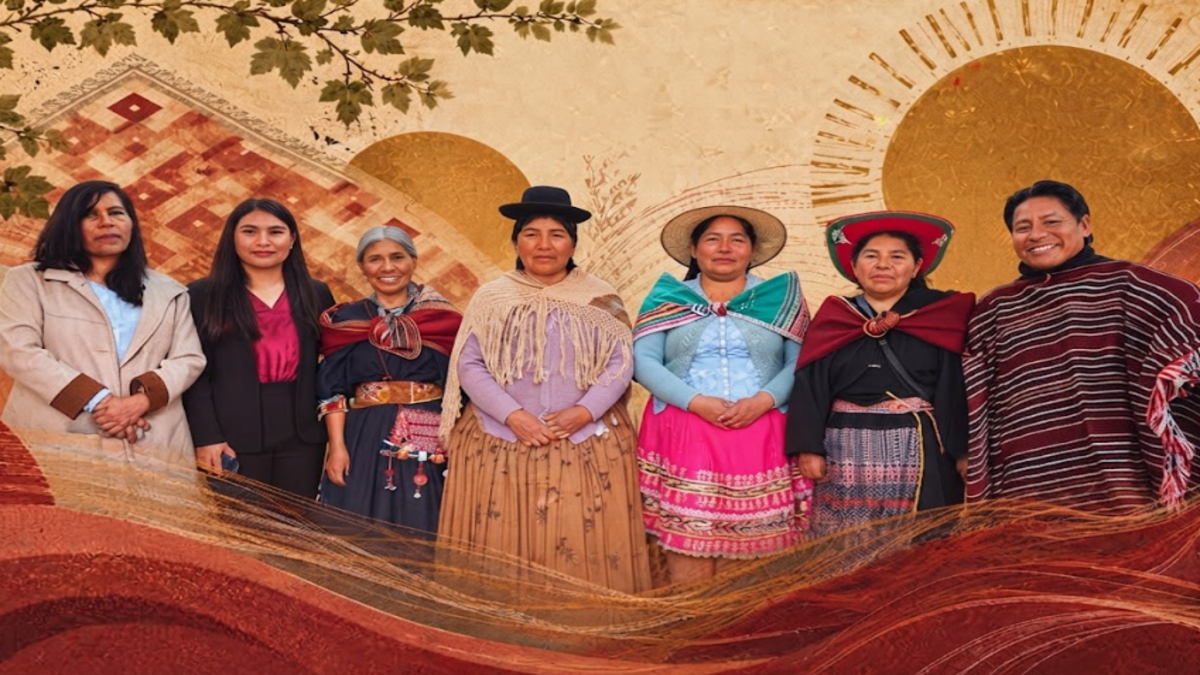
La Paz – ABN News: Bolivia’s “Weaving the Future” forums are bringing Indigenous communities, government representatives, academics, faith communities and civil society organizations together to discuss education, equality, justice and community development. But what can these conversations reveal about building a shared future?

The series, known as “Tejiendo Futuro,” was organized by the Bahá’í Office of External Affairs of Bolivia. Its discussions have created spaces for groups that have not always found it easy to engage in dialogue with one another.
Rosmery Chambi, a member of the Office, described the purpose of the initiative through the image of weaving.

“To weave, you need many threads,” she said in a conversation with the News Service.
The first forum, titled “Indigenous Women as Builders of Peace and Development,” examined the contribution of Indigenous women to education, family life, community leadership and the preservation of knowledge.
Among the participants was Julia Pachacopa Llacsa, an Indigenous authority of the Yampara people. Holding an aguayo, a traditional woven cloth, she traced one of its zigzag patterns and explained the meaning she had learned from her mother.
“This weaving is like a book,” she said.
Her mother had taught her to understand the pattern as a representation of the path of life, including difficulty and joy, mistakes and learning, and the need to continue moving forward.
For Pachacopa, the aguayo also represents knowledge transmitted between generations. Her mother had never attended school and neither read nor spoke Spanish, yet she passed on knowledge through weaving, observation, stories, work and play.
The participants therefore considered education in broader terms than formal schooling. Weaving could teach perseverance, while spinning wool could become an opportunity to discuss how to live an upright life.
Knowledge concerning land, family, mathematics and culture can also pass naturally from one generation to another, participants said.
Other speakers discussed how inherited knowledge could be combined with formal and spiritual education, particularly for girls and women who had limited access to schooling in previous generations.
The discussion also considered equality and cultural diversity. Participants explored how differences in experience and knowledge can contribute to a common undertaking when relationships are based on mutual respect and equal participation.
The second forum, “Without Equality There Is No Peace,” examined the relationship between equality, justice and peace.
The gathering considered themes from the Bahá’í International Community statement “Reconceptualizing Justice: Laying Foundations for a Gender-Equal World.”
Participants were invited to view justice as extending beyond legal and judicial mechanisms to include the values, relationships and social norms that influence the daily lives of women and girls.
“There can be no justice without equality,” said Nidya Pesántez, Resident Representative of UN Women Bolivia. “And there can be no peace if there is no justice.”
Pesántez said a culture of peace requires people to discuss their differences openly, listen to one another and search for common ground instead of turning to violence.
Mirna Inturias, a researcher at NUR University, brought another perspective to the discussion. She has worked with Indigenous communities in Bolivia’s lowlands, particularly with women organizing to govern their territories.
According to Inturias, these communities are already developing practical approaches to justice rather than merely discussing theories about it.
Indigenous women in the lowlands have long participated in organizations involving both women and men. However, established patterns of interaction in some of these spaces have sometimes provided limited room for women’s participation.
Women have responded by creating their own organizations while drawing on existing principles of collective organization, listening and assembly within their communities.
“It is not enough simply to ask to participate,” Inturias said. “We have to develop capacities for that.”
She emphasized that strengthening women’s leadership ultimately involves both women and men. The process, she said, can create new structures and social spaces that “generate processes of greater justice and greater participation.”
The ideas discussed at the forums have also been connected to practical training.
NUR University has collaborated with the National Confederation of Indigenous Women of Bolivia to strengthen women’s capacities in governance, environmental stewardship, project administration and leadership.
An initial class of 38 women completed training in environmental governance.
The issues addressed through the training are closely connected to daily life in Indigenous territories. They include decisions over land, protection of water sources and forests, food security and the effects that present decisions may have on future generations.
For Inturias, these experiences illustrate a broader understanding of justice explored in the Bahá’í International Community statement: “justice as a community’s freedom to conceive and pursue its own path of development.”
She said the processes are characterized by cooperation rather than competition, decisions made through assembly and mutual care that includes protecting the biodiversity on which an entire community depends.
“These are processes that are taking place,” she said, “and they generate hope.”
The Bahá’í Office of External Affairs of Bolivia plans to continue the forum series under the same name.
Chambi said the future remains a process that people are actively shaping and emphasized the importance of participation in that process.
“Our future is not yet fully built, but we are in the process of building it,” she said. “Who participates in that process, and how we do it, is already in our hands.”
What is “Weaving the Future”?
It is a series of forums organized by the Bahá’í Office of External Affairs of Bolivia.
Who participates in the forums?
Participants include Indigenous communities, government representatives, academics, faith communities and civil society organizations.
What issues have the forums examined?
Discussions have focused on Indigenous women, education, equality, justice, peace, leadership and community development.
How many women completed the environmental governance training?
An initial class of 38 women completed the training.