Physical Address
304 North Cardinal St.
Dorchester Center, MA 02124
Physical Address
304 North Cardinal St.
Dorchester Center, MA 02124
Religions News Around the World
Religions News Around the World
SEO Title:

Meta Description:
Slug: illumined-by-oneness-multifaith-dialogue-overcoming-racism

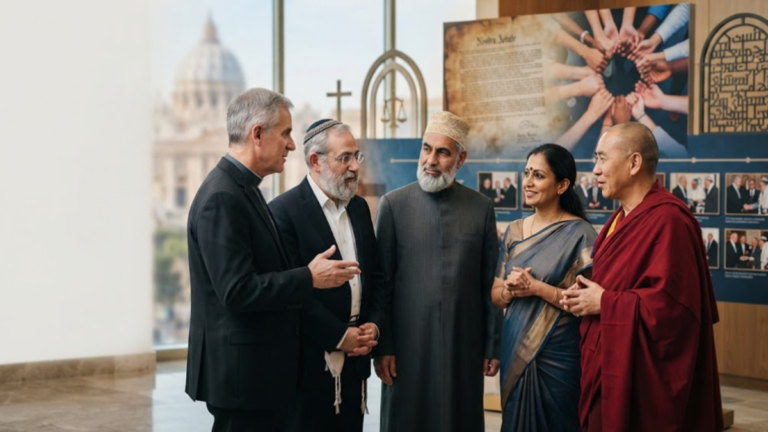
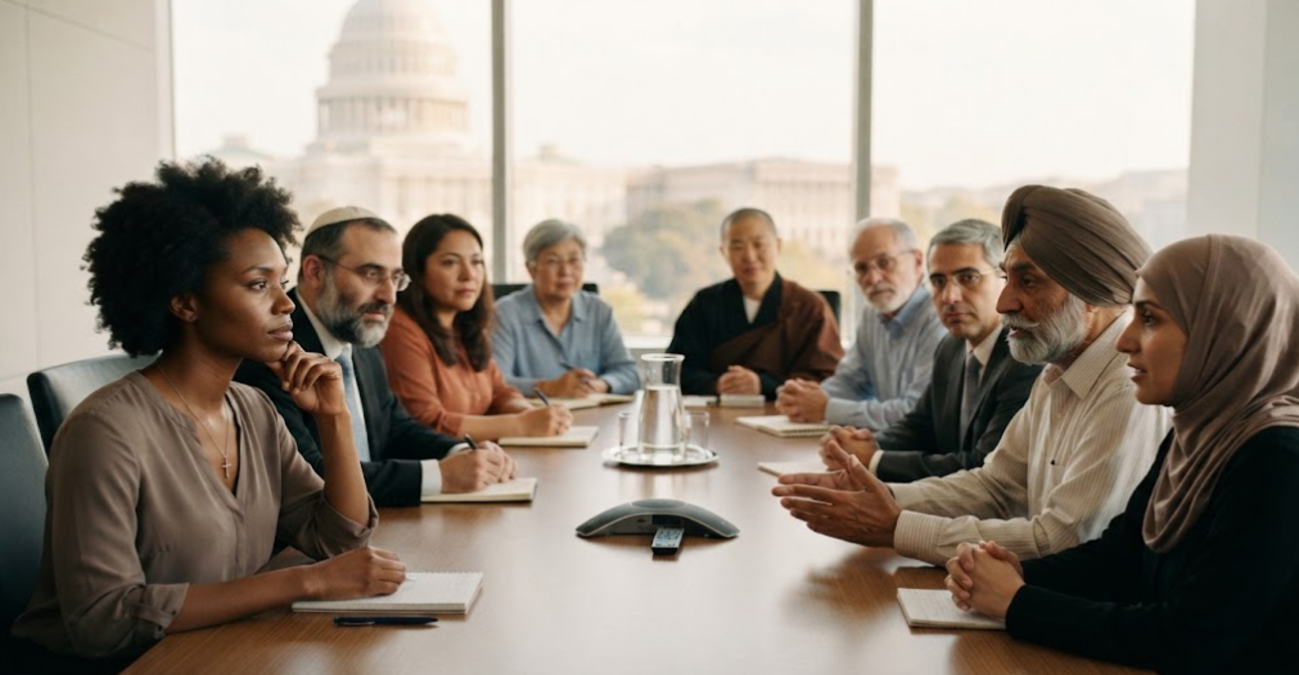
Washington D.C. – ABN News: Illumined by Oneness brings together five years of multifaith conversations on racial prejudice, justice, unity and the role of religion in American society. The new publication and accompanying website collect insights developed through discussions among representatives of national religious organizations, but what can these conversations offer to communities seeking ways to overcome racial divisions?
The publication, Illumined by Oneness: Resources and Reflections from a Multifaith Dialogue on Overcoming Racism, grew out of discussions organized by the Bahá’í Office of Public Affairs in the United States.
The conversations formed part of broader efforts by the Bahá’ís of the country to contribute to societal harmony and explore how people can work together toward the flourishing of society.
The forum operated in collaboration with the Peace and Justice Studies Program and the Institute for Policy Research and Catholic Studies at the Catholic University of America in Washington, D.C. It brought together leaders and representatives of national religious organizations from different faith communities.
The meetings began as off-the-record spaces intended to encourage open discussion. Each quarterly gathering centered on a discussion paper prepared by the Office of Public Affairs. Participants read the papers together before exploring their themes through small-group discussions and plenary sessions.
The subjects included identity, justice and unity, materialism, historical narratives, and the role of media in either reinforcing or challenging racial prejudice. The discussions also examined the distinctive contribution religion might make to overcoming social divisions.
The publication combines ideas developed through these conversations with earlier discussion papers and essays dating to January 2017, when divisions surrounding racial injustice in the United States had intensified.
The materials are presented as resources for people and communities interested in initiating similar conversations in their own settings.
According to the Bahá’í World News Service, the publication reflects an approach that considers racial inequality not only as a question affecting individuals but also as an issue connected to the well-being of society as a whole.
A central idea in the discussions was the oneness of humanity. One of the forum’s papers on identity describes this principle not simply as an aspiration but as an expression of an underlying reality.
From this perspective, racial inequality affects the wider society as well as those who experience prejudice directly. The materials argue that addressing racism therefore requires changes not only in structures and behavior but also in patterns of thought, narratives and conceptions of human identity.
Mat Cotton, a member of the Bahá’í Office of Public Affairs, said the forum provided an opportunity to examine the spiritual dimensions of racial injustice.
“Our society is grappling with many questions of racial injustice,” Cotton said, adding that the discussions allowed participants to reflect on the spiritual dimensions of those questions.
He compared social structures to a lamp, arguing that even well-designed structures remain ineffective without the qualities that give them purpose.
“The structures of a society, however well designed, remain dark until they are illumined by love, fellowship, and spiritual purpose,” he said.
Selvi Adaikkalam Zabihi, also a member of the Office, said the publication forms part of a wider effort to contribute to discussions about spiritual renewal in American society.
She questioned the assumption that science and rational thought alone can create healthy societies and raised the role of religion in establishing foundations for justice, stability, peace and prosperity.
The discussions also examined the relationship between justice and unity. The materials reject the idea that unity can be achieved by ignoring injustice, while also questioning approaches that depend primarily on contest and conflict.
Instead, the publication presents justice as a means through which unity can become tangible, while unity provides a broader horizon for justice.
The forum’s work was not limited to formal discussions. Participants developed practices intended to build trust and strengthen relationships across religious and personal differences.
They shared meals and opened meetings with opportunities for participants to speak about matters that concerned them personally. After a difficult exchange between two participants, the group also began visiting museums together to develop a shared understanding of the histories represented by different backgrounds.
These practices helped the forum become more than an exchange of opinions. William A. Barbieri Jr. of Catholic University, who co-hosted the dialogue during its early years, described the gatherings as a place of learning, introspection, exchange and shared experience.
The forum also moved temporarily online during the coronavirus pandemic. Following the murder of George Floyd in 2020, it served as a venue for information-sharing, consultation and emotional connection, according to the publication.
Another theme that emerged from the discussions concerned the meaning of power.
Zabihi said participants responded positively to the idea of understanding power not as domination controlled by a few people, but as something accessible to everyone.
She identified love, collective action, unity and sacrifice as forms of power that can contribute to building a different social order.
The approach also shaped the forum’s understanding of social change. Zabihi acknowledged the need to address unjust structures but said the Bahá’í perspective places additional emphasis on constructing new forms of social life that embody unity.
She described this process as extending from individuals and children to relationships and institutions, with the aim of developing new ways of working together and addressing society’s needs.
“This is an exercise of power,” she said. “It is not the power to tear something apart. It is the power to build something new that can ultimately transcend old forms that are not conducive to justice.”
P.J. Andrews, another member of the Office, said the forum’s focus on racial injustice ultimately raised a broader question about the foundations required for a society to hold together and move forward.
“That is among the things religion has to offer the life of a nation,” Andrews said, adding that the organizers hoped the materials would help other communities pursue the same question.
After five years of discussion, participants worked together to identify and articulate the ideas that had resonated most strongly throughout the dialogue.
Zabihi described that process as an experience of bringing together ideas that people from different faiths and backgrounds could recognize as meaningful.
She said the resulting ideas were not simply a lowest common denominator among participants, but something more substantial that nevertheless remained shared.
The publication therefore presents the dialogue as a resource for communities interested in examining racial prejudice through questions of justice, unity, identity, relationships and spiritual purpose.
The Bahá’í World News Service report says the material is intended to contribute to an ongoing search for ways to address racial divisions through changes in policies and language as well as through deeper changes in thought, relationships and collective purpose.
The official publication is available through the Bahá’í World News Service.
What is Illumined by Oneness?
It is a publication collecting insights and reflections from a multifaith dialogue on overcoming racism.
Who organized the dialogue?
The discussions were organized by the Bahá’í Office of Public Affairs in the United States in collaboration with programs at the Catholic University of America.
What topics did participants discuss?
The conversations addressed identity, justice, unity, materialism, historical narratives, media and the role of religion in overcoming divisions.
Who can use the publication?
The materials are offered as a resource for people and communities wishing to initiate similar conversations in their own settings.