Physical Address
304 North Cardinal St.
Dorchester Center, MA 02124
Physical Address
304 North Cardinal St.
Dorchester Center, MA 02124

Religions News Around the World
Religions News Around the World
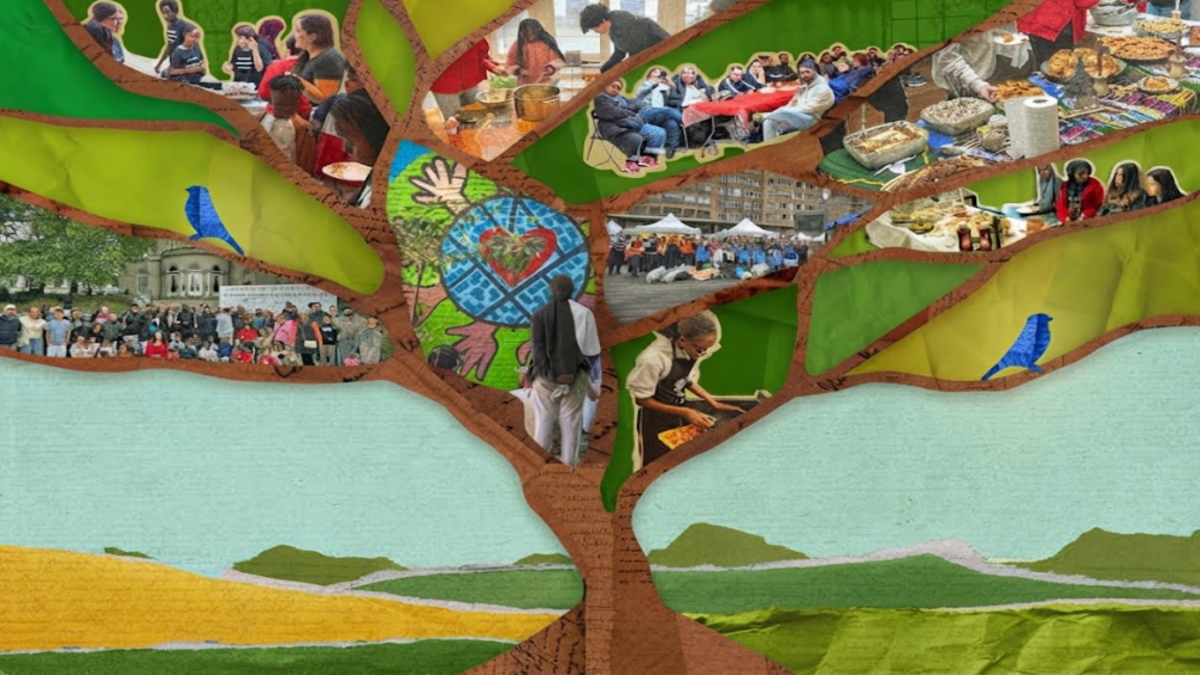
BRUSSELS – ABN News: Matongé youth brunches have brought young residents, families and older neighbors together in Brussels, turning a small cooking project into an exercise in community participation and cooperation. But how did a group of teenagers become a driving force for neighborhood life in Matongé?

The story started not in a kitchen, but during a public clean-up day.
About a year and a half before the brunch project took shape, young people involved in Bahá’í community-building activities in Matongé joined a national clean-up initiative alongside other residents and municipal workers.

The turnout surprised local officials. A large number of young people from the neighborhood took part, prompting municipal representatives to ask questions about who they were and what they were doing together.
That curiosity led to a meeting between the young participants and municipal officials. The discussion opened a wider conversation about community-building activities that had already been developing in Matongé for four years.
Several months later, the municipality announced plans to establish a youth council for residents aged between 12 and 15. The group decided to attend the first meeting.
They arrived to discover that they were the only young people who had turned up.
Rather than ending the initiative, their participation gradually turned them into the youth council itself. They began working with municipal staff on a series of small projects and learned more about how local decisions could involve residents directly.
One of the opportunities they encountered was the municipality’s participatory budget, which allows residents to propose projects designed to benefit their neighborhood.
The young people were encouraged to consider their own abilities and ask how they could use those talents to serve others.
The answer was straightforward: they enjoyed cooking.
With assistance from older young people and adults, they developed a proposal described as “by the youth, for everyone”. Residents voted in favor of the initiative, allowing the group to use part of the participatory budget to purchase ingredients, equipment and decorations.
The result was a series of five neighborhood brunches.
The brunches were held every two months, with each gathering attracting around 60 or 70 people.
The participants included families already known to the young organizers, as well as neighbors who were meeting the group for the first time.
Food provided the starting point, but conversation quickly became an equally important part of the gatherings.
Residents discussed subjects connected to everyday life in the neighborhood, including friendship, bullying, education, the environment and social cohesion.
The young cooks were responsible for considerably more than preparing meals.
On Wednesdays after school, they spent hours shopping for supplies. Fridays involved food preparation and decorating the hall, often continuing into the evening.
On Saturdays, the group arrived at 9 a.m. to prepare for the event.
The workload gave the teenagers an opportunity to take responsibility for something that directly affected people around them.
The project also exposed them to the practical challenges of working as a group.
Kitchen work created disagreements about responsibilities and different ways of completing tasks. The young organizers had to learn how to cooperate despite having different preferences.
One participant acknowledged that working in a kitchen with several people was difficult because everyone had their own way of doing things.
Yet those difficulties became part of the learning process. The young people discovered that cooperation required patience, communication and a willingness to work through disagreements.
The brunches therefore became more than occasional meals. They created a setting in which young residents could develop practical skills while strengthening relationships with people from different generations.
The young organizers also discovered that bringing people together required more than preparing good food.
At first, they attempted to present themes directly to the assembled residents. Speaking in front of roughly 60 people proved more difficult than expected.
They eventually changed their approach.
Instead of delivering formal presentations, the young people began asking questions and inviting participants to divide into smaller discussion groups.
Afterward, everyone came together again to share ideas from those conversations.
The change made the gatherings more interactive and allowed more people to contribute.
The approach also helped bridge differences between residents who might not normally meet.
Elisa, a longtime resident who attended three of the brunches, recalled seeing Moroccan, Dutch and other neighbors sitting together around the tables.
She also highlighted the broad age range of the participants, from older residents to families with babies.
That mixture was one of the project’s notable features. The brunches created opportunities for people from different backgrounds and generations to encounter one another in an informal setting.
The food provided a common activity, while the discussions created space for residents to exchange views about their neighborhood.
For the young organizers, the experience offered another lesson: community participation does not necessarily begin with large projects.
It can start with a simple activity that gives people a reason to meet.
The project also reflected a broader question about the relationship between residents and local authorities.
Neysan Khabirpour, an Auxiliary Board member in Belgium who works with the group, said the community had been considering how residents could work alongside the municipality rather than simply asking officials to solve local problems.
The participatory budget provided a practical opportunity to test that approach.
Instead of viewing the municipality only as a provider of services, residents became participants in identifying an idea, proposing it and helping put it into practice.
One father involved in the neighborhood described a similar change in attitude.
He said that, earlier, he had tended to focus on what the municipality was not doing. Through the project, he came to see residents themselves as part of the response.
“We are among those doing it,” he said.
The relationship between the young people and municipal officials had developed gradually.
The initial clean-up event attracted official attention. The youth council created a formal setting for cooperation. The participatory budget then gave the group an opportunity to turn an idea into a real neighborhood project.
The brunches demonstrated how those stages could connect.
The young people did not simply receive funding. They planned, prepared, cooked, organized discussions and welcomed residents.
The municipality, meanwhile, provided a mechanism through which the proposal could receive financial support.
The project therefore combined local participation with youth initiative.
The impact extended beyond the people who attended the meals.
When the municipality later gathered recipients of the participatory budget to present their various projects, one man approached the young organizers afterward.
He told them that he had begun to lose hope in the younger generation.
Seeing the teenagers speak about their work changed his perspective and gave him renewed hope.
The reaction reflected one of the central themes of the project: young people can contribute to their communities when they receive opportunities to take meaningful responsibility.
Khabirpour described this as an important principle within Bahá’í educational efforts involving young people.
The emphasis is not simply on preparing young people to contribute at some distant point in the future. It is also on recognizing capacities they already possess and creating opportunities for those capacities to develop through service.
In Matongé, cooking provided a practical route into that process.
The teenagers already knew that they enjoyed preparing food. The project gave them a way to transform that interest into an activity involving dozens of other residents.
The experience also gave them a chance to see the results of their work immediately.
One participant described the nervousness that came before each brunch, including concerns that the preparations might not be completed or that something could go wrong.
Once the guests arrived and began eating, those worries gave way to the satisfaction of seeing the event come together.
That progression—from uncertainty to responsibility and then to shared achievement—became part of the experience.
The five brunches were never intended to become a permanent program.
The project had a defined duration and eventually came to an end.
Its significance, however, was not measured by whether the brunches continued indefinitely.
Instead, the organizers and participants pointed to the relationships, confidence and experience developed during the initiative.
The young people learned how to organize an event, manage disagreements, communicate with adults and engage residents in discussions.
They also gained experience working with municipal representatives and navigating a participatory funding process.
Residents, meanwhile, gained opportunities to meet neighbors they might otherwise rarely encounter.
The project brought together people from different cultural backgrounds and generations around a shared activity.
The experience also altered how some residents viewed the role of young people in neighborhood life.
Rather than seeing teenagers only as future participants in civic life, the project demonstrated that they could identify a need, develop an idea and carry it through with support.
That distinction is central to the story of Matongé.
The young people did not wait for an adult organization to design the entire initiative for them. They identified cooking as a strength, connected it to a community need and developed a proposal with the help of older participants and adults.
The municipality provided a framework through its participatory budget, while residents ultimately supported the proposal through a vote.
The result was a project built around shared responsibility.
Matongé is part of the Ixelles municipality in Brussels and is home to residents with roots in numerous countries.
Against that diverse backdrop, the brunches provided a regular meeting place where people could sit together and talk.
The project also illustrated how community initiatives can evolve unexpectedly.
A public clean-up day led municipal officials to take notice of the young participants. That encounter contributed to the creation of a youth council. The council introduced the young people to participatory budgeting, which then gave them the opportunity to create the brunches.
Each stage emerged from the previous one.
The process did not depend on a single large intervention. Instead, it developed through a sequence of relatively small opportunities for participation.
The young people first showed up. They then continued attending meetings, worked on projects, proposed an initiative and accepted responsibility for carrying it out.
The brunches ultimately became a practical expression of that involvement.
The experience also highlighted the role of adults in creating conditions for young people to act without taking over the project themselves.
Older youth and adults supported the organizers, while the teenagers remained central to the preparation and delivery of the events.
For the neighborhood, the legacy was therefore broader than five mornings of shared food.
It included stronger relationships between residents, greater confidence among the young organizers and a clearer example of cooperation between generations and between residents and municipal institutions.
The project showed that community life can grow from ordinary activities when people are given meaningful opportunities to contribute.
For the young people of Matongé, cooking became the starting point. The deeper outcome was a stronger sense of connection with the people living around them.
They were five neighborhood gatherings organized by young people aged 12 to 15, with support from older youth and adults.
Each brunch attracted approximately 60 to 70 residents.
Residents voted for the initiative through the municipality’s participatory budget, which provided money for ingredients, equipment and decorations.
They gained experience in cooking, event organization, teamwork, communication, discussion and cooperation with residents and municipal officials.
… Read more
Contact: info@abnnews.net