Physical Address
304 North Cardinal St.
Dorchester Center, MA 02124
Physical Address
304 North Cardinal St.
Dorchester Center, MA 02124
Religions News Around the World
Religions News Around the World
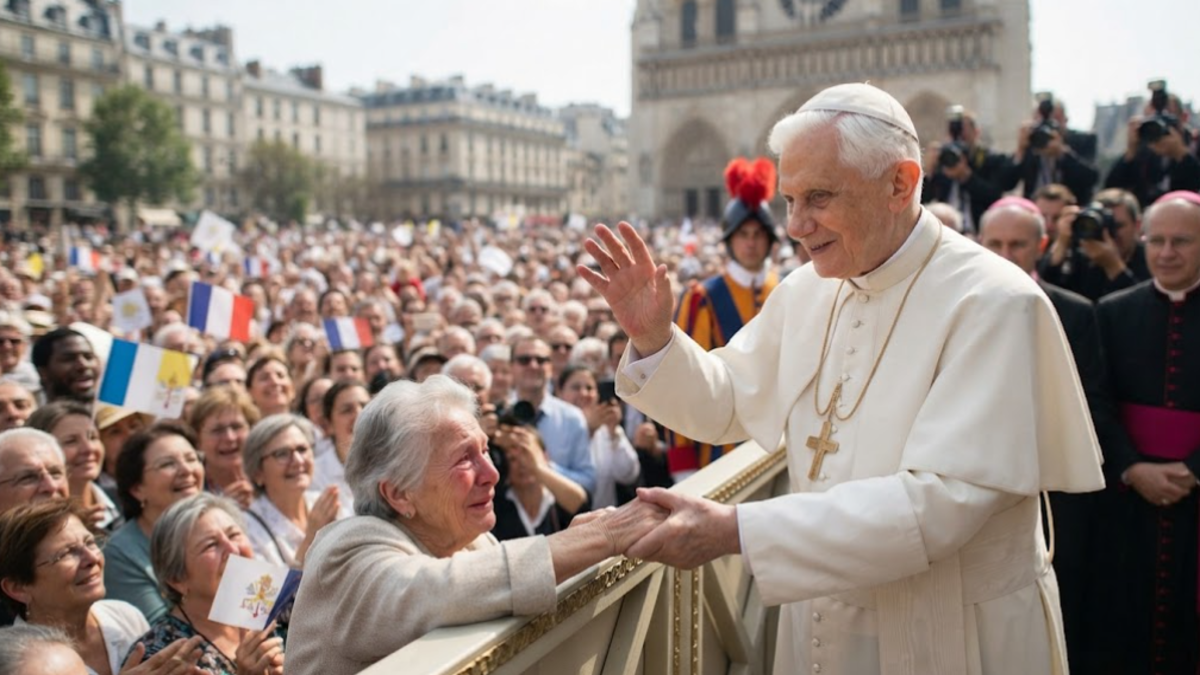
Pope Leo XIV is completing his first apostolic journey to France, a four-day visit that has taken him from Paris and UNESCO to Lourdes and, on its final day, Metz. The programme has combined major Catholic gatherings with meetings on diplomacy, artificial intelligence, interreligious dialogue and the future of Europe.

The visit, which began on September 25, has also brought the Pope into direct contact with French President Emmanuel Macron, religious leaders, young people, migrants and refugees, pilgrims and representatives of other faiths. It concludes in Metz before his scheduled return to Rome on Monday evening.
France has been a significant stop in the Pope’s international programme because the itinerary reaches well beyond traditional Catholic ceremonies.

At the Élysée Palace, Leo XIV discussed bilateral relations and international issues with Macron. According to the French presidency, their discussions covered climate change, artificial intelligence, the war in Ukraine, peace and stability in the Middle East, and partnerships with Africa.
The Pope also used his address to French authorities to emphasize peace and multilateral cooperation. He referred to France’s cultural and religious heritage and to his own family origins in Normandy and Béarn.
The diplomatic dimension continued at UNESCO, where Leo XIV called for international cooperation and stressed the relationship between education, culture, science, human dignity and peace. UNESCO said the visit was the Pope’s first to a UN agency outside Italy.
One of the biggest moments of the journey came on September 26 at the Place de la Concorde.
The Vatican reported that around 800,000 faithful were present for the open-air Mass, although another Vatican-language bulletin gave a figure of 700,000. The difference illustrates why attendance figures should be treated as estimates rather than precise counts.
In his homily, Leo XIV focused on what he described as the human search for meaning, truth and fulfilment, using the biblical image of thirst and living water.
The Paris programme also included a prayer vigil with young people at the Stade de France in Saint-Denis. The Vatican’s official account records a programme of dialogue, prayer and reflection involving young people and the presentation of the Holy Tunic and relics of saints.
After Paris, the Pope travelled to Lourdes, one of the Catholic Church’s most important pilgrimage destinations.
His programme included meetings with the bishops of the French Bishops’ Conference, Mass at the sanctuary, a meeting with staff and people receiving support from Accueil Notre-Dame, a private meeting with contemplative religious sisters and an evening Rosary and torchlight procession.
The Mass at Lourdes attracted an estimated 150,000 people, according to the Vatican’s official account.
Leo XIV also used the occasion to call for prayer for peace. After the Mass, he invited Catholics and Christian communities to pray the Rosary during October for an end to wars and for peace among peoples affected by conflict.
His meeting with the bishops also addressed the historical and spiritual relationship between France and Catholicism, including the country’s longstanding devotion to the Virgin Mary.
The final stage of Pope Leo XIV’s France visit has taken him to Metz, where the programme has placed particular emphasis on interreligious dialogue and Europe.
The Pope arrived in Metz from Lourdes on Monday morning and went to the Robert Schuman Congress Centre for an interreligious meeting. Representatives of different religious traditions took part in the gathering, which included the reading of the Metz Appeal before the Pope addressed participants.
Leo XIV presented dialogue as a way of maintaining religious identity while remaining open to others. He also linked the meeting to Robert Schuman, one of the figures associated with the origins of European integration.
The Pope then took part in the meeting titled “At the Roots of Europe for Peace and Unity.”
The choice of Metz was significant to the programme because of the city’s location at the heart of Europe and its association with Schuman. In his address, Leo XIV discussed the historical influence of Christianity on European civilization and connected Europe’s past with questions about peace, unity and its future.
The meeting also included Macron, Cardinal Jean-Marc Aveline and other civil and religious representatives. The official programme places the Pope’s final French Mass at Saint Stephen’s Cathedral in Metz before his farewell ceremony and scheduled departure for Rome.
| Stage | Main focus |
|---|---|
| Paris | French authorities, diplomacy, UNESCO and young people |
| Place de la Concorde | Large public Mass |
| Lourdes | Pilgrimage, bishops, sick people and prayer for peace |
| Metz | Interreligious dialogue and Europe’s future |
| Final stage | Mass at Saint Stephen’s Cathedral and return to Rome |
The itinerary shows that the journey has not been limited to religious ceremonies. It has also created several settings in which the Pope has addressed issues with wider international relevance, particularly peace, multilateral cooperation, human dignity, artificial intelligence and European unity.
The Vatican has formally confirmed the Pope’s movements and speeches through its daily bulletins and the official programme. Events in Paris, Lourdes and the first stages of the Metz programme have already been documented by the Holy See Press Office.
The published itinerary schedules the final Mass at Saint Stephen’s Cathedral in Metz for 4 p.m., followed by a farewell ceremony at Metz-Nancy-Lorraine Airport at 6:30 p.m. and departure at 7 p.m. The scheduled arrival in Rome is 8:50 p.m. local time.
These times are part of the official programme; individual movements can change during a papal journey.
Three themes have emerged consistently across the journey.
First, peace. Leo XIV repeatedly presented peace and dialogue as central priorities, from his opening remarks in Paris to his meetings in Lourdes and Metz.
Second, dialogue across differences. His meetings with French authorities, UNESCO and representatives of other religions have placed cooperation and dialogue alongside his explicitly pastoral activities.
Third, Europe. The final day in Metz has given the journey a specifically European dimension, with Robert Schuman’s legacy providing the historical framework for discussions about peace and unity.
For France, the visit has therefore combined a major religious gathering with diplomatic and international themes. For the Vatican, it has provided a high-profile setting for Leo XIV to articulate messages on peace, human dignity, interreligious relations and Europe’s future during his first apostolic journey to France.