Physical Address
304 North Cardinal St.
Dorchester Center, MA 02124
Physical Address
304 North Cardinal St.
Dorchester Center, MA 02124

Religions News Around the World
Religions News Around the World
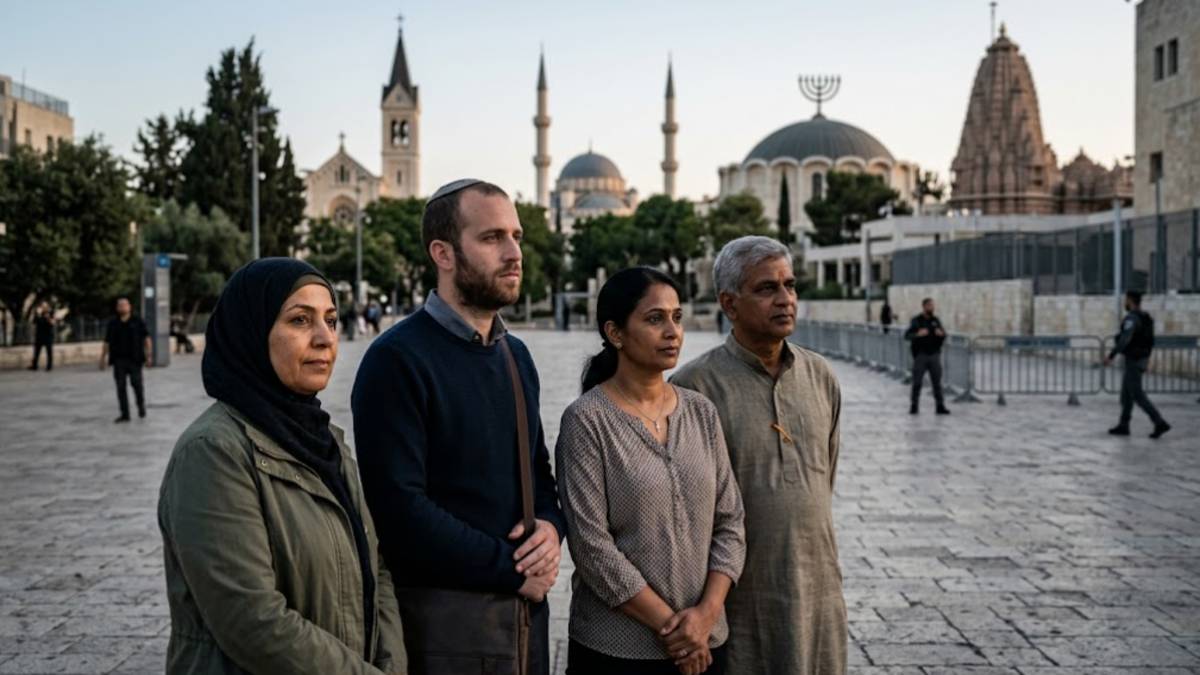
Restrictions on religious freedom and hostility toward religious communities remain widespread worldwide, with new research documenting elevated levels of social hostilities in 55 countries and high or very high government restrictions in 58 countries during 2023. The findings highlight how laws, state actions, discrimination, harassment and violence continue to affect people of different faiths, as well as those who do not follow a religion.

The figures come from Pew Research Center’s global study, published in June 2026, which examined 198 countries and territories using information from the United Nations, government reports and other international organizations. Although most countries were classified as having low or moderate levels of social hostilities and government restrictions, the overall picture shows persistent challenges to freedom of religion or belief.
The research distinguishes between two related but different problems: restrictions imposed by governments and hostility originating in society.

Government restrictions can include laws that limit religious practices, obstacles to registering religious organizations, interference with worship, restrictions on religious clothing and unequal treatment of religious groups.
Social hostilities, by contrast, involve actions by private individuals, organizations or other non-governmental actors. These can include harassment, vandalism of religious buildings, mob violence, physical assaults and attacks motivated by religious identity or belief.
The distinction matters because a country may have relatively limited government restrictions while still experiencing serious religiously motivated hostility. Conversely, a government may tightly regulate religious activity even where widespread public violence is not reported.
| Indicator | Findings for 2023 |
|---|---|
| Countries and territories assessed | 198 |
| Countries with high or very high government restrictions | 58 |
| Countries with high or very high social hostilities | 55 |
| Countries with harassment by governments or private actors | 192 |
| Countries reporting government harassment of religious groups | 185 |
| Countries reporting government interference in worship | 175 |
| Countries reporting physical harassment of religious groups | 151 |
Source: Pew Research Center, analysis of data for 2023. These figures measure the presence and reported extent of different types of restrictions or hostility. They do not mean that every religious community or every person in each country experiences the same level of risk. Source report.
One of the study’s central findings is that the number of countries classified as having high or very high social hostilities involving religion rose from 45 in 2022 to 55 in 2023. That was the third consecutive annual increase.
The number remains below the historical peak of 65 countries recorded in 2012, but the latest increase indicates that religiously motivated harassment and violence remain a significant international concern.
Pew’s analysis points to several contributing factors, including harassment of religious minorities and the wider repercussions of the Hamas attack on Israel on October 7, 2023, and Israel’s subsequent military campaign in Gaza. The report documents incidents and patterns rather than suggesting that a single event explains every country’s results.
The global median score for social hostilities remained at 1.6 out of 10 in 2023, unchanged from the previous two years. This does not contradict the increase in the number of countries with high or very high scores: a median can remain stable even as conditions worsen in a substantial group of countries.
The research also found that 58 countries had high or very high levels of government restrictions on religion in 2023, compared with 59 in 2022. Although this represents a slight decrease, the total remains close to the highest level recorded since Pew began tracking these indicators.
The global median government-restrictions score stood at 3.0 out of 10, its highest level in the study’s series. It was also substantially higher than the 1.8 recorded in 2007, when the project began.
Government harassment of religious groups was reported in 185 countries in 2023. Interference in worship was recorded in 175, the highest number in the study’s historical series.
Such interference can take different forms, including denying permission to hold religious services, restricting access to places of worship or imposing rules that obstruct religious practices. The figures do not establish that every reported measure is unlawful; assessing legality requires examining the specific measure, its purpose, its effects and the applicable human rights obligations.
Pew’s findings show that the two forms of pressure do not always occur in the same places.
Countries with very high government-restrictions scores in 2023 included China, Iran, Afghanistan, Indonesia, Syria and Uzbekistan. Countries with very high social-hostilities scores included Nigeria, India, Israel, Syria, Bangladesh and Pakistan.
These lists reflect different indicators and should not be treated as a simple ranking of the most dangerous countries for every religious group. Conditions can vary considerably within national borders, between religious communities and over time.
The report also identified 27 countries with high or very high levels on both indexes. Across the 198 countries and territories studied, 86 had elevated levels of either government restrictions or social hostilities, or both.
The distinction is particularly important for religious minorities. A national score may conceal substantial differences in the treatment of majority and minority communities, while incidents in one region may not reflect conditions throughout an entire country.
The study recorded at least one form of physical harassment against religious groups in 151 countries and territories during 2023. The category includes damage to property, physical assaults, detentions, displacement and killings.
Property damage was the most widely reported form, affecting 120 countries. Physical assaults were reported in 96 countries, while detentions related to religious identity, beliefs or practices were reported in 89.
The study also recorded displacement because of religion in 58 countries and religion-related killings in 48. These are country counts, not the number of individual victims, and they should not be interpreted as estimates of the total number of people affected.
The consequences can extend beyond immediate physical harm. Damage to a place of worship can disrupt community life, while threats and discrimination may discourage people from expressing their beliefs openly. In severe cases, individuals and families may be forced to leave their homes or avoid public religious activities.
Non-believers and people who identify with no religion are also included when the source material indicates that they were targeted because of their beliefs or non-belief.
Freedom of religion or belief is recognized under Article 18 of the Universal Declaration of Human Rights. It includes the freedom to have or adopt a religion or belief of one’s choice and the freedom to manifest that religion or belief, individually or with others, in public or private.
The right also protects people who choose not to follow a religion. It is not limited to the interests of established religious institutions or majority faiths.
International human rights law recognizes that the manifestation of religion or belief can be subject to certain limitations, but these must meet the applicable legal requirements. Governments cannot justify every restriction simply by invoking national security, public order or tradition.
The UN framework also emphasizes protection against coercion and discrimination. In practice, this means that governments have responsibilities not only in relation to their own laws and actions but also in addressing violence and abuse by private individuals when human rights obligations require them to act.
The existence of a religious majority, an official religion or a particular national tradition does not, by itself, settle whether a specific policy complies with human rights standards. The details of the policy and its impact on individuals must be examined.
Global studies help identify broad patterns, but their findings have limits.
Pew’s research draws on publicly available information from multiple sources, including government publications, United Nations material and independent organizations. A country is counted for a particular type of harassment when the sources document at least one relevant incident during the period under review.
As a result, the number of countries reporting an incident does not show how frequently incidents occurred, how many people were affected or how severe the overall situation was in each country. Reporting practices and access to reliable information can also vary.
The study’s classifications are therefore best understood as comparative indicators rather than definitive judgments about every individual’s experience. They can identify areas requiring attention, but detailed country assessments and investigations are needed to establish the facts of particular cases.
The latest published findings covered 2023, so they should not be presented as a complete account of conditions in 2026. More recent incidents may have occurred since the period covered by the data.
Addressing religious restrictions and social hostilities requires action on both the legal and social fronts. The appropriate response will depend on the nature of the problem, but several priorities follow from the documented patterns.
Review laws and administrative practices: Governments can assess whether rules on registration, worship, religious clothing and public expression discriminate against particular communities or impose unjustified restrictions.
Investigate violence and harassment: Authorities should respond to credible reports of threats, attacks and damage to religious sites, applying the law fairly regardless of the victim’s or alleged perpetrator’s beliefs.
Protect minority communities: Public institutions can strengthen access to justice and ensure that religious minorities and non-believers receive equal protection.
Improve reporting and transparency: Reliable, disaggregated information helps distinguish isolated incidents from sustained patterns and supports more effective responses.
Encourage dialogue without limiting rights: Community engagement and education can help reduce prejudice, but they should complement rather than replace legal protection and accountability.
International organizations, civil society groups and religious communities can also contribute through monitoring, support for affected people and cooperation across different faiths and beliefs.
Global religious restrictions are laws, policies or government actions that limit people’s ability to hold, change, practise or express their religious beliefs. Examples include unjustified restrictions on worship, religious clothing or the activities of religious organizations.
Social hostilities are acts by private individuals, groups or organizations that target people or communities because of religion or belief. They can include harassment, threats, vandalism, physical attacks and religion-related violence.
Pew Research Center classified 58 of the 198 countries and territories studied as having high or very high levels of government restrictions on religion in 2023. Another 55 had high or very high levels of social hostilities involving religion.
Yes. The study can include harassment of atheists, agnostics and other non-religious people when the sources indicate that they were targeted because of their beliefs or non-belief.
Article 18 of the Universal Declaration of Human Rights recognizes freedom of thought, conscience and religion. The International Covenant on Civil and Political Rights also protects freedom of thought, conscience and religion under Article 18.
Pew Research Center — More Countries Had Elevated Levels of Social Hostilities Involving Religion in 2023 — https://www.pewresearch.org/religion/2026/06/15/more-countries-had-elevated-levels-of-social-hostilities-involving-religion-in-2023/
Pew Research Center — Harassment of Religious Groups Around the World in 2023 — https://www.pewresearch.org/religion/2026/06/15/harassment-of-religious-groups-around-the-world-in-2023/
United Nations — Universal Declaration of Human Rights, Article 18 — https://www.un.org/en/about-us/universal-declaration-of-human-rights
Office of the United Nations High Commissioner for Human Rights — Special Rapporteur on Freedom of Religion or Belief — https://spinternet.ohchr.org/ViewAllCountryMandates.aspx?Type=TM
….Read More
Contact: info@abnnews.net