Physical Address
304 North Cardinal St.
Dorchester Center, MA 02124
Physical Address
304 North Cardinal St.
Dorchester Center, MA 02124

Religions News Around the World
Religions News Around the World
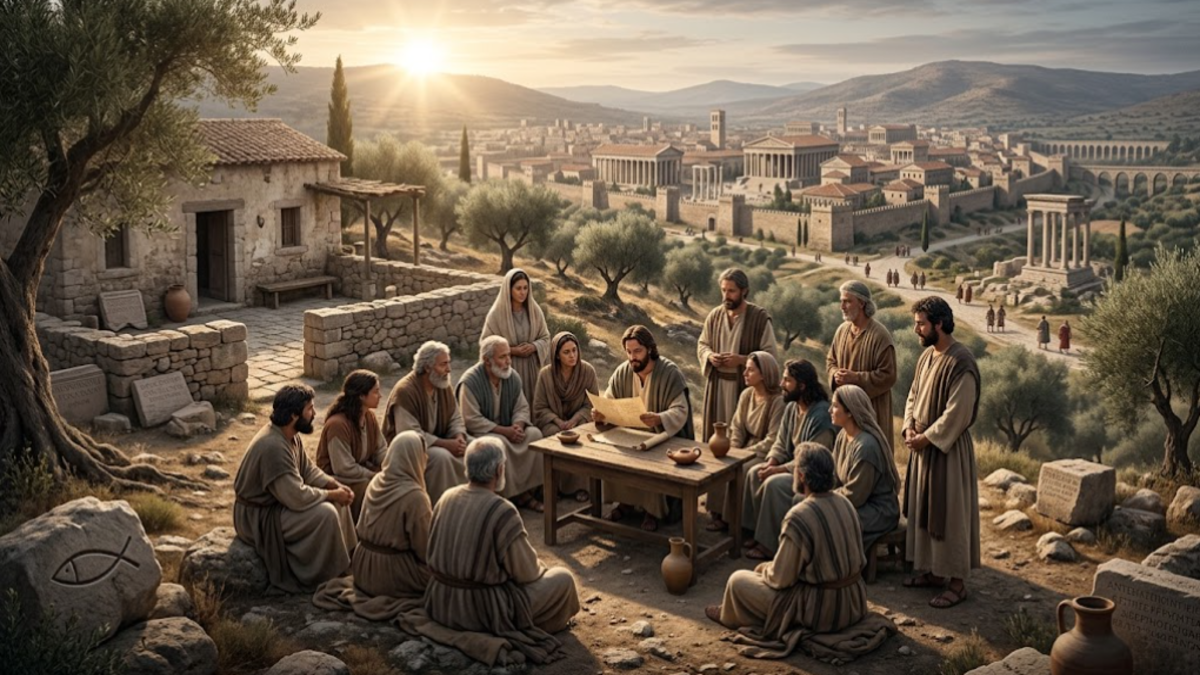
VATICAN CITY – ABN News: History of Christianity is again attracting international attention as archaeologists, historians and religious scholars examine new evidence from the ancient Mediterranean and the Near East. Recent discoveries and renewed research are helping researchers understand how Christian communities developed, travelled and worshipped during the first centuries of the faith. What can these discoveries tell us about the world in which Christianity first took root?

Christianity emerged in the first century from the Jewish religious environment of Roman-era Judea, centred on the life, teachings, death and resurrection of Jesus of Nazareth. From its beginnings, the movement expanded beyond its original setting, reaching cities across the Roman Empire and eventually developing into one of the world’s largest religious traditions.
The story, however, is not limited to written accounts. Archaeological remains, inscriptions, churches, burial sites, mosaics and religious objects continue to provide evidence about the communities that lived during Christianity’s earliest centuries.

Recent reporting on Christian archaeology has placed particular emphasis on that material evidence. Pope Leo XIV has also highlighted archaeology as an important field for understanding the Christian past, describing the discipline as a way of recovering the experiences of people whose names and stories were not preserved in major historical records.
For historians, one of the most important challenges in studying early Christianity comes from the limited nature of surviving evidence. Ancient communities did not leave behind the kind of extensive documentation expected from modern institutions.
Researchers therefore combine different forms of evidence. Ancient texts can reveal beliefs and disputes, while buildings and objects can show how Christians lived and practised their religion. Tombs can provide information about burial customs, and inscriptions can sometimes identify individuals, religious affiliations or biblical references.
That approach has gained fresh attention through archaeological discoveries in several parts of the former Roman world.
One striking example is an ancient silver amulet discovered in a Roman cemetery near Frankfurt, Germany. Archaeologists originally found the object during excavations in 2018, but modern analytical techniques have allowed specialists to examine its inscription in much greater detail.
The small rolled piece of silver contains an 18-line Latin inscription. Researchers have dated it to the period between approximately 230 and 270, and the text contains references associated with early Christianity, including Saint Titus and language connected with the writings attributed to Paul.
The find is significant because it provides evidence of Christian belief north of the Alps considerably earlier than previously documented. Researchers used CT scanning and three-dimensional modelling to examine the fragile object without opening or damaging it.
The discovery illustrates an important point about the History of Christianity: the geographical spread of the faith may have been more complex and earlier in some regions than surviving conventional evidence once suggested.
The first Christian communities developed in the eastern Mediterranean, but Christianity did not remain confined there.
The New Testament records missionary journeys associated with figures such as Paul, while archaeological evidence demonstrates that Christian communities eventually appeared in many parts of the Roman Empire.
Cities in Asia Minor, Greece, Syria, North Africa and Italy became important centres of Christian life. Rome eventually emerged as a major centre, while other ancient cities also developed strong Christian communities.
The archaeological landscape reflects this expansion. Churches were constructed, cemeteries developed distinctive features and Christian symbols appeared on objects and monuments.
At the same time, historians caution against treating every ancient Christian-related object as proof of a large or organised community. Archaeological interpretation requires context, including dating, location, inscriptions and comparison with other evidence.
This is why new discoveries can influence historical debates without automatically producing a completely new version of the past.
Recent archaeological reporting has also drawn attention to the way modern scientific methods can change interpretations of ancient Christian life.
Near Jerusalem, researchers have examined remains associated with a Byzantine monastery dating from roughly the fourth to seventh centuries. The discovery involved a skeleton found with chains, evidence associated with extreme ascetic practices.
For centuries, historical accounts and popular representations have often focused heavily on male ascetics when describing severe forms of Christian devotion. New scientific analysis, however, suggests that the individual associated with these remains was likely a woman.
Researchers used protein analysis from a tooth to examine biological sex because the skeleton itself was too damaged for conventional identification. The analysis detected the X-linked form of amelogenin without the corresponding Y-linked form, supporting the conclusion that the remains probably belonged to a woman.
Scientists have stressed that the result is not absolutely definitive because proteins can deteriorate over long periods. Nevertheless, the finding provides another indication that women participated in forms of Christian asceticism that historical narratives have sometimes associated primarily with men.
The significance goes beyond one skeleton. It raises broader questions about the roles played by women in early Christian communities and about how much of their religious activity survives in written sources.
Historical records often preserve the names and writings of prominent men. Archaeology can sometimes reveal the lives of people who left no written account.
The history of Christianity is not only a history of bishops, councils, emperors and theological debates.
It is also a history of ordinary people.
Early Christians lived in households, worked in trades, travelled between cities, buried relatives and participated in communal worship. Some became missionaries, while others remained members of small local communities.
Their experiences can be difficult to reconstruct because ordinary people rarely appear in surviving historical narratives.
Archaeology offers another route into that world. Burial practices, domestic objects, inscriptions and the remains of places of worship can reveal how Christian identity became part of everyday life.
The evidence also shows that Christianity developed within diverse cultures. Christians used languages including Greek, Latin, Syriac and other regional languages. Their artistic traditions drew on both Christian themes and the wider cultures in which they lived.
That diversity became one of the defining features of Christianity as it expanded.
The Roman Empire played a decisive role in the early development of Christianity.
The empire provided roads, ports, cities and trade networks that connected distant regions. Those same systems could also facilitate the movement of people and ideas.
Christian missionaries and travellers could move between major urban centres, while letters and religious texts circulated across communities.
Yet the relationship between Christianity and Roman authority was complicated.
Christians faced periods of opposition and persecution, although the intensity and geographical reach of persecution varied considerably. The experience was not identical across the empire or throughout the entire period of Roman rule.
A major turning point came when imperial policy changed and Christianity moved from a persecuted minority tradition toward an officially recognised and increasingly influential religion.
That transformation altered the physical landscape of Christian life. Public churches became possible on a much larger scale, Christian leaders gained greater institutional influence and monumental religious architecture spread across important cities.
The development of large basilicas changed how Christians gathered and worshipped.
Over subsequent centuries, Christianity became deeply connected with the political and cultural structures of Europe and the Mediterranean. Different traditions emerged, theological disagreements intensified and church institutions developed increasingly complex structures.
The modern study of Christian archaeology developed as scholars began systematically examining the physical remains of early Christian communities.
The field includes the study of ancient churches, catacombs, cemeteries, inscriptions, mosaics, manuscripts and objects used in worship.
The Vatican has maintained a particular interest in this discipline. The Pontifical Institute of Christian Archaeology was founded in the early twentieth century to support scientific research into Christian antiquities.
During an address marking the institution’s centenary, Pope Leo XIV encouraged students and researchers to approach Christian archaeology as an academic discipline capable of connecting religious history with material evidence.
The Pope’s emphasis reflects a wider scholarly principle: archaeology does not exist simply to confirm religious traditions. It can also complicate them, challenge assumptions and reveal unexpected aspects of ancient life.
That distinction matters when reporting archaeological discoveries.
A Christian site does not automatically prove every tradition later associated with it. Researchers must examine dates, construction layers, inscriptions and the wider historical context before drawing conclusions.
For readers interested in the official institutional perspective on Christian archaeology, the United States Conference of Catholic Bishops report on Christian archaeology provides additional background on the Vatican’s recent emphasis on the discipline.
The renewed interest in Christian archaeology is also visible in the Holy Land.
Jordan has been working to catalogue, promote and develop 34 sites connected with Christian history or biblical heritage. The initiative forms part of a wider effort to strengthen religious tourism and highlight the country’s historical Christian landscape.
The sites include locations associated with biblical traditions and the development of Christianity in the region. The project demonstrates how ancient religious heritage remains important not only to historians and believers but also to modern cultural policy and tourism.
Such projects can bring archaeological and historical locations to a wider audience, but they also create responsibilities.
Ancient religious sites can be vulnerable to development, environmental damage, conflict and political instability. Preservation therefore has become an increasingly important part of the conversation surrounding Christian heritage.
The issue is particularly sensitive in the Middle East, where Christian communities continue to live among some of the world’s most historically significant Christian sites.
Recent reporting from the region has described Christian communities experiencing uncertainty amid conflict and instability. Their modern experiences form another chapter in a much longer history that stretches back to the earliest Christian communities.
The preservation of Christian archaeological sites is not solely a religious concern.
Many sites form part of the cultural heritage of the countries where they are located. They can provide evidence about Roman, Byzantine and later societies, while also revealing interactions between different religious and cultural communities.
Ancient Christian architecture often incorporates artistic traditions that existed before Christianity. Later Islamic, Jewish and Christian histories can also overlap in the same geographical areas.
For historians, that makes preservation particularly valuable.
A damaged monument may contain information that cannot be recovered once its archaeological context disappears. Even small fragments can sometimes help researchers establish dates, identify artistic traditions or understand how a building changed over time.
Modern technologies are strengthening this work.
Digital scanning, imaging, laboratory analysis and non-invasive examination allow researchers to study fragile objects while reducing the risk of physical damage.
The Frankfurt silver amulet demonstrates the potential of this approach. Technology made it possible to read an object whose physical condition would have made conventional examination difficult.
The same principle applies to human remains, manuscripts and architectural fragments.
Archaeology can provide powerful evidence, but it has limits.
A building can demonstrate that people used a particular place. An inscription can reveal a name or belief. A burial can provide information about customs. None of these pieces of evidence automatically answers every theological or historical question.
Historians therefore compare archaeological discoveries with written sources and other evidence.
The process can produce disagreement. Two researchers may examine the same object and reach different conclusions about its significance, especially when dating or context remains uncertain.
That uncertainty should not weaken the value of archaeology. On the contrary, careful uncertainty is a central part of responsible historical research.
The most important discoveries often do not produce simple answers. Instead, they lead to new questions.
The silver inscription found near Frankfurt, for example, raises questions about how quickly Christian ideas travelled into northern Roman provinces. The Byzantine remains near Jerusalem raise questions about women’s participation in demanding forms of religious practice. The cataloguing of Christian sites in Jordan raises questions about how ancient religious heritage should be preserved and presented to modern visitors.
Together, these developments show that the History of Christianity remains an active field of research rather than a subject confined to ancient texts.
Christianity has undergone enormous changes since the first communities formed in the eastern Mediterranean.
It expanded across the Roman world, developed distinct traditions, experienced theological disputes, survived periods of persecution, became closely connected with imperial and European institutions and eventually spread across every inhabited continent.
Today, Christianity includes numerous traditions and denominations, with different approaches to worship, theology, church governance and biblical interpretation.
Yet archaeological evidence continues to reveal connections between these modern communities and the distant past.
Ancient churches, inscriptions and burial sites provide physical links to generations of Christians who lived long before modern denominations existed.
The continuing discoveries also remind historians that the surviving historical record is incomplete.
Some early Christian communities left substantial traces. Others left almost nothing that survived. Some individuals became famous because their writings or actions were preserved, while countless others remain anonymous.
Christian archaeology can sometimes give those anonymous people a place in the historical record.
That may be one of the most important reasons the subject continues to attract attention.
The past is not simply a collection of dates and famous names. It is also made up of ordinary lives, forgotten communities and physical traces that can remain hidden for centuries.
As archaeologists use increasingly sophisticated methods to examine those traces, the picture of early Christianity becomes more detailed and, in some cases, more complicated.
The latest discoveries do not replace the established history of the faith. They add new evidence to it.
For a religion whose traditions are deeply connected with particular people, places and historical events, that evidence matters. It helps scholars distinguish between what ancient sources claim, what archaeology demonstrates and what remains uncertain.
The result is a more nuanced understanding of how Christianity developed from a small movement in the eastern Mediterranean into a global religious tradition.
And as researchers continue to uncover inscriptions, buildings, burials and other material evidence, one conclusion is becoming increasingly clear: the History of Christianity is still being discovered beneath the surface of the ancient world.
Christianity emerged in the first century in the eastern Mediterranean, centred on Jesus of Nazareth and the movement formed around his teachings and followers.
Archaeology examines churches, burial sites, inscriptions, objects, mosaics and other physical evidence to reconstruct how Christian communities lived and worshipped.
The silver amulet contains an early Christian inscription and provides evidence that Christian beliefs had reached areas north of the Alps earlier than previously documented.
It helps researchers investigate early Christian communities while preserving historical sites and objects that connect modern society with the ancient past.
… Read more
Contact: info@abnnews.net