Physical Address
304 North Cardinal St.
Dorchester Center, MA 02124
Physical Address
304 North Cardinal St.
Dorchester Center, MA 02124

Religions News Around the World
Religions News Around the World
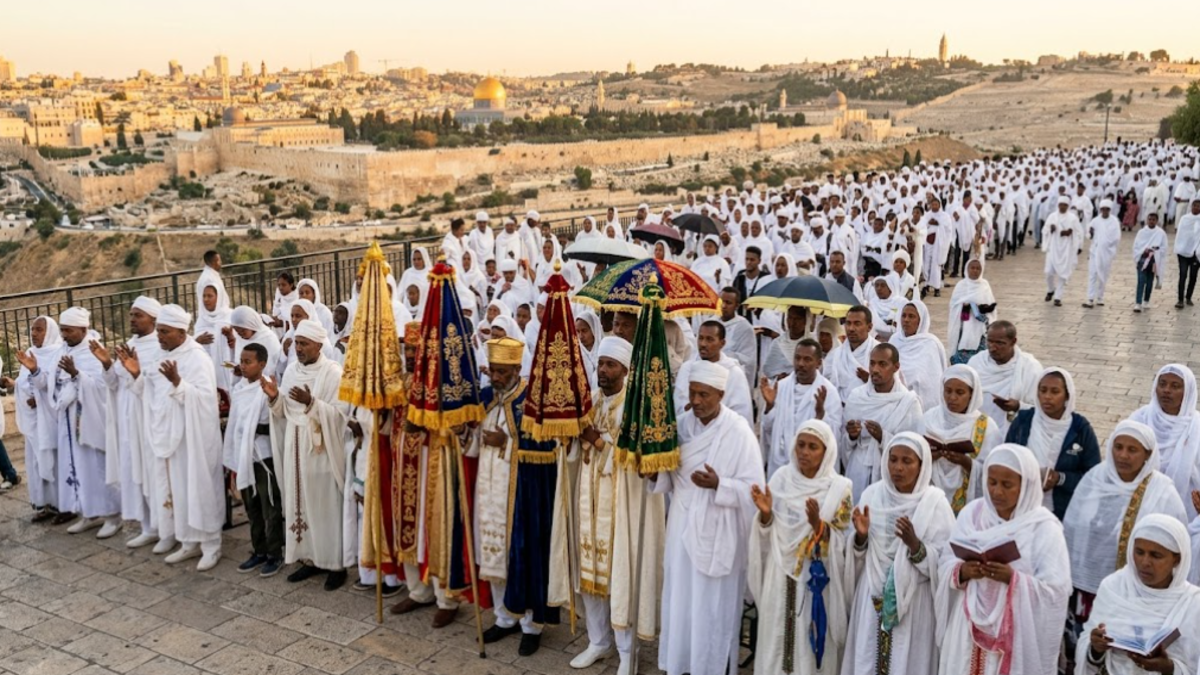
Sigd is one of the most distinctive celebrations in Jewish religious and cultural life, yet it remains relatively unknown to many people outside the Ethiopian Jewish community. Observed by the Beta Israel, the Ethiopian Jewish community, the festival brings together prayer, fasting, repentance and the renewal of the covenant between God and the Jewish people.

Celebrated 50 days after Yom Kippur, Sigd also carries a powerful historical message: the community’s centuries-old connection to Jerusalem and its determination to preserve its religious identity across generations.
Today, the festival has a special place in Israel’s national calendar, where it provides an opportunity to recognise Ethiopian Jewish heritage and share its traditions with a wider public.

Sigd is a traditional religious festival of Beta Israel, the Ethiopian Jewish community. Its name is associated with the Hebrew word for worship and prostration, reflecting the central role of prayer and devotion during the celebration.
The festival takes place on the 29th day of Heshvan, the eighth month of the Hebrew calendar, exactly 50 days after Yom Kippur.
Its religious significance centres on renewing the covenant between God, the Jewish people and the Torah. It is also a time for collective reflection, repentance and spiritual renewal.
Unlike celebrations primarily focused on family gatherings or festive meals, Sigd places communal responsibility at the heart of its observance. The community comes together to reflect on its conduct, seek forgiveness and reaffirm its shared religious commitments.
According to the Ethiopian Jewish tradition, the festival is also associated with the historical return to Jerusalem described in the biblical accounts of Ezra and Nehemiah.
The origins of Sigd are closely connected to the religious history of Beta Israel.
For centuries, Ethiopian Jews maintained a distinctive form of Jewish religious life, preserving traditions, prayers and sacred texts within a geographical and cultural environment far removed from many other Jewish communities.
The festival recalls the biblical account of the people gathering to hear the Torah and renew their commitment to God following their return from exile.
The account of Ezra and Nehemiah, particularly the communal assembly described in the Book of Nehemiah, provides an important religious reference for the celebration.
However, the precise historical date when Sigd first began to be observed is not definitively established. It is therefore more accurate to describe it as a longstanding Ethiopian Jewish tradition than to assign it a specific founding year.
For generations, the festival also expressed the community’s longing to reach Jerusalem. That aspiration became one of the defining elements of its religious identity.
Traditionally, Sigd is observed through a combination of religious ceremonies, fasting, processions and communal prayer.
The Ethiopian Jewish Heritage Center documents several customs that distinguish the festival from other Jewish celebrations.
The day traditionally begins with fasting. Participants abstain from food as an expression of spiritual discipline, repentance and devotion.
The fast reinforces the connection between Sigd and Yom Kippur, although the two observances have distinct purposes.
One of the most recognisable historical customs was the community’s ascent to a high mountain.
In Ethiopia, Jewish families and religious leaders would gather at elevated locations, carrying sacred texts. The mountain symbolised Mount Sinai, where, according to Jewish tradition, Moses received the Torah.
The procession was an important communal event, bringing together religious leaders, elders, children and other members of the community.
The religious ceremonies are led by the Kessim (also written Kesim), the traditional spiritual leaders of Ethiopian Jewry.
Wearing traditional ceremonial clothing, they lead prayers and readings from sacred texts. These include passages from Exodus, Deuteronomy and Nehemiah.
The readings focus on the covenant between God and the people of Israel, repentance and the importance of remaining faithful to religious tradition.
The spiritual observance eventually gives way to a more festive atmosphere.
After the prayers, participants break their fast and share food. The celebration also provides an opportunity for families and community members to meet, strengthen relationships and preserve cultural traditions.
This combination of solemn religious reflection and communal celebration is central to the meaning of Sigd.
Jerusalem is not simply the location of the modern celebrations. It is one of the most important symbols of the festival itself.
For generations, Ethiopian Jews maintained a deep spiritual connection to Jerusalem, even when geographical distance made visiting the city extremely difficult.
Their longing to return to Zion was expressed through prayers, religious practices and the annual observance of Sigd.
The Ethiopian Jewish Heritage Center explains that the festival traditionally offered an opportunity to pray collectively for the return to Jerusalem and the restoration of the community’s connection with its religious homeland.
Following the immigration of large numbers of Ethiopian Jews to Israel, the meaning of the celebration acquired another dimension.
Today, the main public gathering takes place at the Sherover Promenade, near Armon Hanatziv in Jerusalem. The location provides views towards the Old City and the Temple Mount, reinforcing the historical and spiritual connection that has defined the festival.
The gathering brings together Ethiopian Jewish families, religious leaders and public representatives. It is also an opportunity for younger generations to learn about the history and traditions of their community.
One of the most significant developments in the modern history of Sigd was its official recognition by the Israeli parliament.
On 30 June 2008, the Knesset approved the Sigd National Holiday Law, formally recognising the festival as a national holiday in Israel.
The legislation established 29 Heshvan as the annual date of observance and provided for a central state ceremony and educational activities to promote knowledge of the festival.
It also recognised Sigd as an optional day off for employees observing the holiday.
This decision was significant because it moved Sigd beyond the boundaries of a single community’s religious calendar and gave Ethiopian Jewish heritage greater visibility within Israeli public life.
The law also created an opportunity for schools and educational institutions to introduce students to the history, beliefs and cultural contributions of Ethiopian Jews.
Recognition, however, does not mean that the festival has lost its distinctive identity. Its religious leadership, traditional ceremonies and community customs remain central to its observance.
Sigd follows the Hebrew calendar rather than a fixed date in the Gregorian calendar.
It is observed on 29 Heshvan, 50 days after Yom Kippur. Consequently, its date changes from year to year.
In 2026, the festival falls on Monday, 9 November.
The Ethiopian Jewry Heritage Center has announced the following programme for the main Jerusalem gathering:
| Event | Time |
|---|---|
| Opening of the prayer area | 08:00 |
| State ceremony | 12:30 |
| Breaking of the fast | 14:00 |
Location: Sherover Promenade, near Armon Hanatziv, Jerusalem. Times are those published by the Ethiopian Jewry Heritage Center.
The centre has also announced special shuttle services from the area around the Binyanei HaUma Convention Centre, as well as buses departing from different locations across Israel.
These arrangements demonstrate that Sigd is not simply a religious observance held behind closed doors. It is also a major public gathering that brings together members of the Ethiopian Jewish community from across the country.
The preservation of Sigd is closely connected to the wider effort to protect the history, religious literature and cultural identity of Beta Israel.
One particularly important example is the Orit, a collection of sacred writings that holds a central position in Ethiopian Jewish religious tradition.
Written in Ge’ez, an ancient Ethiopian language, the Orit traditionally comprises the first eight books of the Bible: the Five Books of Moses, Joshua, Judges and Ruth.
In November 2025, the National Library of Israel announced an exceptional event involving a historic Orit manuscript.
The approximately 300-year-old manuscript, which had been preserved at the library since 2016, was temporarily taken to the Western Wall for a special Sigd prayer ceremony. The event took place at the request of the family that had donated the manuscript and Ethiopian Jewish community leaders.
The library also reported that 16 Ethiopian Jewish manuscripts had been digitised through a collaboration involving the Ethiopian Jewry Heritage Center and Tel Aviv University.
The collection includes historical copies of the Orit, prayer books and other religious works.
This initiative highlights an important aspect of cultural preservation: safeguarding traditions requires more than celebrating an annual festival. It also involves protecting the historical documents, religious texts and knowledge that allow future generations to understand their heritage.
Although Sigd is an established national holiday in Israel, its significance remains relatively unfamiliar to many people outside Ethiopian Jewish communities.
Its importance extends beyond religious observance. The festival represents the survival of a distinctive Jewish tradition, the preservation of cultural identity and the transmission of historical memory between generations.
It also offers a broader lesson about cultural diversity within Judaism. Jewish religious life has developed through different historical experiences, geographical settings and community traditions. Sigd is an important example of that diversity.
Greater international awareness of the festival could help promote a more complete understanding of Ethiopian Jewish history and challenge the tendency to overlook smaller religious communities when discussing Jewish heritage.
In our assessment, Sigd deserves recognition as an important part of both Ethiopian heritage and the wider history of Judaism.
Its message of collective responsibility, spiritual renewal and cultural continuity remains relevant beyond the community that celebrates it.
The official recognition of Sigd in Israel was an important step towards preserving this heritage. However, genuine recognition also requires education, historical research and opportunities for younger generations to learn directly about their ancestors’ traditions.
The preservation of sacred manuscripts such as the Orit demonstrates why these efforts matter. Cultural heritage cannot survive through symbolic recognition alone; it must remain accessible, understood and actively transmitted.
Sigd is therefore more than an annual festival. It is a living expression of a community’s history, faith and identity.
Sigd is a religious festival celebrated by the Beta Israel community. It focuses on prayer, fasting, repentance and renewing the covenant between God and the Jewish people.
Sigd takes place on 29 Heshvan, 50 days after Yom Kippur. In 2026, it falls on Monday, 9 November.
The main public celebration in Israel takes place at the Sherover Promenade near Armon Hanatziv in Jerusalem.
The mountain represents Mount Sinai, where Moses received the Torah according to Jewish tradition. The ascent symbolises spiritual renewal and the community’s reaffirmation of its covenant with God.
Yes. The Israeli Knesset formally recognised Sigd through the Sigd National Holiday Law in 2008. The law provides for a national ceremony, educational activities and recognition of the day as an optional day off.
1. The Knesset — Sigd: Holiday of Ethiopian Jews
Official Knesset information about Sigd
2. Ethiopian Jewry Heritage Center — The Sigd Holiday
History, religious traditions and the Sigd Law
This source also provides the official 2026 celebration programme.
3. National Library of Israel — Ancient Beta Israel Orit Transported to Western Wall from National Library for Sigd Ceremony
Official press release, 20 November 2025
4. Ethiopian Jewry Heritage Center — About Ethiopian Jewry