Physical Address
304 North Cardinal St.
Dorchester Center, MA 02124
Physical Address
304 North Cardinal St.
Dorchester Center, MA 02124

Religions News Around the World
Religions News Around the World
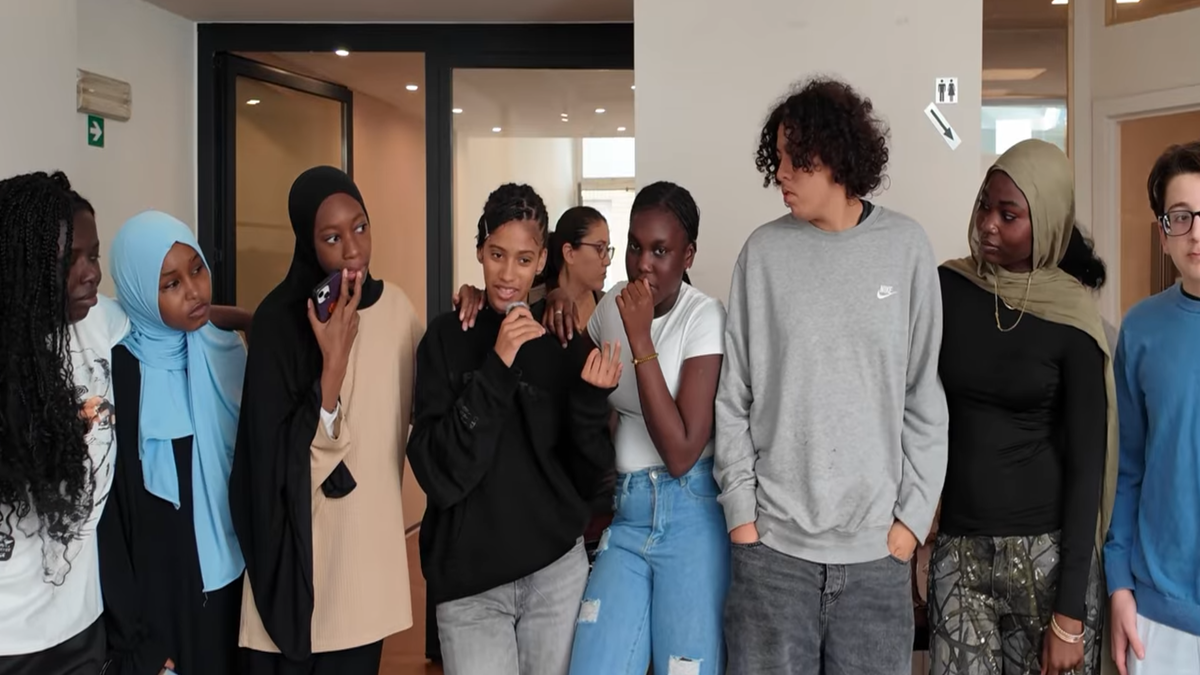
BRUSSELS – ABN News: Matongé neighborhood brunches have brought young people, families and older residents together around food, conversation and community service in one of the Belgian capital’s most diverse neighborhoods. What began with a group of teenagers interested in cooking developed into a broader effort to strengthen relationships among residents and encourage closer cooperation with local authorities—but how did five simple brunches become a lesson in community building?

In Matongé, a densely populated neighborhood within the Ixelles municipality of Brussels, residents come from a wide range of cultural and national backgrounds. The neighborhood has long brought together people with different languages, experiences and generations, creating both opportunities and challenges for social cohesion.
Against that backdrop, a group of young people aged between 12 and 15 decided to put one of their interests to practical use: cooking.

Over the course of several months, the teenagers dedicated many of their afternoons and weekends to preparing brunches for local residents. Every two months, they opened the doors to neighbors who wanted to share a meal and spend time together.
The young organizers described the idea simply: “by the youth, for everyone.”
Their motivation went beyond preparing food. They wanted residents to meet people they might otherwise never encounter and hoped the initiative could make the neighborhood feel closer.
One of the young cooks also pointed to a more practical concern. Some residents do not always have enough to eat, and offering food provided another reason for people to come together.
The result was a series of five neighborhood brunches that regularly attracted between 60 and 70 people.
The tables brought together families already known to the young organizers and residents who had never previously crossed paths with them. Children, parents and older people shared the same space, often meeting neighbors from different backgrounds for the first time.
For the teenagers, cooking became a starting point for something larger.
The origins of the project can be traced back to an activity that had little connection with cooking.
Around a year and a half before the brunch initiative took shape, young participants involved in Bahá’í community-building activities joined other residents and municipal workers during a national public clean-up day.
Their unexpectedly large turnout caught the attention of municipal officials.
Officials had not realized how many young people were participating together in community-building activities in the area. Their curiosity prompted a meeting between the teenagers and municipal representatives.
That conversation eventually opened the door to a broader discussion about work that had already been taking place in Matongé for several years.
Several months later, the municipality announced the creation of a youth council for residents aged 12 to 15 through its magazine.
The young people decided to attend the first meeting. When they arrived, however, they discovered that they were the only young participants who had turned up.
Rather than allowing the initiative to disappear, the group continued working with municipal staff.
According to Neysan Khabirpour, an Auxiliary Board member in Belgium who works with the young people, the municipality had many ideas but sometimes struggled to establish direct connections with residents.
The teenagers gradually became involved in different small projects. Over time, they effectively became the youth council themselves.
That experience gave them a closer understanding of how local decision-making works and introduced them to the municipality’s participatory budget.
The fund allows residents to propose projects designed to benefit their neighborhood. For the young people, it offered a concrete opportunity to transform an idea into action.
The facilitators working with the youth group regularly asked the teenagers to consider a fundamental question: what talents do they possess, and how could they use those talents to serve other people?
The answer came quickly.
They liked cooking.
With support from older youth and adults, the group developed its brunch proposal. Residents then voted for the initiative, allowing the project to receive a modest allocation from the participatory budget.
The money paid for ingredients, equipment and decorations.
But financial support alone did not make the brunches happen.
The teenagers supplied the most important resource: their time.
Preparation began during the week. On Wednesdays after school, the young people spent hours shopping for the ingredients they would need.
Fridays were devoted to cooking preparations and decorating the hall, with the teenagers often remaining until the evening.
Then came Saturday.
The group arrived at 9 a.m. to finish preparations and welcome residents. For Khabirpour, their willingness to arrive early demonstrated the difference that personal ownership can make.
The young people were not simply completing an assignment given to them by adults. They had helped choose the idea, organize it and carry responsibility for making it work.
That sense of ownership also brought some pressure.
One participant acknowledged that the organizers sometimes became nervous before each brunch. They worried that they might not finish everything on time or that something could go wrong.
Yet those concerns usually disappeared once the doors opened.
Seeing residents eating the food they had prepared gave the young organizers a strong sense of satisfaction.
The experience also taught them that teamwork inside a kitchen can be complicated.
Cooking for dozens of people requires organization, communication and flexibility.
The teenagers sometimes disagreed about responsibilities or about the best way to complete a task. Those conflicts were not unusual, particularly when several young people were working in a limited kitchen space.
One of the organizers acknowledged that everyone had their own preferred way of doing things.
Instead of treating disagreements as a failure, the group gradually learned to work through them.
The kitchen became a practical environment for learning cooperation. The young people discovered that serving others requires more than enthusiasm. It also requires listening, compromise and a willingness to share responsibilities.
One organizer said the experience helped them learn how to work together and live together while strengthening friendships.
The lessons extended beyond cooking.
At each brunch, the teenagers also wanted residents to discuss subjects affecting everyday life in the neighborhood.
The topics included friendship, bullying, education, the environment and social cohesion.
Initially, the young people attempted to present themes directly to the assembled guests.
They soon discovered that speaking before 60 or 70 people was much more difficult than preparing a meal.
The group adapted.
Instead of giving conventional presentations, the young organizers began by asking a question. Residents then divided into smaller groups to discuss the issue before coming together again to share their thoughts.
That adjustment changed the nature of the conversations.
Rather than listening to a presentation, residents became participants. The format gave more people an opportunity to speak and allowed different experiences and opinions to emerge.
The social impact of the brunches became particularly visible around the dining tables.
Elisa, a longtime resident who attended three of the events, recalled that the first brunch presented challenges for the young organizers.
But she noticed a clear improvement from one event to the next.
For her, one of the most memorable aspects was the diversity of the people sharing the room.
She met Moroccan, Dutch and other neighbors whom she would not normally encounter in her daily life.
The age range was equally striking.
Older residents sat alongside parents, young people and babies. The brunches created an informal setting in which differences in age and background became less important than the shared experience of eating and talking together.
The project therefore addressed a question that extends beyond a single meal: how can residents of a diverse urban neighborhood develop stronger relationships?
The teenagers did not attempt to solve that question through a large institutional program.
Instead, they started with something familiar.
They cooked.
Food provided a natural reason for people to enter the room. Conversation followed.
The young organizers then used that opportunity to encourage discussions about issues that mattered to the community.
In this way, the brunch became both a social event and a space for civic participation.
The initiative also reflected a wider question about the relationship between residents and local government.
Khabirpour said community members had begun asking themselves whether residents should focus only on what they expected municipal authorities to provide.
That approach can easily turn into a list of complaints about what the municipality has not done.
The group instead began asking what residents themselves could contribute and how they could work alongside municipal officials.
The participatory budget offered a practical mechanism for putting that approach into practice.
Residents proposed an idea, the community voted on it and the municipality provided limited financial resources. The teenagers then took responsibility for turning the proposal into an actual neighborhood activity.
That process changed perceptions on both sides.
One father in the neighborhood said he had previously been quick to focus on what the municipality was failing to do.
His perspective changed as he became more involved.
Rather than simply asking what authorities should provide, he came to see himself and other residents as part of the solution.
“We are among those doing it,” he said.
The distinction is important because the brunches did not replace the role of municipal authorities. Instead, they demonstrated how residents and institutions can work together when both sides recognize the contribution the other can make.
The project eventually came to an end.
It had always been designed as a fixed-duration initiative rather than a permanent neighborhood program.
Yet its conclusion did not erase what the young organizers and residents had gained.
The teenagers developed greater confidence in their ability to organize an event, work with others and address a community need.
They also experienced the responsibilities that come with taking ownership of a project.
Residents, meanwhile, gained opportunities to meet neighbors they rarely encountered.
The brunches strengthened relationships across generations and cultural backgrounds, while the discussions gave residents an opportunity to exchange views on issues affecting their community.
The experience also affected how some people viewed young residents.
During a gathering organized by the municipality for recipients of the participatory budget, a man approached the teenagers after hearing them speak about their project.
He told them that he had begun to lose hope in the younger generation.
Watching the young people explain their work changed that feeling, he said, and gave him renewed hope.
For the organizers, that reaction illustrated the broader value of giving young people meaningful responsibilities.
The teenagers were not simply preparing for a future role in society. They were already contributing to their neighborhood.
The brunch initiative formed part of broader Bahá’í community-building efforts in Matongé, where young people have been encouraged to develop capacities for service.
The experience offered a practical example of what can happen when teenagers receive trust, guidance and an opportunity to respond to a real need.
The young people did not begin with a complicated plan.
They identified something they could do well and enjoyed doing. Then they connected that ability with the needs of their neighbors.
Cooking provided the immediate activity, but service provided the deeper purpose.
The process also showed that community-building does not always depend on large projects.
A modest budget helped pay for supplies, but the initiative depended heavily on voluntary effort. The teenagers spent hours shopping, preparing meals, decorating and organizing discussions.
Their work created a space where people could simply meet.
That may sound ordinary, but in a diverse urban neighborhood, repeated opportunities for residents to sit together can have significant value.
The five brunches demonstrated how a meal can become a gateway to relationships, how a youth project can become a form of civic participation and how a municipal program can give residents the means to act on their own ideas.
The story began with young people showing up for a clean-up day.
It continued with an unexpected youth council, a participatory budget proposal and five mornings of cooking and conversation.
It ended with something less tangible but potentially more enduring: a group of young people who had discovered that they could identify a need and respond to it, and a neighborhood that had seen what they could accomplish.
The most important legacy may therefore not be the brunches themselves.
It may be the confidence left among the young organizers and the relationships created among the people who sat around their tables.
In Matongé, the teenagers learned that community service does not have to begin with an official title or a major institution.
Sometimes, it begins by asking what you know how to do—and deciding to share it with your neighbors.
The Matongé neighborhood brunches were community meals organized by young people aged 12 to 15 for local residents in Brussels. The teenagers prepared and served the food while encouraging neighbors to meet and discuss community issues.
Each brunch attracted approximately 60 to 70 residents, including families, children and older people from different cultural backgrounds.
Residents voted for the young people’s proposal through the municipality’s participatory budget. The funding covered ingredients, equipment and decorations.
The teenagers developed practical skills in cooking, planning and teamwork while learning how to manage disagreements, communicate with residents and use their talents in service of the wider community.
… Read more
Contact: info@abnnews.net