Physical Address
304 North Cardinal St.
Dorchester Center, MA 02124
Physical Address
304 North Cardinal St.
Dorchester Center, MA 02124

Religions News Around the World
Religions News Around the World
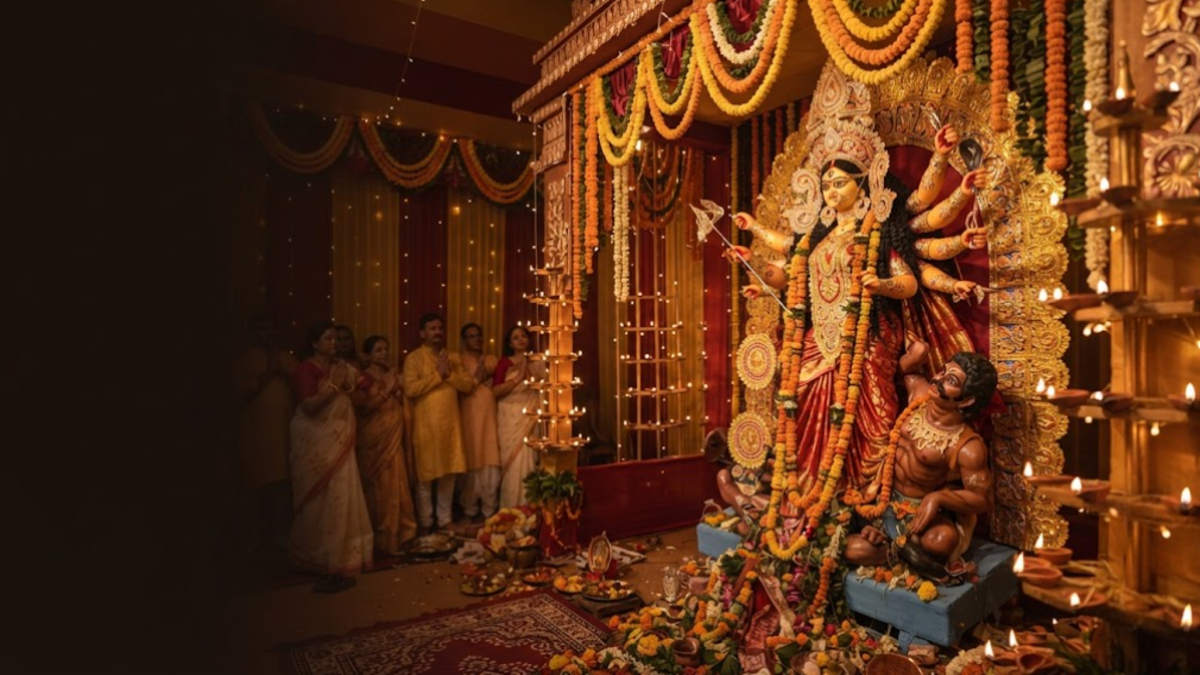
Navaratri 2026 begins on Sunday, October 11, with the nine-night festival continuing through October 19. The festival, dedicated to the worship of Goddess Durga and the many manifestations of Shakti, will be marked across India through prayers, fasting, Garba and Dandiya, Durga Puja, Ramlila and other regional traditions. The celebration culminates in the wider Vijayadashami/Dussehra observances on October 20.

For devotees preparing for the festival, the most important point is that Navaratri starts on October 11, while the exact rituals and customs can differ considerably by region and family tradition.
The Ministry of Tourism’s official Incredible India portal lists Sharad Navaratri from October 11 to October 19. It describes Navaratri as a nine-night festival honouring different forms of Goddess Durga.

The National Portal of India separately lists Dussehra on October 20 as a central gazetted holiday. Its holiday calendar also reflects regional Dussehra observances on October 18 and 19, illustrating why festival dates can appear differently in official state calendars.
| Occasion | Date |
|---|---|
| Navaratri begins | Sunday, October 11 |
| Nine-night Navaratri period | October 11–19 |
| Vijayadashami/Dussehra | Tuesday, October 20 |
The dates above refer to the commonly observed Sharad or Shardiya Navaratri cycle. Local religious calendars may differ in the timing of individual rituals.
Ghatasthapana, also known as Kalash Sthapana, marks the beginning of Navaratri worship. Maharashtra Tourism describes the ritual as an invocation of Goddess Durga and explains that it traditionally involves placing a sacred kalash over soil in which barley seeds are sown.
The timing of Ghatasthapana is not simply a fixed clock time for every location. It is linked to Pratipada Tithi and local astrological calculations. Maharashtra Tourism advises that the preferred period falls within the first one-third of the day during Pratipada, with specific periods traditionally avoided.
For that reason, devotees should check a local panchang or their temple’s announced schedule rather than applying one national muhurta to every city.
The nine nights are traditionally associated with nine manifestations of Goddess Durga, collectively known as the Navadurga. The official Incredible India portal identifies them as Shailaputri, Brahmacharini, Chandraghanta, Kushmanda, Skandamata, Katyayani, Kalaratri, Mahagauri and Siddhidatri.
| Day | Date | Form of Goddess |
|---|---|---|
| Day 1 | October 11 | Maa Shailputri |
| Day 2 | October 12 | Maa Brahmacharini |
| Day 3 | October 13 | Maa Chandraghanta |
| Day 4 | October 14 | Maa Kushmanda |
| Day 5 | October 15 | Maa Skandamata |
| Day 6 | October 16 | Maa Katyayani |
| Day 7 | October 17 | Maa Kalaratri |
| Day 8 | October 18 | Maa Mahagauri |
| Day 9 | October 19 | Maa Siddhidatri |
The day-by-day dates follow the nine-day festival period published by Incredible India, while the traditional sequence of the nine forms is given by the same official tourism source.
Navaratri does not look the same everywhere. Its regional diversity is one of the festival’s defining features.
Gujarat is particularly associated with Garba and Dandiya, with large public celebrations built around music, dance and devotion. The Gujarat Tourism festival calendar lists the Vibrant Navratri Festival in Ahmedabad from October 11 to 20.
In eastern India, Navaratri overlaps with the traditions of Durga Puja, while northern parts of the country commonly connect the period with worship of the Goddess and Ramlila performances. In parts of southern India, traditions such as Kolu displays form part of the seasonal celebrations. Incredible India highlights these regional differences as central to the festival’s cultural character.
This means that there is no single ritual schedule that represents every community. The religious focus may be shared, but the way families and communities observe the festival can be distinctly regional.
For many devotees, Navaratri is a period of fasting, prayer and spiritual reflection. Others participate mainly through temple visits, community celebrations, music and dance.
In Gujarat, Garba and Dandiya are especially prominent. Maharashtra Tourism also describes fasting and community gatherings as part of Navaratri observance, while noting that eastern India follows the Durga Puja tradition.
People planning to fast should follow their own family, religious or medical guidance rather than assuming that one fasting practice applies to everyone.
The festival period leads into Vijayadashami, or Dussehra, observed on October 20 in the central government holiday calendar. Dussehra represents the victory of good over evil and is associated with different traditions across India.
Maharashtra Tourism describes Dussehra as the tenth day of Ashvin and identifies it as the culmination of the nine-day Navaratri period.
The connection between Navaratri and Dussehra is therefore straightforward in the broad festival cycle, but the exact ceremonies and emphasis vary from one region to another.
Navaratri’s significance in 2026 lies not only in its religious observance but also in the remarkable range of traditions that take place under the same festival name. Official tourism sources themselves reflect that diversity: Garba in Gujarat, Durga Puja in eastern India, Ramlila in northern regions and Kolu traditions in the south.
For readers preparing to observe the festival, the practical takeaway is simple: October 11 is the starting date to mark on the calendar, but local temple schedules and panchang calculations should be used for specific rituals such as Ghatasthapana. This approach avoids treating a diverse set of regional traditions as though they followed one universal timetable.
Sharad Navaratri begins on Sunday, October 11, according to the official Incredible India festival listing.
The main Sharad Navaratri observance covers nine nights, from October 11 through October 19. Dussehra/Vijayadashami follows on October 20.
Ghatasthapana, or Kalash Sthapana, is a ritual marking the beginning of Navaratri worship. It involves establishing a sacred kalash and traditionally sowing barley in soil as part of the ceremony.
The first day is traditionally dedicated to Maa Shailputri, followed by Brahmacharini, Chandraghanta, Kushmanda, Skandamata, Katyayani, Kalaratri, Mahagauri and Siddhidatri on the subsequent days.
The National Portal of India lists Dussehra on Tuesday, October 20 as a central gazetted holiday.
….Read More
Contact: info@abnnews.net