Physical Address
304 North Cardinal St.
Dorchester Center, MA 02124
Physical Address
304 North Cardinal St.
Dorchester Center, MA 02124

Religions News Around the World
Religions News Around the World
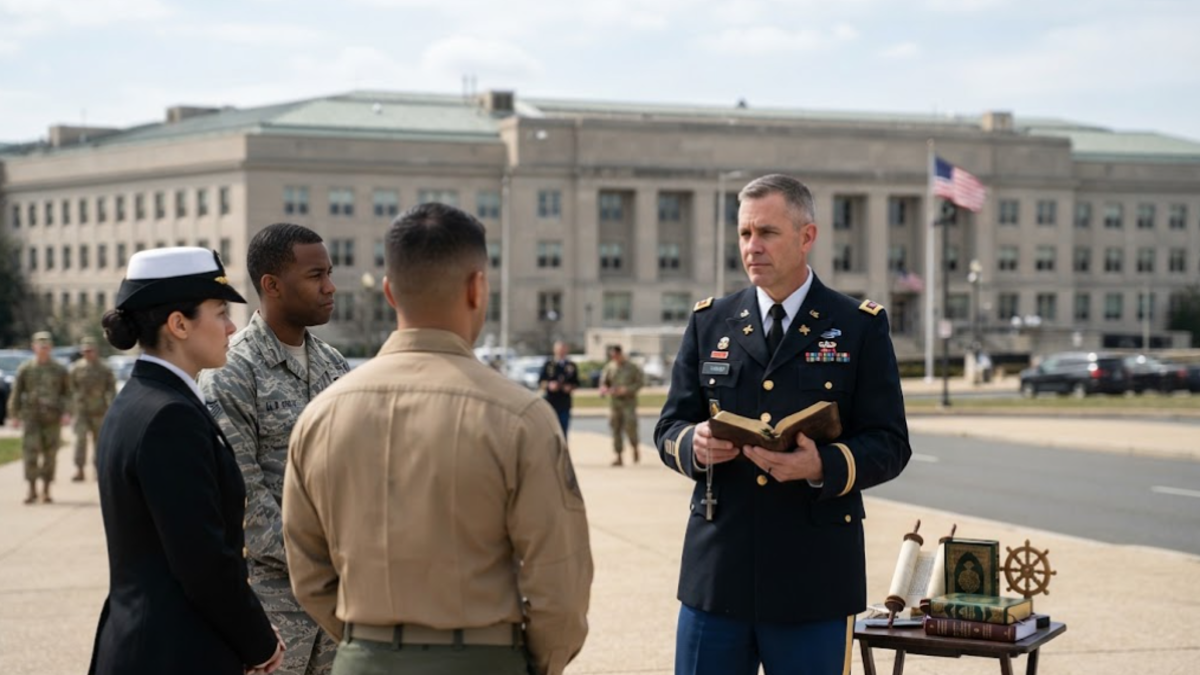
The Pentagon has established a new Office of Religious Affairs (ORA) that will report directly to Defense Secretary Pete Hegseth and oversee religious-affairs policy, resources and support across the U.S. military. The office was announced on September 30 as part of Hegseth’s “State of the Force” address at Marine Corps Base Quantico and is intended to give military chaplains and religious-support programs a more direct channel to senior Pentagon leadership.

The initiative gives religious affairs a new position inside the Pentagon’s senior leadership structure. At the same time, the department says the office will not compel religious participation or diminish the religious-freedom rights of service members, civilian employees or military families, including those who identify with no faith.
The Office of Religious Affairs is a new Department of War office designed to coordinate and strengthen religious support throughout the armed forces.

According to the department’s description, the office is intended to elevate spiritual readiness as one element of military readiness and to address what the administration describes as gaps in funding, infrastructure and support for military chaplaincy. The office will have a director serving as a principal staff adviser to the secretary and deputy secretary on religious affairs.
The move also changes where the Armed Forces Chaplains Board sits within the Pentagon structure. The board and its executive director are to be placed under the authority and direction of the new religious-affairs office.
The office is expected to work on several areas of military religious support, including:
The Pentagon has also directed the military services to identify religious-affairs requirements that are currently unfunded or underfunded. A baseline funding plan for the office is expected within 60 days of the memorandum, while its organizational structure and initial staffing requirements are to be developed within 90 days.
Military chaplains already have an established role in the U.S. armed forces. They provide religious services and pastoral care, advise commanders on religious and ethical matters, and help service members exercise their religious beliefs.
Before the creation of the new office, the Armed Forces Chaplains Board was part of the Pentagon’s personnel and readiness structure. The Department of Defense’s personnel policy organization has listed the board among its directorates, alongside other military personnel policy functions.
The military services also maintain their own chaplain leadership. For example, the Air Force says its senior chaplain leadership advises commanders on the religious and moral welfare of Airmen and Guardians and oversees programs intended to meet the religious needs of personnel and their families.
The new Pentagon office therefore does not create military chaplaincy from scratch. Instead, it creates a central senior-level office intended to coordinate policy, resources and advocacy for religious affairs across the department.
“Spiritual readiness” is a term increasingly used in discussions of military religious support. The new office is specifically tasked with supporting research, technology and analytical tools intended to assess spiritual fitness, spiritual readiness and spiritual resilience.
The concept sits alongside existing military approaches to resilience, morale, ethics and mental well-being. However, the precise methods that the new office will use to assess or measure spiritual readiness have not yet been fully established publicly.
That distinction matters. The Pentagon has announced the office and its responsibilities, but its permanent staffing, detailed organizational framework, budget and operating procedures are still being developed.
The creation of a powerful central office for religious affairs has raised questions about how the Pentagon will balance religious support with constitutional protections.
The memorandum establishing the office explicitly states that it should not be interpreted as requiring religious participation or reducing the free-exercise rights of any service member, civilian employee or family member, regardless of faith or lack of faith.
Those protections build on existing Defense Department policies concerning religious liberty. Department of Defense materials reference DoD Instruction 1300.17, “Religious Liberty in the Military Services,” which governs religious accommodation and protection of sincerely held religious beliefs. A Defense Department Inspector General review has also emphasized that religious-accommodation requests must be considered individually under applicable policy.
The practical test for the new office will therefore be how its policies are implemented across a military that includes personnel with different religious beliefs as well as personnel who do not identify with a religion.
One of the most significant structural changes is the transfer of the Armed Forces Chaplains Board under the authority of the new Office of Religious Affairs.
The board has historically provided senior-level advice on military chaplaincy and religious matters. The Pentagon’s personnel policy structure previously placed the board within the Office of the Under Secretary of Defense for Personnel and Readiness.
Under the new arrangement, the religious-affairs director will have a more direct relationship with the secretary and deputy secretary. The stated purpose is to reduce bureaucratic barriers and give chaplains a stronger advocate when decisions about resources, facilities and policy are made at department level.
| Issue | Status |
|---|---|
| Creation of the Office of Religious Affairs | Confirmed and established by memorandum |
| Direct reporting relationship to the secretary | Confirmed |
| Creation of a director position | Confirmed |
| Transfer of the Armed Forces Chaplains Board under the new office | Directed |
| Initial FY2027 funding plan | Pending; required within 60 days |
| Permanent organizational structure | Pending; to be developed within 90 days |
| Initial staffing allocation | Pending |
| Permanent director appointment | Not yet publicly identified in the available reporting |
| Detailed operating procedures | Still being developed |
The distinction between these stages is important. The office itself has been established, but its full institutional structure and long-term resources have not yet been finalized.
The office represents a notable change in the Pentagon’s approach to religious affairs because it gives the subject a dedicated office with direct access to the secretary.
Hegseth presented the initiative as part of a broader effort to strengthen the moral, ethical and spiritual dimensions of military readiness. During his Quantico speech, he argued that chaplains should have a stronger voice at senior levels and described the office as a mechanism for protecting budgets, improving infrastructure and strengthening religious support.
The announcement has also prompted criticism from religious-liberty and church-state organizations. Those critics have questioned whether expanding the Pentagon’s emphasis on religious programs could give particular religious viewpoints greater influence within a government institution. Such concerns are contested, and the department’s memorandum expressly says that the office must protect free exercise and cannot compel religious participation.
For that reason, the most consequential questions may emerge during implementation rather than at the moment of creation: how funding is distributed, how religious diversity is handled, how spiritual-readiness programs are defined and what safeguards are applied to ensure participation remains voluntary.
The next phase is largely administrative.
The Pentagon must develop the office’s organizational framework, determine its staffing requirements and prepare a baseline budget and funding plan. The military services are also expected to identify religious-affairs needs that require additional resources.
Those steps should provide more information about the office’s eventual size, authority and priorities. Until those details are finalized, it would be premature to describe the Office of Religious Affairs as a fully operational replacement for existing chaplain structures.
What is clear is that the Pentagon has elevated religious affairs to a new level of senior departmental attention. The coming months will show how that change translates into policy, funding and services for military personnel and their families.
It is a newly established Department of War office responsible for coordinating religious-affairs policy, resources and support across the U.S. military while advising senior Pentagon leadership.
The office will report directly to the secretary, with its director serving as a principal staff adviser on religious affairs across the department.
The establishing memorandum says the office cannot be interpreted as compelling religious participation or diminishing the free-exercise rights of service members, civilian employees or family members of any faith or no faith.
The memorandum places the board and its executive director under the authority and direction of the new Office of Religious Affairs.
Not yet. The Pentagon has directed the office to produce an initial baseline budget and fiscal 2027 funding plan within 60 days, while its broader organizational structure is to be developed within 90 days.
….Read More
Contact: info@abnnews.net