Physical Address
304 North Cardinal St.
Dorchester Center, MA 02124
Physical Address
304 North Cardinal St.
Dorchester Center, MA 02124

Religions News Around the World
Religions News Around the World
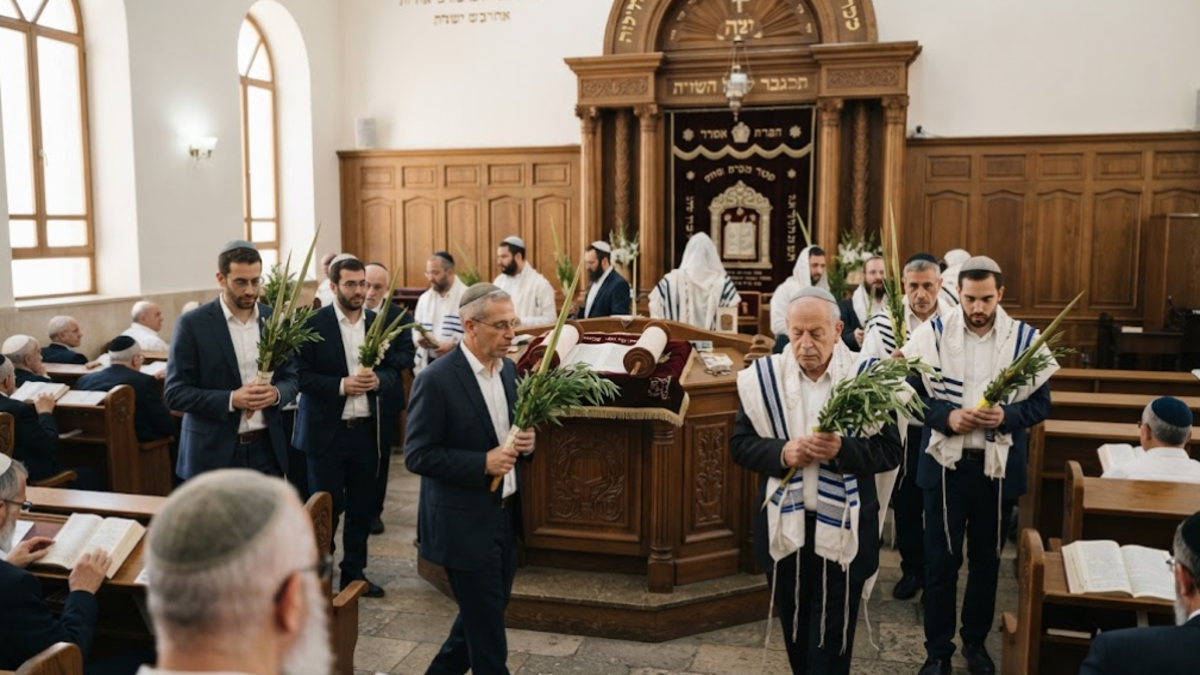
Hoshana Rabbah is the seventh and final day of Sukkot, a Jewish festival centered on joy, gratitude and prayers for the coming year. The day has a distinctive place in the Jewish calendar, combining extended prayers, seven processions around the synagogue, the use of willow branches and traditions associated with divine judgment and rainfall.

Although Hoshana Rabbah is part of the intermediate days of Sukkot, its rituals make it unlike the preceding days of the festival. Its name, commonly translated as “the Great Hoshana,” comes from the repeated prayers for salvation, known as Hoshanot.
Hoshana Rabbah falls on the seventh day of Sukkot, the final day of the festival itself. In the Hebrew calendar, it is observed on 21 Tishrei.

It comes immediately before Shemini Atzeret, which begins after Sukkot. The distinction matters: Hoshana Rabbah is the seventh day of Sukkot, while Shemini Atzeret is a separate festival that follows it. In communities outside Israel, some traditional practices continue to involve the sukkah on Shemini Atzeret, but Hoshana Rabbah remains the final day of Sukkot proper.
Hoshana Rabbah developed a special spiritual significance in rabbinic and later Jewish tradition.
Sukkot has a strong connection to water and the agricultural year. The traditional prayers of the festival repeatedly ask for salvation and blessing, including prayers connected with rainfall. Chabad’s explanation of the holiday cites the Talmudic tradition that the amount of rain for the coming year is judged during Sukkot and that Hoshana Rabbah is associated with the completion of that judgment.
This helps explain why the day’s prayers are unusually extensive. Hoshana Rabbah is not simply a ceremonial end to Sukkot; its rituals express a final appeal for blessing and sustenance.
The idea of a final stage in the year’s judgment is especially prominent in later Jewish tradition. It should be understood as a religious belief and interpretation rather than a claim about a measurable or historical event.
Several customs distinguish Hoshana Rabbah from the other days of Sukkot.
During the Hoshana Rabbah morning service, worshippers traditionally take the lulav and etrog, the Four Species of Sukkot, and circle the synagogue’s Torah-reading platform, known as the bimah, seven times.
On the first six days of Sukkot, the customary procession is generally one circuit. Hoshana Rabbah expands this to seven. The practice recalls the ancient Temple ceremony in which the altar was circled seven times on the seventh day.
The connection goes back to the Mishnah, which describes the Temple’s willow ceremony and states that the altar was circled once on ordinary days and seven times on the seventh day.
The processions are accompanied by Hoshanot, a series of liturgical prayers asking God for salvation, prosperity and blessing.
The Hebrew expression hosha na means, broadly, “please save” or “please bring salvation.” The prayers therefore give Hoshana Rabbah its characteristic tone: an extended plea for divine help at the close of Sukkot.
Because more Hoshanot are recited on this day than during the earlier days of the festival, the seventh day became known as Hoshana Rabbah, or the “Great Hoshana.”
One of the most recognizable Hoshana Rabbah customs involves aravot, or willow branches.
The practice is connected to the Temple service described in the Mishnah. During Sukkot, large willow branches were placed alongside the altar, and worshippers circled the altar while reciting prayers. On the seventh day, they made seven circuits.
In contemporary Jewish practice, a separate bundle of willow branches is used after the Hoshanot. In many communities, five willow branches are bound together and struck against the ground. Chabad sources describe this as an ancient Hoshana Rabbah custom and distinguish it from the willow branches included in the Four Species.
The ritual has acquired additional symbolic explanations over the centuries, particularly in Jewish mystical tradition. Practices can vary between communities, so the exact form and accompanying customs are not identical everywhere.
The Four Species are central to Sukkot:
They are used during the Hoshana Rabbah prayers, just as they are during the earlier days of Sukkot. Hoshana Rabbah is traditionally the final day on which the mitzvah of taking the Four Species is performed as part of Sukkot.
The additional willow ritual should not be confused with the willow that forms part of the Four Species. The separate bundle of aravot used later in the service has its own ritual history.
Not exactly.
Hoshana Rabbah has sometimes been described as resembling a “mini-Yom Kippur” because of its themes of judgment, repentance and prayer. However, it is still the seventh day of Sukkot and has its own rituals and legal status.
The comparison is therefore best understood as a description of its spiritual character, not as saying that Hoshana Rabbah is another Yom Kippur.
Unlike Yom Kippur, Hoshana Rabbah does not have Yom Kippur’s comprehensive fasting restrictions. Its observances are rooted in Sukkot’s rituals, including the lulav, etrog, Hoshanot and willow branches.
In many Jewish communities, the night preceding Hoshana Rabbah is devoted to extended Torah study and prayer.
One established custom is to remain awake during the night and study Torah. Chabad’s description of the practice includes study of Deuteronomy and Psalms, although customs differ between communities.
This overnight observance is not universal, however. Jewish communities have developed different liturgical traditions, and the precise order of prayers and study varies according to custom.
| Feature | Hoshana Rabbah |
|---|---|
| Place in Sukkot | Seventh and final day |
| Hebrew date | 21 Tishrei |
| Main prayers | Hoshanot |
| Processions | Seven circuits around the bimah |
| Main ritual objects | Lulav and etrog, plus separate willow branches |
| Distinctive willow ritual | Willow branches are struck against the ground |
| Historical connection | Willow ceremony around the Temple altar |
| Main themes | Salvation, blessing, rain and the completion of Sukkot |
The table summarizes traditional observances described in rabbinic sources and later Jewish practice. Details can vary among communities.
One of the clearest ways to understand Hoshana Rabbah is to see how its modern rituals preserve memories of the ancient Temple service.
The Mishnah describes worshippers bringing willow branches and placing them around the altar. They circled the altar while reciting prayers and made seven circuits on the seventh day of Sukkot.
After the destruction of the Temple, Jewish practice could no longer reproduce that ceremony in its original setting. The synagogue ritual of circling the bimah became a way of commemorating the Temple practice. Chabad’s account explicitly describes the modern seven circuits as a remembrance of the Temple service.
This historical continuity is central to the meaning of Hoshana Rabbah: familiar objects and movements in the synagogue connect contemporary worship with rituals described in the Mishnah.
Hoshana Rabbah is best understood not simply as the “last day of Sukkot,” but as a day in which several major themes of the festival converge: prayer for rain and sustenance, remembrance of the Temple, use of the Four Species, and a distinctive emphasis on willow branches.
Its rituals also explain why the day can look unfamiliar to people who know Sukkot mainly through the sukkah and the Four Species. The seven circuits, extended Hoshanot and willow ritual give the final day a character of its own while remaining firmly connected to the broader themes of Sukkot.
For readers encountering Hoshana Rabbah for the first time, the key distinction is straightforward: it is the seventh day of Sukkot, not a separate festival, and its distinctive customs center on prayers for salvation and blessing and on rituals recalling the ancient Temple service.
Hoshana Rabbah is commonly translated as “the Great Hoshana.” The name refers to the extensive Hoshanot prayers recited on the seventh day of Sukkot.
It is the seventh and final day of Sukkot, corresponding to 21 Tishrei in the Hebrew calendar.
The seven circuits around the bimah commemorate the seven circuits around the Temple altar described for the seventh day of Sukkot in the Mishnah.
Willow branches recall the special willow ceremony performed in the Temple during Sukkot. A separate willow ritual became part of Hoshana Rabbah practice after the Temple era.
No. Hoshana Rabbah is the seventh day of Sukkot. Shemini Atzeret follows Sukkot as a distinct festival.
….Read More
Contact: info@abnnews.net