Physical Address
304 North Cardinal St.
Dorchester Center, MA 02124
Physical Address
304 North Cardinal St.
Dorchester Center, MA 02124
Religions News Around the World
Religions News Around the World
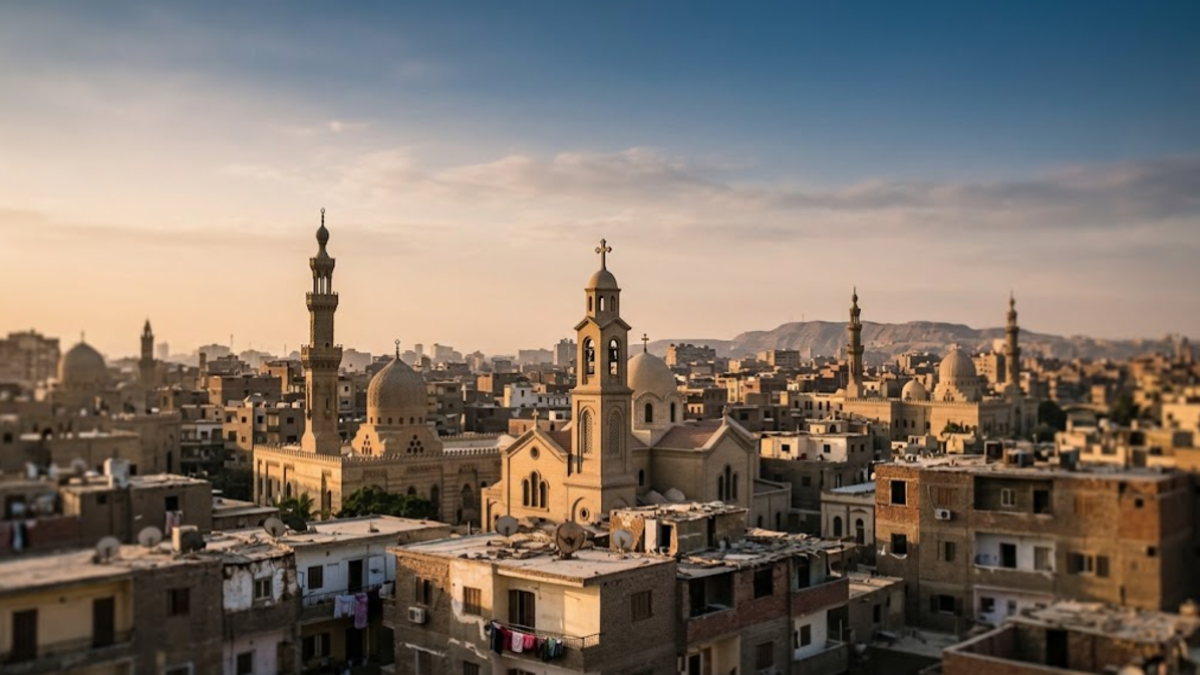
Religious minority rights in Egypt remain a significant human rights issue, despite constitutional guarantees of freedom of belief and government initiatives promoting religious coexistence. Coptic Christians, Baha’is, Jehovah’s Witnesses, Shi’a Muslims, Jews and other religious communities face different legal and practical challenges, ranging from restrictions on religious recognition to difficulties establishing places of worship and obtaining equal treatment under the law.

Egypt’s Constitution states that freedom of belief is absolute and guarantees equality before the law. However, the gap between these constitutional principles and the experiences reported by minority communities continues to attract scrutiny from international human rights organizations.
A February 2025 report by the United States Commission on International Religious Freedom (USCIRF) found that, although the Egyptian government supports some initiatives promoting religious diversity, restrictions affecting non-Muslim religious life remain a serious concern. The commission recommended that the United States place Egypt on its Special Watch List for religious freedom violations.

Egypt’s Constitution provides the starting point for assessing religious freedom in the country. Article 64 states that freedom of belief is absolute, while Article 53 establishes equality before the law and prohibits discrimination on grounds including religion or belief.
The Constitution also identifies Islam as the state religion and the principles of Islamic Sharia as the main source of legislation. Article 64 specifically addresses the practice of religious rituals and the establishment of places of worship for followers of the three recognized Abrahamic religions: Islam, Christianity and Judaism.
These provisions create an important distinction between constitutional protections and the legal framework governing religious practice. While the Constitution establishes broad principles of equality and freedom of belief, the recognition of religious communities and their ability to exercise particular rights are not identical across all faiths.
The government officially recognizes Sunni Islam, Christianity and Judaism. Communities outside these categories, including Baha’is and Jehovah’s Witnesses, have faced longstanding restrictions on the public practice of their religion or the legal recognition of their religious institutions.
Coptic Christians constitute Egypt’s largest religious minority and have a longstanding presence in the country. Most Egyptian Christians belong to the Coptic Orthodox Church, although Catholic, Protestant and other Christian communities are also present.
The government has taken steps to support religious coexistence and improve the legal status of churches. One significant measure was the Church Construction and Restoration Law, enacted in 2016, which established a legal framework for building and restoring Christian places of worship.
The government has also pursued the legalization of churches that previously operated without the required authorization. This process has provided a route toward formal recognition for some congregations, although administrative requirements and the pace of implementation have remained subjects of scrutiny.
Nevertheless, church construction is not the only issue affecting Coptic Christians. International reporting has documented concerns about sectarian violence, discrimination, access to justice and the representation of Christians in certain public institutions.
Some Christian communities and human rights advocates have also criticized customary reconciliation sessions used to settle sectarian disputes. They argue that such proceedings can undermine accountability when they replace criminal investigations or court proceedings. The Coptic Orthodox Church has emphasized that reconciliation should not serve as a substitute for applying the law.
The central issue is therefore not simply whether churches can be built or restored. Effective protection also requires authorities to investigate attacks, prosecute crimes fairly and ensure that Christians can exercise their citizenship rights without religious discrimination.
Religious minorities outside the three officially recognized Abrahamic faiths face a different set of challenges.
Egypt’s Baha’i community has long encountered difficulties obtaining full legal recognition of its religious identity. The consequences can extend beyond religious ceremonies to civil documentation, marriage recognition and access to certain administrative services.
A 2009 judicial ruling allowed members of religious minorities to leave the religion field blank on national identity documents rather than being required to identify themselves as followers of one of the officially recognized religions. However, leaving the field blank does not resolve every issue associated with religious identity.
In October 2026, Reuters reported that Egypt’s Baha’i community was facing a serious shortage of burial space in Cairo, where its remaining cemetery was reportedly nearing capacity. The report also described difficulties obtaining new burial sites and securing recognition of Baha’i marriages.
These problems illustrate how restrictions on religious recognition can affect everyday life, including burial according to religious traditions, inheritance and access to public services.
Jehovah’s Witnesses have also faced longstanding restrictions in Egypt. USCIRF has identified the community among religious groups affected by government policies limiting religious activity.
The broader issue concerns whether members of smaller faiths can organize their religious lives, gather for worship and obtain appropriate legal recognition without facing restrictions that do not apply equally to recognized communities.
Shi’a Muslims and other religious groups have reported additional difficulties, including barriers to establishing public places of worship and concerns about discrimination.
Religious minorities should not be treated as a single group with identical experiences. Their legal status, religious practices and administrative needs differ. Nevertheless, their experiences raise a common question: whether the right to freedom of belief is accompanied by equal practical opportunities to exercise that right.
Access to places of worship remains a key measure of religious freedom in Egypt.
The 2016 Church Construction and Restoration Law established procedures for Christian buildings, while the subsequent legalization of previously unlicensed churches has been presented by the government as part of its efforts to support citizenship and equal rights.
However, the existence of a legal procedure does not automatically guarantee that every religious community can establish or maintain a place of worship on equal terms.
The distinction is particularly important for communities whose faiths are not officially recognized. A framework designed to regulate church construction does not, by itself, resolve the separate legal questions affecting Baha’is, Jehovah’s Witnesses or other groups outside the recognized religious categories.
Protection also depends on local implementation. Authorities must respond effectively when religious buildings are threatened, investigate violence linked to disputes over worship and apply administrative rules consistently.
For minority communities, the ability to worship safely and without arbitrary interference is a practical test of whether constitutional guarantees are being upheld.
Religious minority rights extend beyond formal recognition and places of worship. They also involve personal safety, employment opportunities, education and equal access to justice.
The US State Department’s report on international religious freedom covering 2023 documented concerns involving sectarian incidents, restrictions affecting religious expression and the treatment of minority communities. It also described disputes over the use of customary reconciliation sessions in cases involving violence against Christians.
Such sessions may help resolve local tensions, but human rights advocates warn that they should not prevent victims from pursuing legal remedies. When allegations of violence are settled informally without adequate investigation, the result can weaken accountability and leave affected communities without effective protection.
Religious identity can also intersect with administrative and social barriers. Identification documents, personal-status rules and the recognition of religious marriages can affect access to services and the exercise of civil rights.
Addressing these concerns requires more than public statements supporting tolerance. It requires consistent law enforcement, impartial judicial proceedings, accessible administrative remedies and safeguards against discrimination in public institutions.
Egypt has promoted interfaith dialogue, restored religious heritage sites and supported initiatives intended to encourage religious coexistence. These efforts form part of the government’s public approach to religious diversity.
The restoration of Muslim, Christian and Jewish religious sites has also highlighted Egypt’s historical religious heritage. However, preservation of historic buildings and public celebrations of coexistence do not necessarily resolve the legal and administrative difficulties experienced by contemporary religious minorities.
USCIRF’s 2025 country update concluded that government policies continued to restrict aspects of non-Muslim religious life, including for Coptic Christians, Jews, Baha’is, Jehovah’s Witnesses and Qur’anists. Its assessment also distinguished between initiatives promoting tolerance and the more substantive question of whether freedom of religion or belief is protected in practice.
The commission’s recommendations represent an independent US government advisory assessment, rather than a binding international legal judgment. They nevertheless provide a useful framework for examining the difference between Egypt’s stated commitments and the concerns raised by affected communities.
The challenge for Egyptian authorities is to ensure that policies promoting coexistence are accompanied by enforceable protections for religious minorities, including communities that lack full official recognition.
Several practical measures could help strengthen religious freedom and equal citizenship.
These measures would help translate constitutional principles into protections that people can exercise in everyday life.
Egypt’s religious heritage and the government’s initiatives to promote interfaith coexistence are important, but they should not be the sole measures used to assess religious freedom.
The more decisive test is whether people can follow their beliefs, change their religion or hold no religious belief without facing unjustified restrictions. It is also whether religious communities can obtain appropriate civil documentation, establish places of worship, bury their dead according to their traditions and seek justice when their rights are violated.
From ABN News’ editorial perspective, religious freedom should be evaluated through both the law and its practical implementation. Constitutional guarantees provide an essential foundation, but they must be supported by transparent administrative procedures, impartial enforcement and effective remedies for discrimination.
Ensuring equal rights for recognized and unrecognized religious communities would strengthen citizenship and provide a more credible basis for lasting religious coexistence in Egypt.
Yes. Article 64 states that freedom of belief is absolute. However, the legal framework governing religious practice and places of worship distinguishes between officially recognized religions and other belief communities.
Coptic Christians constitute the largest religious minority. Other communities include Baha’is, Jews, Jehovah’s Witnesses, Shi’a Muslims and smaller religious groups. Their legal status and circumstances differ.
Egypt’s Church Construction and Restoration Law of 2016 establishes a legal framework for building and restoring churches. Applications and the legalization of previously unlicensed buildings remain subject to the applicable administrative procedures.
Reported concerns include limited legal recognition, difficulties involving religious marriage and civil documentation, and obstacles to securing adequate burial space.
The central concern is the gap between constitutional guarantees and their implementation. Recognition of religious communities, access to places of worship, protection against discrimination and effective access to justice remain important areas of scrutiny.
….Read More
Contact: info@abnnews.net