Physical Address
304 North Cardinal St.
Dorchester Center, MA 02124
Physical Address
304 North Cardinal St.
Dorchester Center, MA 02124

Religions News Around the World
Religions News Around the World
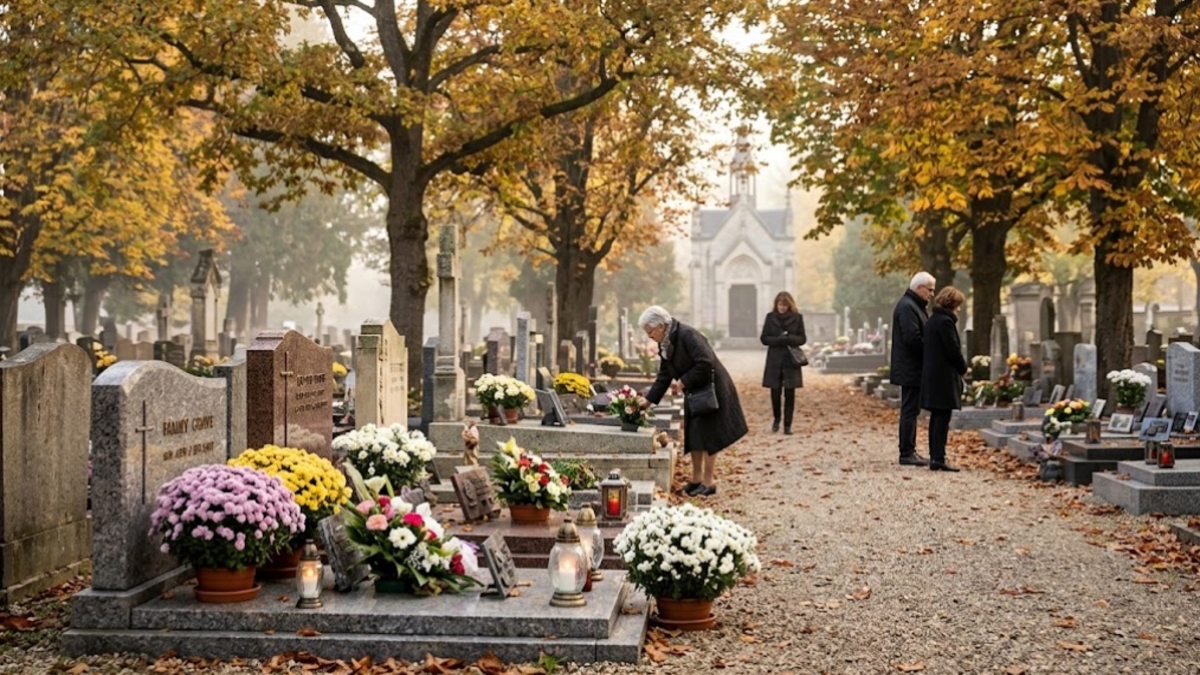
All Saints’ Day is observed on 1 November in many Christian communities around the world. The annual religious feast honours all saints, including those recognised by the Church and those whose names and lives are not widely known. It is also a public holiday in several countries, when families attend church services, visit cemeteries and remember loved ones.

Although often associated with the remembrance of the dead, All Saints’ Day has a distinct religious meaning. It celebrates the lives of saints and the Christian belief that holiness is not limited to a small number of famous religious figures.
All Saints’ Day, also known as the Feast of All Saints or All Hallows’ Day, is a Christian solemnity dedicated to all saints. In the Catholic Church, it honours those believed to have reached heaven, whether they have been formally canonised or not.

The feast includes well-known figures such as apostles, martyrs and other canonised saints, but its meaning extends beyond them. It also recognises people whose faith and good works may never have received public attention.
The date is 1 November in the Roman Catholic liturgical calendar. Many Anglican and other Christian traditions also observe the feast, although practices and calendars can differ between denominations.
The history of the feast developed over several centuries. Early Christians commemorated martyrs, sometimes together on a shared day, particularly when the number of people honoured made individual feast days impractical.
A major step in the development of the Western feast came when Pope Gregory III dedicated a chapel in St Peter’s Basilica in Rome in honour of all saints during the eighth century. The observance was later extended throughout the Western Church.
By the time of Pope Gregory IV in the ninth century, 1 November had become the date for the celebration across the Western Church.
The historical development was gradual, and the origins of the date are not explained by a single event. Today, however, 1 November is firmly established as All Saints’ Day in the Roman Catholic calendar.
All Saints’ Day and All Souls’ Day are closely connected, but they are not the same celebration.
| Celebration | Date | Main meaning |
|---|---|---|
| All Saints’ Day | 1 November | Honours all saints, known and unknown |
| All Souls’ Day | 2 November | Commemorates the faithful departed and encourages prayer for them |
In Catholic teaching, All Saints’ Day focuses on those believed to be in heaven. All Souls’ Day, observed the following day, is dedicated to prayer for the dead.
The two dates form part of a period of remembrance for many Christian families. Their proximity also explains why customs such as visiting cemeteries, leaving flowers and lighting candles are associated with both days in many countries.
Traditions vary according to country, local culture and religious denomination. Some communities place greater emphasis on church services, while others combine religious observance with family customs and public events.
In Italy, All Saints’ Day is a public holiday and an important date in the Catholic calendar. Many people attend Mass and visit family graves, bringing flowers and taking time to remember relatives who have died. Cemetery visits are especially common around the beginning of November, although they are also associated with All Souls’ Day.
In Spain, 1 November is known as Día de Todos los Santos. Families often visit cemeteries to clean and decorate graves with flowers, particularly chrysanthemums. Some regions also have traditional seasonal foods and local customs connected with the feast.
All Saints’ Day falls within Mexico’s wider Día de Muertos period, a cultural and religious tradition for remembering deceased family members. The observances include family gatherings, offerings, flowers and visits to cemeteries.
The traditions are related in the calendar but are not identical. Día de Muertos has its own history and combines Indigenous and Catholic influences. It should not be treated simply as another name for All Saints’ Day.
In countries including France, Austria, Belgium and parts of Germany, 1 November is also observed as a public holiday. Church attendance and cemetery visits are common in many communities, while the exact customs vary locally.
Not every Christian denomination observes the day in the same way, and it is not a public holiday everywhere. Whether people have a day off depends on national law, not solely on the religious calendar.
All Saints’ Day is a public holiday in a number of countries, particularly in parts of Europe and Latin America. In those places, government offices, schools and many businesses may close or operate reduced hours.
However, the holiday status is determined by each country. In the United States, for example, 1 November is a religious observance but not a federal public holiday. Catholic practice also differs by country: the United States Conference of Catholic Bishops lists All Saints’ Day among the holy days of obligation for Latin Rite Catholics, while noting that the obligation is abrogated when the date falls on a Saturday or Monday under the applicable decree.
USCCB
People should check local government calendars and individual service opening hours rather than assume that the day is a public holiday everywhere.
For Christians, the feast is more than a tribute to famous religious figures. It presents sainthood as a calling expressed through faith, compassion, courage and service to others.
The Vatican’s teaching and reflections on the solemnity emphasise the communion of saints: the spiritual bond between Christians on earth and those believed to be with God. The celebration therefore brings together remembrance, hope and the example set by people who lived lives of faith.
Vaticano+2
For people who do not observe the religious feast, 1 November may still be a meaningful moment to reflect on family history, cultural traditions and the ways communities remember those who came before them.
All Saints’ Day retains its significance because it connects religious belief with a universal human experience: remembering people whose lives have made a difference. Its customs may vary from one country to another, but the themes of remembrance, gratitude and community remain recognisable across cultures.
It is also worth preserving the distinction between All Saints’ Day and All Souls’ Day. Understanding their different meanings helps explain why the two dates are observed separately, even when family and cemetery traditions bring them closely together.
All Saints’ Day is observed on 1 November each year in the Roman Catholic Church and in many other Christian traditions.
It honours all saints, including those formally recognised by the Church and those who are not officially known or canonised.
No. All Saints’ Day, on 1 November, honours the saints. All Souls’ Day, on 2 November, is dedicated to the commemoration of the faithful departed.
In many countries, families visit cemeteries around 1 and 2 November to place flowers on graves, remember relatives and take part in religious or family traditions. The custom is particularly associated with the wider period around All Saints’ and All Souls’ Days.
It is a public holiday in several countries, but not worldwide. The status and impact on business opening hours depend on national and local rules.
The Holy See — Homily of Benedict XVI on the Solemnity of All Saints (2006) — Direct link
The Holy See — Angelus of John Paul II, 1 November 1997 — Direct link
The Holy See — Homiletic Directory — Direct link
United States Conference of Catholic Bishops — Canon 1246, §2: Holy Days of Obligation — Direct link
….Read More
Contact: info@abnnews.net