Physical Address
304 North Cardinal St.
Dorchester Center, MA 02124
Physical Address
304 North Cardinal St.
Dorchester Center, MA 02124

Religions News Around the World
Religions News Around the World
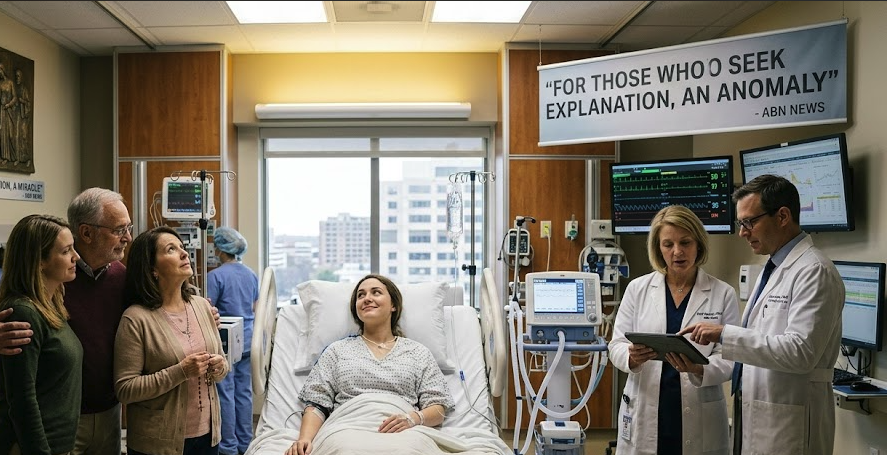
ABN NEWS: why do some people believe in miracles : In a dimly lit emergency room, a patient suddenly stabilizes and recovers from a medical crisis previously described by attending physicians as “extremely rare and terminal.” For the patient’s immediate family, who spent hours in unified prayer, this sudden reversal represents an undeniable divine intervention—a miracle. For the attending chief medical officer, the recovery is documented as an exceptional, anomalous physiological response to aggressive clinical therapy, even if current medical literature cannot fully chart every biochemical mechanism involved.

Between these two divergent explanations lies a profound, historically persistent inquiry that continues to partition modern societies: Why do some individuals interpret rare, highly impactful events as definitive evidence of transcendent intervention, while others flatly reject such frameworks, choosing to adhere strictly to naturalistic, empirical methodologies?
This investigative report does not attempt to validate the ontological reality of miracles, nor does it seek to disprove their occurrence. Instead, it systematically examines the diverse psychological, neurological, epistemological, and sociological mechanisms that cause human beings to arrive at radically different interpretations of the exact same physical event. By balancing rigorous scientific research, cognitive psychology, neurobiology, theological traditions, and historical philosophy, this analysis maps out where the scope of empirical testing ends and the domain of personal, subjective conviction begins.

To understand why human perspectives diverge so intensely over extraordinary occurrences, one must first analyze how different intellectual disciplines define the foundational concept of a “miracle.”
               [ EXTRAORDINARY PHYSICAL EVENT ]
                              |
       +----------------------+----------------------+
       |                                             |
[ RELIGIOUS FRAMEWORK ]                      [ SCIENTIFIC FRAMEWORK ]
       |                                             |
Assumes Metaphysical Agency                  Confined to Natural Law
       |                                             |
Definition: Divine Intervention              Definition: Unexplained Phenomenon
Within global religious frameworks, a miracle is conventionally defined as a physical event that is attributed to divine agency, transcending ordinary natural mechanisms, and carrying a distinct spiritual or moral message. In these traditions, the event is not viewed merely as a statistical anomaly, but as an intentional communication or act of benevolence from a higher power.
In the realm of formal philosophy, the parameters of this debate were deeply shaped by the 18th-century Scottish Enlightenment philosopher David Hume. In his influential work An Enquiry Concerning Human Understanding, Hume defined a miracle as “a violation of the laws of nature; and as a firm and unalterable experience has established these laws, the proof against a miracle, from the very nature of the fact, is as entire as any argument from experience can possibly be imagined.”
Hume’s core philosophical position was proposition-based: he argued that because regular, predictable natural laws are supported by billions of uniform human observations, the probability that a witness is mistaken, hallucinating, or fabricating a claim will always outweigh the probability that a uniform law of nature was genuinely broken. This framework established a secular baseline for modern skepticism, asserting that extraordinary claims demand an unprecedented caliber of cross-examined evidence.
From the perspective of contemporary empirical science, the word “miracle” does not exist as a valid technical descriptor or operational classification. The foundational framework of the scientific method is fundamentally limited to the observation, measurement, experimentation, and replication of physical phenomena within the natural universe.
Therefore, when modern researchers encounter a highly anomalous event—such as the spontaneous regression of an advanced malignant tumor—they do not categorize it as either a “miracle” or a “non-miracle.” Instead, the professional scientific community designates the occurrence as “currently unexplained according to existing biological paradigms.”
This distinction highlights a frequently misunderstood element of the science-versus-faith dialogue: science lacks the specialized philosophical tools required to definitively prove or disprove the existence of supernatural intervention. Because a miracle is defined by its religious proponents as originating from a transcendent source outside the material universe, it remains inherently insulated from empirical lab testing, which can only measure material cause and effect.
The cognitive architecture of the human brain plays a decisive role in how individuals process unexpected or high-stakes occurrences. Cognitive scientists emphasize that human beings do not interpret reality based solely on raw, unvarnished data; instead, information is immediately filtered through pre-existing psychological frameworks, past cultural experiences, and deep-seated evolutionary survival mechanisms.
[ Raw Anomalous Event ]
       │
       ▼
[ Human Cognitive Filters ] ──► (Pattern Recognition / Hyperactive Agency Detection)
       │
       ├─► Route A: Religious Framework ──► Meaning-Driven Interpretation (Miracle)
       │
       └─► Route B: Skeptical Framework ──► Law of Truly Large Numbers (Coincidence)
Evolutionary psychologists suggest that the human brain evolved to be highly sensitive to detecting intention and agency within its environment. This concept, pioneered by researchers in the cognitive science of religion, is known as the Hyperactive Agency Detection Device (HADD).
In ancestral environments, an individual who assumed that a rustling bush was caused by an intentional agent (such as a hidden predator) possessed a distinct survival advantage over an individual who assumed the noise was merely a random gust of wind. If the hunter was wrong, the cognitive cost of caution was minimal; if the hunter was right, they saved their own life.
As a consequence of this evolutionary trajectory, modern humans retain a powerful, default tendency to attribute conscious intent, design, and personal agency to complex, chaotic, or sudden environmental events. When an individual experiences an unexpected stroke of fortune or a narrow escape from mortality, HADD can instinctively prompt them to perceive the hand of a protective deity, rather than viewing the event as a meaningless byproduct of physical variables.
Philosopher Yujin Nagasawa, a prominent specialist in the philosophy of religion, has extensively documented that belief in extraordinary or miraculous interventions is a cross-cultural phenomenon that spans diverse historical eras, distinct religious orthodoxies, and even exists among individuals who describe themselves as non-religious or spiritually unaffiliated.
Nagasawa notes that cognitive science provides a fascinating explanation for this ubiquity: the human mind is neurologically optimized to remember, retell, and emotionally invest in narratives that contain “minimally counterintuitive” elements. A story where a standard natural law is slightly violated—such as a person walking away completely uninjured from a catastrophic plane crash—strikes a perfect cognitive balance. It is strange enough to command absolute attention and be passed down through generations, yet structured enough to remain deeply relatable to human survivors.
To understand the profound divide between those who embrace miracles and those who dismiss them, psychologists point to two well-documented cognitive phenomena that shape daily human judgment: Pattern Recognition and Confirmation Bias.
The human brain is an advanced pattern-seeking machine. While this capability allows humanity to master mathematics, language, and predictive sciences, it can also lead to apophenia—the human tendency to perceive meaningful connections or causal relationships between completely unrelated events.
For instance, if an individual engages in intense personal prayer for a sick relative, and that relative’s medical vitals show a dramatic improvement an hour later, the human brain naturally links these two events together in a direct line of cause and effect.
The Faith-Based Perspective: Interprets this sequence as a direct answered prayer, providing profound spiritual comfort and reinforcing personal theology.
The Skeptical Perspective: Views the sequence as a textbook example of post hoc ergo propter hoc (a logical fallacy asserting that because event Y followed event X, event X must have caused event Y). The skeptic attributes the recovery to delayed medication response, natural biological cycles, or pure statistical coincidence.
Confirmation bias is a universal cognitive shortcut that affects all human beings, regardless of their specific intellectual training, religious affiliations, or secular worldviews. It describes the subconscious tendency to seek out, remember, and prioritize information that validates an individual’s pre-existing convictions, while simultaneously ignoring, downplaying, or forgetting data that contradicts those beliefs.
In recent decades, the rapidly expanding field of neurotheology has sought to map out the specific neurobiological correlates of intense spiritual, mystical, and miracle-related experiences using advanced functional neuroimaging technologies.
                    [ NEUROLOGICAL CORRELATION ]
                                 |
         +-----------------------+-----------------------+
         |                                               |
[ BRAIN ACTIVATION ]                             [ PARADISE OF INTERPRETATION ]
         |                                               |
* Temporal Lobes (Mystical Unity)               * Secular: Epiphenomenon of Brain Chemistry
* Parietal Lobes (Orientation/Self)             * Religious: Neural Conduit for Divine Contact
Neuroscientists utilizing Functional Magnetic Resonance Imaging (fMRI) and Positron Emission Tomography (PET) scans have successfully observed distinct neurological shifts when individuals engage in intense prayer, deep meditation, or enter states of profound religious ecstasy.
Studies show a significant increase in neural activity within the frontal lobes, which are directly associated with focused attention and concentration. Concurrently, researchers routinely observe a sharp decrease in activity within the orientation association area of the superior parietal lobe. Because this specific region of the brain is responsible for maintaining the clear psychological boundary between the “self” and the external physical environment, its temporary suppression creates a powerful, intensely felt sensation of absolute unity, timelessness, and direct connection to a transcendent or cosmic reality.
However, the global scientific community maintains a highly cautious stance regarding the philosophical conclusions drawn from this neuroimaging data. Neurobiologists emphasize that identifying a specific physical location or chemical pathway in the brain for an experience does not automatically explain away or invalidate the objective reality of the experience itself.
For example, when an individual looks at a beautiful landscape, the visual cortex and the brain’s reward pathways light up predictably on an fMRI scan. This measurable neural activity does not mean the physical landscape is an illusion created by brain chemistry; it simply demonstrates that the human brain uses specific biological hardware to perceive and process external reality.
Consequently, modern neuroscience remains completely neutral on the ultimate meaning of spiritual states:
The Secular Thinker: May interpret these neural patterns as absolute proof that mystical experiences and perceptions of miracles are merely internal biophysical illusions—epiphenomena generated by fluctuating neurotransmitters.
The Religious Thinker: Can interpret these exact same neurological pathways as the sophisticated, divinely designed biological hardware required for the human consciousness to interface with a non-material spiritual reality.
Perhaps no arena hosts more intense debates over the boundaries of the miraculous than the field of clinical medicine, particularly regarding cases documented as spontaneous remissions or unexplained medical recoveries.
                 [ CASE OF SPONTANEOUS REMISSION ]
                                 |
         +-----------------------+-----------------------+
         |                                               |
[ CLINICAL INTERPRETATION ]                     [ THEOLOGICAL INTERPRETATION ]
         |                                               |
* "Idiopathic Recovery"                         * "Divine Intervention"
* Unknown Bio-Mechanisms                        * Answered Prayers
* Bound to Future Discovery                     * Transcendent Action
In oncology and complex immunology, there is a tiny, mathematically documented percentage of cases where advanced, aggressive diseases completely disappear without standard, logical therapeutic explanations. The medical community tracks these anomalies closely, publishing them in peer-reviewed journals as instances of “idiopathic regression.”
When an individual with terminal organ failure or widespread metastasis experiences a total, rapid restoration of health, the immediate environment fractures into two distinct interpretive camps:
The Family and Faith Community: Views the recovery as a profound manifestation of divine mercy, often linking the physical cure directly to organized prayer chains, spiritual pilgrimages, or specific religious blessings.
The Medical Establishment: Attributes the recovery to highly complex, poorly understood physiological mechanisms. These can include a sudden, hyper-aggressive activation of the patient’s own auto-immune system, unexpected genetic mutations within the pathogens themselves, or delayed synergistic interactions of previous medications.
The history of medicine proves that what is considered completely unexplainable in one century frequently becomes standard, textbook science in the next. For generations, the sudden, complete survival of patients infected with specific lethal bacterial strains was viewed by medieval societies as a direct miracle. Following the discovery of microorganisms, the development of immunology, and the accidental isolation of penicillin by Alexander Fleming, these recoveries were demystified, moving firmly from the realm of the supernatural into predictable biochemical reality.
Modern epidemiologists and medical researchers emphasize that the phrase “medically unexplained” should never be used as a definitive synonyms for a miracle. To a scientist, the term simply represents a temporary boundary of current human knowledge. It serves as an open invitation for deeper biochemical research, rather than a permanent declaration that a natural explanation does not exist.
Conversely, religious philosophers argue that even if a complete physical or biological mechanism is eventually discovered to explain a healing, that discovery does not automatically eliminate a religious interpretation. Many theologians view the natural laws of the universe themselves—including the intricate, self-healing capabilities of human biology—as the primary, organized mechanism through which a higher power orchestrates outcomes.
A common misconception among secular critics is that religious organizations immediately and uncritically validate every reported claim of a supernatural event. In reality, several major global religious institutions utilize highly structured, deeply conservative investigative protocols that rival corporate or legal investigations in their skepticism.
The most thoroughly documented example of institutional rigor in the investigation of reported miracles occurs within the Roman Catholic Church, specifically through the Lourdes Medical Bureau (Bureau Médical de Lourdes) in France. Since the 19th century, millions of pilgrims have visited the sanctuary of Lourdes seeking physical cures for severe, chronic, and terminal illnesses.
[ Patient Claims Healing at Lourdes ]
                 │
                 ▼
[ Lourdes Medical Bureau Investigation ] (Independent, Multidisciplinary Doctors)
                 │
                 ├─► Fails Criteria ──► Dismissed as Natural Recovery
                 │
                 ▼ (Must pass: Certain Diagnosis, Immediate, Permanent, Complete Cure)
[ International Medical Committee of Lourdes ] (Rigorous Peer-Review)
                 │
                 ▼ (Certified as "Medically Unexplained according to current science")
[ Diocesan Canonical Commission ] (Theological Review)
                 │
                 ▼
[ Official Decree of Miracle by Bishop ]
When a pilgrim claims an extraordinary, sudden cure, the Church does not issue an immediate decree. Instead, the case is handed over to a permanent, independent medical bureau composed of international physicians, oncologists, and neurologists—many of whom are non-religious or non-Catholic. To even be considered for evaluation, a case must meet a series of strict, classical scientific benchmarks established by Cardinal Prosper Lambertini (later Pope Benedict XIV) in the 18th century:
Definitive Diagnosis: The original disease must be clearly documented, severe, and objectively proven through robust clinical data (X-rays, biopsies, lab reports) before the reported cure.
Prognosis: The illness must be categorized by modern medical standards as terminal, irreversible, or highly resistant to standard clinical therapies.
Immediacy: The physical healing must occur instantaneously, or within an exceptionally brief window of time that defies standard biological recovery speeds.
Completeness: The regression of the symptoms and underlying pathology must be absolute, leaving no trace of the original chronic illness.
Permanence: The patient must remain entirely free of the disease for years, undergoing regular, mandatory follow-up examinations by independent physicians.
Out of more than 7,000 formal physical healings submitted to the Lourdes Medical Bureau since its inception, only 70 cases have successfully survived this intense, multi-year scientific screening to be officially recognized by the Church as genuine miracles. The remaining thousands of cases are dismissed, categorized as standard medical remissions, or classified as lacking sufficient initial documentation to rule out natural causes.
This extreme institutional caution demonstrates that even within deeply faith-based organizations, a clear operational separation is maintained between unverified subjective claims and highly verified anomalies that defy contemporary scientific paradigms.
To provide a comprehensive view of this societal division, it is essential to map out how different worldviews structure their foundational approach to extraordinary events.
One of the most powerful intellectual frameworks utilized by statisticians, mathematicians, and secular thinkers to explain reported miracles without relying on supernatural mechanisms is the Law of Truly Large Numbers.
[ Population Size: Millions of People ]
                  ×
[ Daily Events: Millions of Interactions ]
                  ▼
[ Microscopic Probabilities (1 in a Million) ] ──► Guaranteed to Happen Regularly
Formulated by mathematicians such as Persi Diaconis and Frederick Mosteller, the Law of Truly Large Numbers states that with a large enough sample size, any highly improbable, seemingly impossible coincidence is mathematically guaranteed to happen eventually.
To illustrate this principle clearly, consider an event that has an incredibly low probability of occurring—such as a one-in-a-million chance. Under normal circumstances, an individual would view this event as practically impossible. However, on a planet inhabited by approximately 8 billion individuals, each experiencing multiple events and environmental interactions every single day, a one-in-a-million occurrence will happen roughly 8,000 times per day across the globe.
When one of these ultra-rare statistical anomalies happens to a specific individual—such as randomly running into a childhood friend in a remote village halfway across the world, or surviving a lightning strike completely unharmed—the person experiencing it naturally struggles to view the event as a meaningless mathematical data point. The intense personal shock of the event creates a powerful illusion of destiny, meaning, and intentional design, prompting a religious or spiritual interpretation, even though the broader mathematical landscape reveals the event as an absolute statistical certainty over time.
In the modern digital age, the speed at which accounts of extraordinary occurrences spread across human societies has accelerated dramatically, deeply impacting public perception and further widening the gap between belief systems.
Sociologists and media analysts note that digital algorithms are optimized to prioritize user engagement, which is driven primarily by intense emotional content, awe, surprise, or existential relief. A headline detailing a dramatic, medically impossible recovery or a divine image appearing in a natural formation can garner millions of views, shares, and comments within hours.
[ Anomalous Event Occurs ]
           │
           ▼
[ Social Media Amplification ] (High Engagement, High Emotion)
           │
           ├─► Faith Communities: Immediate validation, viral sharing without context.
           │
           └─► Skeptical Communities: Aggressive deconstruction, debunking, polarization.
In this rapid information ecosystem, the complete contextual details of an event—such as the preceding medical therapies, alternative logical explanations, or subsequent retractions—are frequently stripped away to preserve a compelling, high-impact story.
For Devout Believers: This constant, rapid exposure to unverified global reports creates an eco-chamber effect, giving the impression that supernatural interventions are occurring constantly around them, thereby lowering their threshold for skepticism.
For Secular Skeptics: This same relentless influx of poorly documented, sensationalized online claims often deepens their cynicism. It reinforces their view that all accounts of miracles are merely the products of digital misinformation, cultural naivety, or deliberate clickbait designed to exploit human emotion.
Ultimately, the enduring global debate over why some people experience miracles while others see only coincidence cannot be reduced to a simple binary conflict between intelligence and ignorance, or science and superstition.
As this investigation demonstrates, the divide is rooted in fundamentally different, highly sophisticated epistemological frameworks. The individual who perceives a miracle is operating from an interpretive framework that prioritizes personal, subjective experience, universal meaning, and the possibility of a non-material reality that actively interfaces with human history. Conversely, the individual who rejects the miracle is operating from an empirical framework that prioritizes objective verifiability, systematic testing, strict logical deduction, and a reliance on natural laws.
Because science remains methodologically confined to the natural universe, and faith remains ontologically anchored in the transcendent, a final, definitive societal consensus on extraordinary events is highly unlikely to occur. Perhaps the true value of analyzing this profound cognitive divide lies in its ability to foster deep intellectual humility on both sides. It challenges secular thinkers to recognize the deep-seated cognitive and emotional needs that drive humanity toward meaning, while encouraging religious communities to respect the vital, rigorous criteria of empirical testing that prevents human knowledge from sliding backward into uncritical superstition. In the end, when faced with the grand, unexplained anomalies of our universe, humanity’s divergent interpretations serve as a striking testament to the sheer complexity of the human mind and its perpetual quest to decipher its place in the cosmos.