Physical Address
304 North Cardinal St.
Dorchester Center, MA 02124
Physical Address
304 North Cardinal St.
Dorchester Center, MA 02124
Religions News Around the World
Religions News Around the World
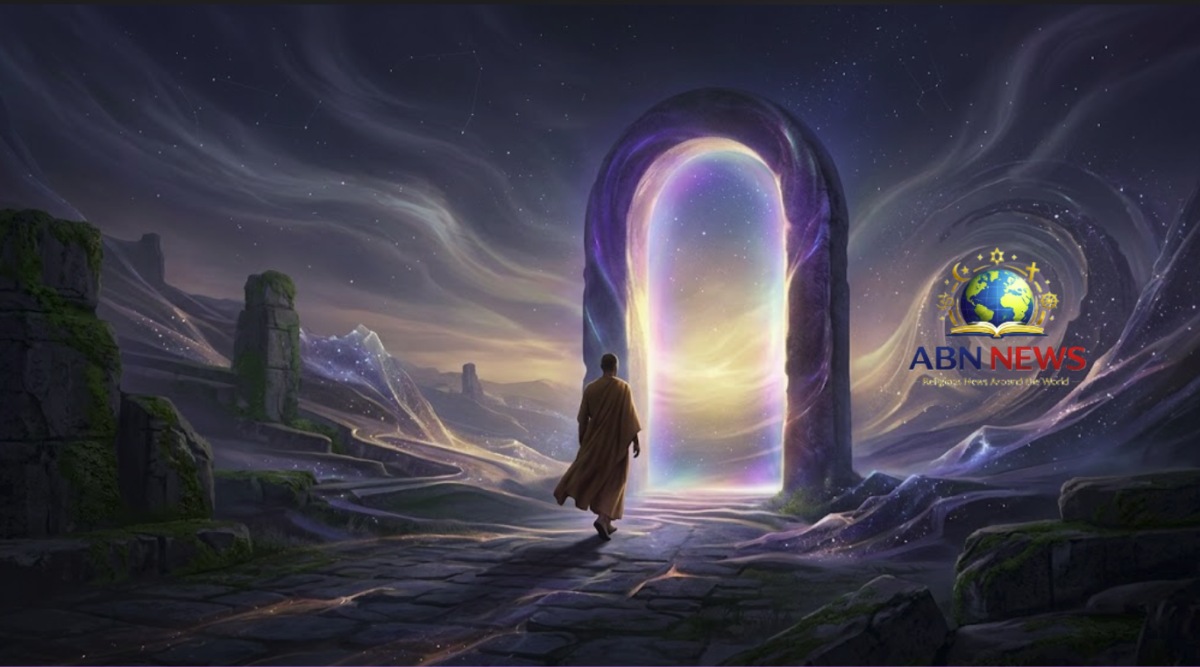
ABN NEWS : Life after death stands as one of humanity’s oldest and most profound mysteries, captivating minds across generations. Ever since early civilizations began burying their deceased with prized possessions, communities have sought to understand what lies beyond the final breath. While biological mortality is an inescapable certainty, the spiritual interpretations of the soul’s journey vary dramatically across different cultures and belief systems. Have you ever wondered how diverse global traditions answer this ultimate question?

To comprehend these diverse systems, we must first look at what the transition of death actually signifies to humanity. Across cultures, the conclusion of physical life is rarely viewed as an absolute end of consciousness. Instead, historical societies treated it as a boundary line or a transformation of energy.
This universal focus serves a vital psychological and social purpose for human communities. It provides a moral framework that keeps societies stable, offering comfort to those experiencing grief and loss. By studying these frameworks, we notice that humanity constantly seeks meaning that extends far beyond physical existence.

The process of moving from the physical world to the next state follows distinct theological patterns. In some traditions, the transition is immediate, sending the conscious self straight to its final destination based on earthly deeds. Other systems rely on a slower, progressive journey where the spirit must navigate intermediate states before achieving rest.
According to extensive global demographic studies, these mechanisms generally depend on how a culture views time itself. Linear cultures look toward a definitive final judgment day that permanently decides a person’s fate. Conversely, cyclical cultures view the spirit as an enduring traveler that constantly inhabits new physical bodies to learn lessons.
The monotheistic traditions originating in the Near East share a linear view of time, where physical life happens exactly once. Consequently, this single lifetime carries immense weight, as every choice directly determines an individual’s long-term spiritual outcome.
In Islam, death leads to a period of waiting in the grave before an ultimate physical and spiritual resurrection occurs. Individuals face a divine judgment that evaluates their faith and actions, granting entry into paradise or assigning them to hellfire.
Roman Catholicism builds upon a similar structure of resurrection and final judgment but includes a temporary state called purgatory. This realm allows souls to undergo necessary spiritual purification before entering the presence of the Divine. Eastern Orthodoxy shares the focus on eternal resurrection but views heaven and hell as different psychological experiences of God’s infinite love. Meanwhile, Protestantism centers its view entirely on individual faith, asserting that salvation relies on divine grace rather than human works.
Orthodox Judaism maintains a traditional belief in a future world to Come along with a physical resurrection of the dead. Shifting toward more symbolic views, Conservative Judaism offers flexible interpretations, focusing on the immortality of the soul rather than physical rebirth. Reform Judaism places minimal emphasis on any literal afterlife, choosing instead to focus on the moral legacy left behind on earth.
Branching into distinct theological spaces, the Baha’i Faith describes the afterlife as a continuous, boundless journey through spiritual spheres. The Druze view the soul as completely immortal, experiencing an immediate and continuous transmigration into a newborn human body. Similarly, Mandaeanism outlines a detailed journey where the soul passes through various testing stations before joining the ultimate World of Light.
The major spiritual systems of India approach the post-mortem journey through a cyclical lens rather than a linear one. Within these frameworks, the physical body acts as a temporary vessel for an eternal essence that moves through multiple lifetimes.
Hinduism operates heavily on the law of cause and effect, where actions dictate a soul’s continuous cycle of rebirth. This ongoing journey only ceases when the individual achieves complete spiritual liberation, allowing the soul to merge back into the source.
Buddhism modifies this concept by focusing on the continuity of consciousness shaped by mental patterns rather than an unchanging soul. The ultimate objective is reaching a state of complete liberation from suffering, which brings an end to involuntary rebirths.
+--------------+------------------------------------+-----------------------------------+
| Religion     | Primary Transition Mechanism       | Ultimate Spiritual Goal           |
+--------------+------------------------------------+-----------------------------------+
| Hinduism     | Reincarnation via Karma            | Liberation and Cosmic Union       |
| Buddhism     | Rebirth of Conscious Tendencies    | Nirvana and Cessation of Rebirth  |
| Jainism      | Transmigration of Karma-bound Soul | Complete Purification of the Soul |
| Sikhism      | Soul Cycles Through Various Forms  | Merging with the Divine Creator   |
+--------------+------------------------------------+-----------------------------------+
| Ayyavazhi    | Evolution Past Material Bounds    | Return to Primeval Source         |
+--------------+------------------------------------+-----------------------------------+
Jainism presents a precise view where the soul accumulates physical karmic particles that weigh it down through various transmigrations. By practicing strict non-violence and self-discipline, a soul sheds this matter and ascends to a state of infinite knowledge.
Sikhism views the soul as a spark of the divine creator that undergoes numerous lifetimes across various living forms. Liberation arrives when a person overcomes ego, enabling the spirit to break the cycle and merge into God. In a similar manner, Ayyavazhi teaches that the spirit eventually evolves past material constraints to return to its original divine essence.
In East Asian traditions, the boundary separating the living from the dead remains highly interactive and fluid. Death does not remove individuals from the family structure; instead, it shifts their status into a protective ancestral role.
Taoism views death as a natural transformation of cosmic energy where the spirit moves through different celestial environments. Confucianism chooses to bypass deep speculation about the next world, focusing instead on honoring ancestors through earthly rituals.
In Japan, Shinto teaches that the spirits of the deceased remain embedded within the natural landscape as protective guardians. Tenrikyo presents the unique view that our physical bodies are borrowed from God, meaning death is simply returning the vessel to prepare for a fresh, clean rebirth. Moving toward a synthesis of ideas, Cao Dai describes a structured path of spiritual evolution where souls climb multiple cosmic planes.
According to insights gathered by ABN NEWS, traditional indigenous systems place immense value on maintaining active communication with the departed. Bon practitioners in Tibet map out a series of intermediate states that a spirit must successfully navigate over several weeks.
Falun Gong describes a process of spiritual refinement where advanced cultivation allows the soul to ascend to higher dimensions. In Mongolian Shamanism, the human spirit is believed to split at death, with portions staying near the earth and others returning to the sky. Siberian Shamanism mirrors this view, describing a rich underworld where spirits reside alongside ancestral helpers. Korean traditional beliefs center on the idea that ancestors remain active family members who require regular honor to stay at peace.
The emergence of modern religious movements has introduced highly varied, specialized interpretations of the human spirit’s destiny. These contemporary views frequently blend ancient cyclical concepts with Western ideas of individual progress.
The Yoruba faith focuses on the transition of consciousness into an ancestral realm, allowing spirits to periodically return to guide their families. Haitian Voodoo views the human soul as dual-natured; upon death, one part returns to the cosmic source while the other joins ancestral spirits beneath sacred waters.
Ifa practices outline a structured cycle where spirits review their original destiny before returning to the physical world through family lines. The Zulu religion emphasizes that the deceased transform into powerful ancestral guides who actively protect their living descendants. Similarly, the Akan tradition describes the soul crossing a spiritual river to enter the land of the elders, maintaining a continuous bond with the community.
Mormonism outlines a detailed heavenly structure consisting of three distinct degrees of glory, where placement depends on earthly commitments. Jehovah’s Witnesses believe in a future resurrection where the majority of believers will live on a restored earth, while a small group receives a heavenly calling.
[Earthly Life] ---> [Physical Death] ---> [Consciousness Persists]
                                                    |
         +------------------------------------------+------------------------------------------+
         |                                          |                                          |
[Linear: Judgment / Rest]              [Cyclical: Rebirth / Evolution]           [Ancestral: Guarding the Living]
Scientology treats the spiritual self as an immortal entity that moves through consecutive lifetimes in different physical forms. Unitarian Universalism deliberately avoids a fixed dogma, leaving members free to view the afterlife as literal, symbolic, or non-existent. Modern Spiritualism focuses heavily on proving that human consciousness survives death, using mediumship to communicate with spirits on higher planes. Finally, Wicca describes a peaceful, intermediate resting area known as the Summerland, where souls rest and rejuvenate before their next incarnation.
Examining these 30 diverse perspectives reveals that the desire for continuity is a foundational piece of the human experience. Whether a culture relies on a final judgment, a cycle of rebirth, or ancestral integration, every system tries to address our deepest existential questions.
These beliefs do far more than offer comfort; they actively shape daily ethics, art, law, and social structures across the globe. Ultimately, exploring these diverse traditions shows that while human cultures use different narratives, they share a universal hope that our individual stories continue long after the heart stops beating.
What is the most widely held belief about the afterlife globally?
The concept of divine judgment followed by reward in heaven or punishment in hell is the most common view, largely due to the global populations practicing Islam and Christianity.
Which religious traditions base their afterlife views on reincarnation?
Reincarnation and rebirth serve as core concepts in Hinduism, Buddhism, Jainism, Sikhism, the Druze faith, and several modern spiritual movements.
Do all international religions require belief in a literal soul?
While the vast majority of traditions assume a spiritual element continues after death, systems like Buddhism view it as a continuation of changing consciousness rather than a fixed soul.
Are there major religious frameworks that do not emphasize the afterlife?
Yes, philosophies such as Confucianism and Reform Judaism focus almost entirely on ethical living and historical legacy within the physical world.… Read more
Contact: info@abnnews.net