Physical Address
304 North Cardinal St.
Dorchester Center, MA 02124
Physical Address
304 North Cardinal St.
Dorchester Center, MA 02124

Religions News Around the World
Religions News Around the World
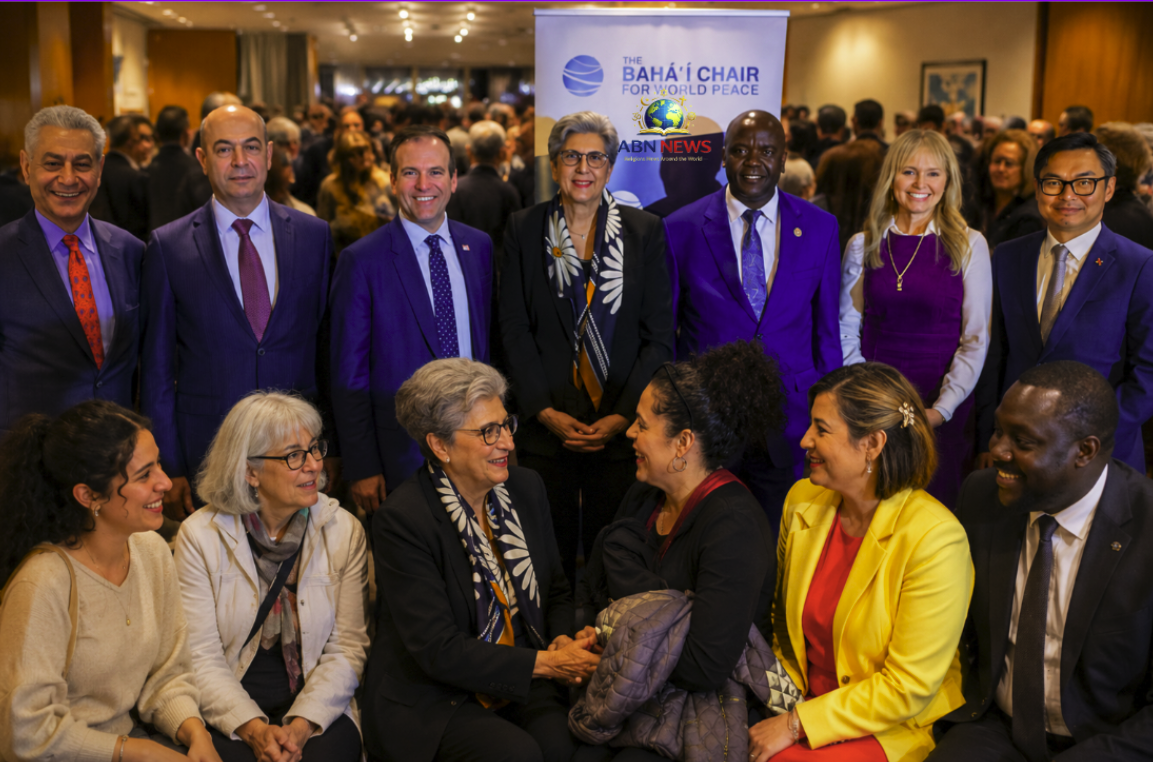
Washington, D.C. – ABN NEWS: Exploring diversity as a path to lasting peace has emerged as a critical necessity in an era defined by deep geopolitical fractures and cross-border security challenges. As modern societies face multiplying conflicts, the conventional approach often forces nations to look inward, relying solely on isolated historical experiences to address systemic tensions. However, a major international forum recently held at the Library of Congress in Washington, D.C., challenged this insular mindset by gathering prominent global leaders to reframe cultural and religious differences as indispensable assets for global stability. Can international cooperation truly thrive when global entities actively shift their focus from managing divisions to embracing collective human identity?

This high-level symposium, co-hosted by the prestigious Bahá’í Chair for World Peace at the University of Maryland, brought together distinguished diplomats, educators, and policy specialists from Azerbaijan, Bahrain, Cambodia, Kenya, and the United States. According to comprehensive reports received by ABN NEWS, the overarching objective was to analyze how diverse regional contexts approach the universal challenges of security, social harmony, and peaceful coexistence. By examining the structural and moral foundations required to sustain diverse societies, the forum provided a powerful blueprint for long-term international peace that moves far beyond the mere absence of military conflict.
At the core of the international forum’s deliberations was the foundational principle of unity in diversity—a conceptual framework asserting that humanity’s collective progress is fundamentally enriched, rather than hindered, by its cultural, linguistic, and religious differences. This principle offers a radical departure from traditional political strategies that treat multiculturalism as an administrative challenge or a source of societal friction. Instead, it positions human differences as a vital resource for establishing resilient, cohesive, and equitable global systems.

However, international experts at the event emphasized that diversity alone is insufficient to guarantee structural stability. Without a robust, shared human identity to anchor a multicultural society, superficial differences can easily be exploited, hardening into systemic political and social divisions.
A critical theme emphasized during the panel discussions was that genuine unity must never be confused with uniformity. True social integration does not require individuals, ethnic groups, or nations to surrender their unique cultural identities or historical heritages. Instead, a sustainable global landscape demands a sophisticated form of social harmony where distinct identities coexist within a larger, unified framework dedicated to the common good.
The international panel firmly rejected the passive definition of peace as simply the interim period between wars. True, lasting peace requires the active presence of structural justice, the uncompromising protection of universal human rights, and the deliberate creation of social harmony. To achieve this, modern global institutions require fresh courage to reform outdated societal structures, ensuring that international policies reflect the intrinsic oneness of the human race.
+--------------------------+-------------------------------------+-----------------------------------+
| Country Representation   | Primary Peacebuilding Focus          | Core Institutional Mechanism      |
+--------------------------+-------------------------------------+-----------------------------------+
| Azerbaijan               | International & Interreligious Coop.| Cross-Border Policy Integration   |
| Kenya                    | Youth Development & Social Harmony  | Localized Youth Peace Clubs       |
| Cambodia                 | Trust Building & Global Missions    | Diplomatic Communication & UN Care|
| Bahrain                  | Cultural Fabric & Shared Humanity   | Heritage Preservation & Dialogue  |
+--------------------------+-------------------------------------+-----------------------------------+
| United States            | Structural Justice & Human Rights   | Academic & Institutional Advocacy |
+--------------------------+-------------------------------------+-----------------------------------+
As the pace of globalization accelerates at an unprecedented rate, the coexistence of varied peoples, languages, and belief systems has transcended traditional national borders. Panelists representing the State Committee on Religious Associations of the Republic of Azerbaijan highlighted that this rapid integration has fundamentally reshaped the global political and economic landscape.
Consequently, maintaining peace is no longer an isolated domestic policy but an international mandate requiring rigorous cross-border cooperation. Azerbaijan’s strategic perspective demonstrates that in a highly interconnected world, cultivating interreligious and intercultural dialogue is a prerequisite for regional and global security.
Fostering a peaceful society requires long-term investments in the moral development of future generations. Representatives from the Embassy of Kenya to the United States detailed their nation’s extensive efforts to integrate moral qualities and conflict resolution mechanisms directly into the academic curriculum. The goal is to nurture a holistic individual capable of embracing peace from early childhood.
A practical example of this strategy is the widespread establishment of localized “peace clubs” throughout Kenyan communities. These clubs deliberately bring young students together across historical lines of tension to engage in sustained, structured conversations. This methodology operates on a profound yet straightforward conviction: when children learn to communicate and understand one another at an early age, they naturally develop the behavioral patterns required to live together harmoniously as adults.
Building sustainable peace across painful histories of internal and external conflict requires immense patience, sincerity, and strategic communication. The Royal Embassy of Cambodia shared a compelling historical trajectory, noting that Cambodia—which once hosted extensive United Nations peacekeeping forces following decades of severe conflict—has successfully transformed into a nation that actively contributes peacekeepers to vital missions worldwide.
This remarkable transition underscores the reality that resolving deep-seated regional tensions cannot be achieved through military force or political coercion. Instead, open channels of diplomatic communication, paired with genuine transparency, remain the only viable mechanisms for transforming post-conflict societies into active guardians of international security.
The symbolic and cultural dimensions of heritage play an invaluable role in reminding societies of their interconnectedness. Speaking on behalf of Bahrain’s diplomatic mission to the United States, representatives shared a poignant metaphor from Bahrain’s famous Beit Al Quran museum. The institution prominently displays hand-woven carpets sourced from diverse nations around the globe, hanging seamlessly side by side.
This powerful visual display serves as an enduring reminder of the intricate, collective fabric that binds humanity together. Just as distinct threads combine to form a resilient and beautiful textile, diverse cultures intersect to create the universal human experience, proving that artistic and historical heritage can inspire modern diplomatic solidarity.
Achieving world peace requires dedicated institutional frameworks capable of translating philosophical principles into actionable public policy. Organizations like the Bahá’í Chair for World Peace play a vital role in this ecosystem by bridging the gap between rigorous academic research and international diplomacy. By providing a neutral, high-level platform for global leaders, these institutions facilitate the exchange of innovative peacebuilding methodologies.
According to insights gathered by the research team at ABN NEWS, forums that utilize universal human metaphors—such as viewing humanity as leaves on branches of the same tree—help policymakers transcend immediate national biases. This collaborative approach encourages leaders to prioritize collective global well-being over short-term political advantages.
[Academic Research] ➔ [Institutional Advocacy] ➔ [Diplomatic Dialogue] ➔ [Actionable Public Policy]
When global institutions successfully reframe differences as a source of strength rather than a threat, public policy undergoes a significant shift. Governments move away from defensive assimilation strategies and transition toward inclusive governance models. This shift ensures that minority populations, diverse cultural groups, and religious communities are integrated into the national fabric as vital contributors to societal resilience.
A cornerstone of any successful peacebuilding framework is the unyielding protection of human rights and social justice. Institutional advocates emphasize that international stability is impossible to maintain if human dignity is compromised. Therefore, international forums serve as crucial accountability mechanisms, reminding participant nations that domestic harmony is directly linked to how effectively a state protects its most vulnerable populations.
Integrate Moral Education: Embed structured conflict resolution, empathy training, and moral development programs within national school curricula from early childhood.
Establish Localized Inter-Group Forums: Create state-supported community initiatives, similar to Kenya’s peace clubs, to facilitate dialogue between historically divided groups.
Prioritize Diplomatic Communication: Rely strictly on bilateral and multilateral diplomatic dialogue rather than military or economic coercion to resolve border and cultural disputes.
Leverage Cultural Diplomacy: Utilize national museums, historical sites, and artistic heritage to highlight the shared historical bonds and common values of humanity.
Support Academic Research on Peace: Partner with specialized university chairs and international foundations to develop data-driven strategies for social cohesion.
The long-term security of the international community depends entirely on its capacity to transition toward a genuinely inclusive model of global governance. As transnational challenges like economic migration, environmental shifts, and digital interconnectedness accelerate, the isolationist approach to national security becomes increasingly obsolete. The insights generated at the Library of Congress emphasize that the only viable path forward is the deliberate cultivation of a shared human identity.
By investing heavily in moral education, protecting universal human rights, and maintaining open channels of sincere communication, the global community can successfully navigate the complexities of the modern era. Embracing unity in diversity ensures that societies remain resilient against division, laying a solid foundation for an era of unprecedented international cooperation. Moving forward, ABN NEWS will continue to monitor and report on these essential diplomatic and academic advancements as nations work together to build a more just and peaceful world.
What was the primary objective of the forum held at the Library of Congress? The forum aimed to gather international leaders and panelists from diverse nations to explore how different regional contexts approach questions of peace, security, and social harmony through the principle of unity in diversity.
How does moral education contribute to long-term national stability? Moral education equips young individuals with essential conflict resolution skills, empathy, and the capacity to live harmoniously with others. By teaching children to communicate across cultural lines from an early age, nations can prevent social divisions from escalating into future conflicts.
What is the difference between unity and uniformity in a diverse society? Unity involves distinct cultural, ethnic, or religious groups coexisting harmoniously within a shared human identity without surrendering their unique heritages. Uniformity, conversely, demands the elimination of differences and the forced assimilation of identity, which often leads to social friction.
How did Cambodia transform from a host of peacekeepers to a contributor? Through patient trust-building, sincere communication, and a commitment to post-conflict reconstruction, Cambodia successfully stabilized its domestic environment. This enabled the nation to transition into a proactive contributor of peacekeeping forces to global United Nations missions.