Physical Address
304 North Cardinal St.
Dorchester Center, MA 02124
Physical Address
304 North Cardinal St.
Dorchester Center, MA 02124

Religions News Around the World
Religions News Around the World
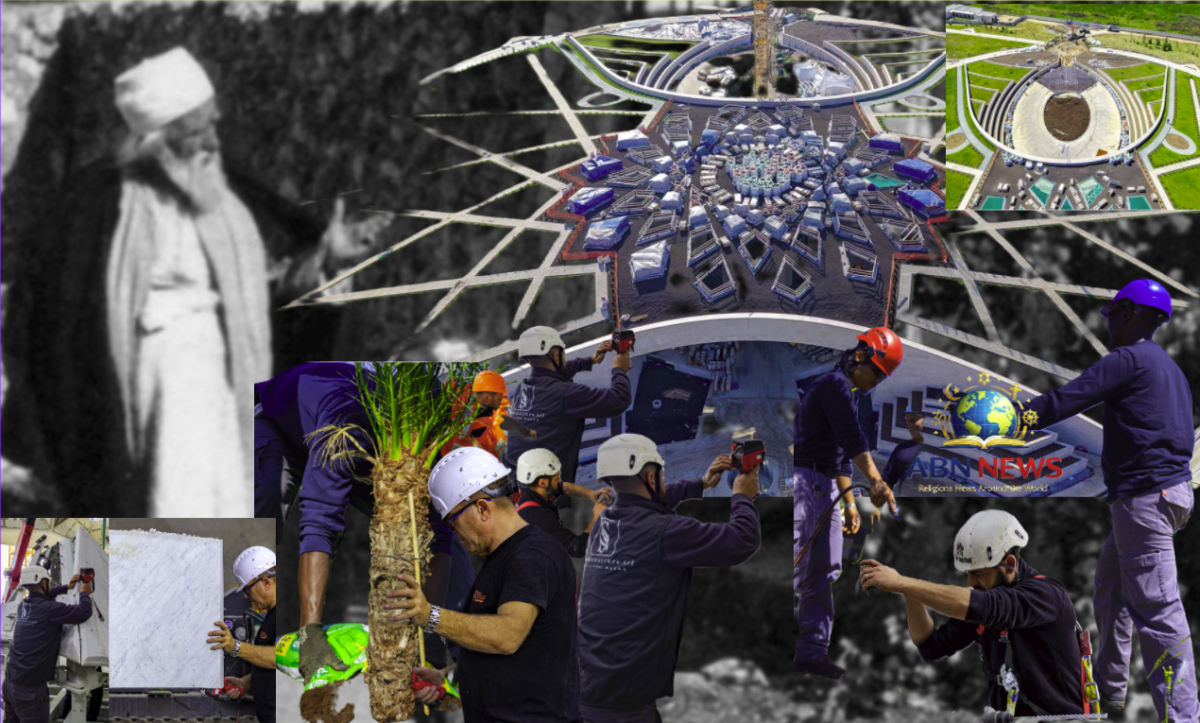
ACRE – ABN NEWS: The complex phases of the Shrine of ‘Abdu’l-Bahá construction have advanced into an intensive period of simultaneous engineering milestones across the historic site. Builders and specialized artisans are currently executing highly intricate tasks on the central edifice, transforming raw materials into a timeless monument of sacred architecture. This phase marks a transition from heavy structural engineering to delicate, high-precision finishings that require absolute geometrical accuracy. As heavy machinery makes way for artisan craftsmanship, the ultimate form of this unique edifice is steadily coming into view for observers worldwide. Have you ever wondered how modern engineering techniques are combined with ancient stonemasonry to build a spiritual monument intended to stand for centuries?

The sacred edifice functions as a permanent, purpose-built resting place designed to honor a figure of profound global spiritual significance. Architecturally, the design breaks away from conventional patterns by utilizing an open, organic structure that seamlessly blends with the surrounding landscape. The heart of the design features a massive, intricate overhead trellis that allows sunlight to filter through geometric patterns, casting dynamic shadows on the plaza below.
This layout does not merely serve an aesthetic function; it embodies structural principles of light, openness, and accessibility. According to architectural assessments obtained by the team at ABN NEWS, the structure represents a pinnacle of contemporary sacred geometry. Every mathematical angle, column curve, and structural pathway is designed to evoke a profound sense of serenity and contemplation for incoming visitors.

The physical footprint of the project integrates sacred spaces with expansive public plazas and terraced gardens. The entire site is engineered to handle microclimatic variations in the region, ensuring that the structural materials withstand environmental wear over generations. By prioritizing longevity and specialized material selection, the project sets a new benchmark for modern spiritual monuments.
The execution of the Shrine of ‘Abdu’l-Bahá construction relies on an unprecedented combination of pre-fabricated components and on-site artisanal assembly. Workers are currently focusing their efforts on the marble cladding of the main trellis and the support columns that anchor the central edifice. Each single column requires an incredibly meticulous installation process, utilizing five distinct pieces of premium marble.
To ensure visual harmony and structural stability, these marble pieces are arranged sequentially, placing the largest, most robust segments at the base and tapering up to smaller segments at the top. This technique creates an optical illusion of greater height while distributing physical weight efficiently. Artisans use custom spider lifts to gently extract the marble slabs from their protective wooden crates, positioning them with millimeter-level precision around the structural concrete cores.
[Column Apex]     --->  Piece 5: Smallest, lightweight marble segment
                  --->  Piece 4: Mid-upper structural segment
                  --->  Piece 3: Center balancing segment
                  --->  Piece 2: Lower support segment
[Column Base]     --->  Piece 1: Largest, high-density marble base
Simultaneously, the curved interior walls of the central edifice are being assembled like an expansive, three-dimensional mosaic. These intricate interior walls are framed using complex components that were precisely cut, measured, and prepared years in advance. This pre-construction precision eliminates the margin for error during final assembly, ensuring that the complex, sweeping curves match the original architectural blueprints perfectly.
The folding walls running along the central plaza are undergoing a detailed transformation using select local stone panels. These walls fold at precise mathematical intervals to support the weight of the overhead trellis while creating hidden alcoves for future visitors.
The application of local stone requires specialized masonry teams to hand-select and match the color gradients of each panel. This careful selection ensures that when sunlight strikes the facade, the stone reflects a uniform, warm glow that harmonizes with the regional environment.
A major upcoming phase involves the installation of massive glass panels designed to enclose the central edifice without obscuring the natural light. The tallest of these custom-fabricated glass panels stands at an impressive height of more than eleven meters.
Status: Fabricated, tested, and safely delivered to the secure on-site storage facilities.
Next Steps: A specialized international installation team is scheduled to deploy on-site to handle the delicate placement.
Purpose: To provide total weather protection while maintaining complete visual transparency into the sacred central plaza.
Engineering Note: The frames are embedded with flexible joints to absorb seismic vibrations and high wind loads near the coast.
The removal of the primary construction crane from the south plaza marks one of the most significant operational turning points in recent history. For years, this heavy crane served as the central axis for moving thousands of tons of reinforced steel and heavy concrete across the site. As ABN NEWS has learned from engineering logs, dismantling this massive machine indicates that the heavy structural pouring phase is officially complete.
With the crane gone, workers have finally gained unrestricted access to the ground planes of the south plaza. This opening allows teams to install reinforcing steel grids for the concrete topping, paving the way for the final layer of artisan paving stones. The departure of heavy industrial machinery allows the true, elegant silhouette of the monument to dominate the landscape for the very first time.
Furthermore, the progress of this project directly enhances the cultural and historic fabric of the surrounding region. The site sits in close proximity to the historic Riḍván Garden and the ‘Akká Visitors’ Centre, creating an interconnected network of heritage locations. This spatial relationship requires the construction teams to minimize environmental disruption, ensuring that the historical integrity of the surrounding holy places remains entirely unblemished during the ongoing works.
A spiritual monument of this scale requires an equally sophisticated environmental design to frame its physical structure. The Gardens Department has been working continuously to transform the surrounding earth berms into lush, living walls of greenery. These massive soil berms flank the central edifice on the east and west sides, acting as natural acoustic barriers that isolate the inner plazas from outside traffic noise.
Currently, these berms are substantially covered with thriving ground covers and carefully selected botanical specimens. As the roots of these plants bind with the engineered soil, they prevent erosion and create a self-sustaining ecosystem. The maturing green landscape immediately softens the hard angles of the concrete and stone, instilling a profound sense of tranquility across the entire property.
[Outer Perimeter] ---> Engineered Soil Berms (Acoustic Isolation)
  [Intermediate Zone] ---> Newly Planted Cypress Alleys (Visual Framing)
    [Inner Sanctum] ---> Crushed Stone Paths & Courtyards (Experiential Walkway)
In addition to the green berms, rows of young cypress trees have been planted along the exterior borders of the central plaza. These trees have been chosen for their slender, upright growth habits, which mimic the vertical lines of the marble columns. As these trees mature, they will provide a natural architectural frame, guiding the eyes of approaching visitors directly toward the central edifice.
The design of the approach paths is intentionally structured to control the emotional and visual journey of future global visitors. The experiential journey begins at the formal Ashraf Gate, which serves as the primary point of entry for the entire public domain.
The Gradual Reveal: The incoming pathway does not lead directly to the center in a straight line; instead, it curves deliberately through the terraced gardens.
The Spiritual Axis: At a specific, mathematically calculated point along the approach, the path aligns perfectly with the distant Shrine of Bahá’u’lláh.
The Winding Path: To the east of the main site, a secondary winding path curves through dense groves, specifically designed to invite quiet reflection and meditation.
The Ground Finish: All main walkways are currently being paved with a solid concrete base, which will soon be topped with a neat layer of premium crushed stone.
The meticulous attention dedicated to the pathways ensures that the physical journey matches the spiritual significance of the site. Every step taken through the gardens prepares the visitor for the final, awe-inspiring view of the central edifice. To understand the current status of global heritage developments and official building guidelines, you can explore the Official Bahá’í World Centre Portals, which detail the international coordination behind these massive structural endeavors.
What material is being used to clad the main columns of the central edifice? The columns are being clad with high-grade premium marble that is transported to the site in specialized protective crates. Each column uses five precisely graduated pieces of marble, starting with thick, heavy bases and transitioning to smaller, lighter pieces as they reach the top structure.
How does the removal of the construction crane impact the remaining building schedule? The removal of the heavy construction crane indicates that all major structural concrete pouring and heavy lifting phases are finished. This operational milestone opens up the south plaza, allowing workers to install reinforcing steel and lay down the final decorative paving stones safely.
What is the architectural purpose of the massive glass panels delivered to the site? The custom glass panels, with the tallest measuring over eleven meters, are designed to enclose the interior spaces of the central edifice. They protect the inner plazas from weather elements while ensuring total visual transparency, allowing natural sunlight to interact with the marble features.
How does the entrance path from the Ashraf Gate create a unique experience for visitors? The path starting at the Ashraf Gate is engineered to reveal the central edifice gradually rather than all at once. At a precise geographical point along the walkway, the path aligns directly with the permanent axis of the Shrine of Bahá’u’lláh, creating a powerful historical connection.
The ongoing development of this sacred landmark represents a magnificent feat of modern engineering and collaborative international craftsmanship. As the hard lines of construction give way to delicate marble finishes, elegant stone paving, and lush botanical gardens, the site is rapidly transforming into a beacon of global peace and architectural wonder.… Read more
Contact: info@abnnews.net