Physical Address
304 North Cardinal St.
Dorchester Center, MA 02124
Physical Address
304 North Cardinal St.
Dorchester Center, MA 02124

Religions News Around the World
Religions News Around the World
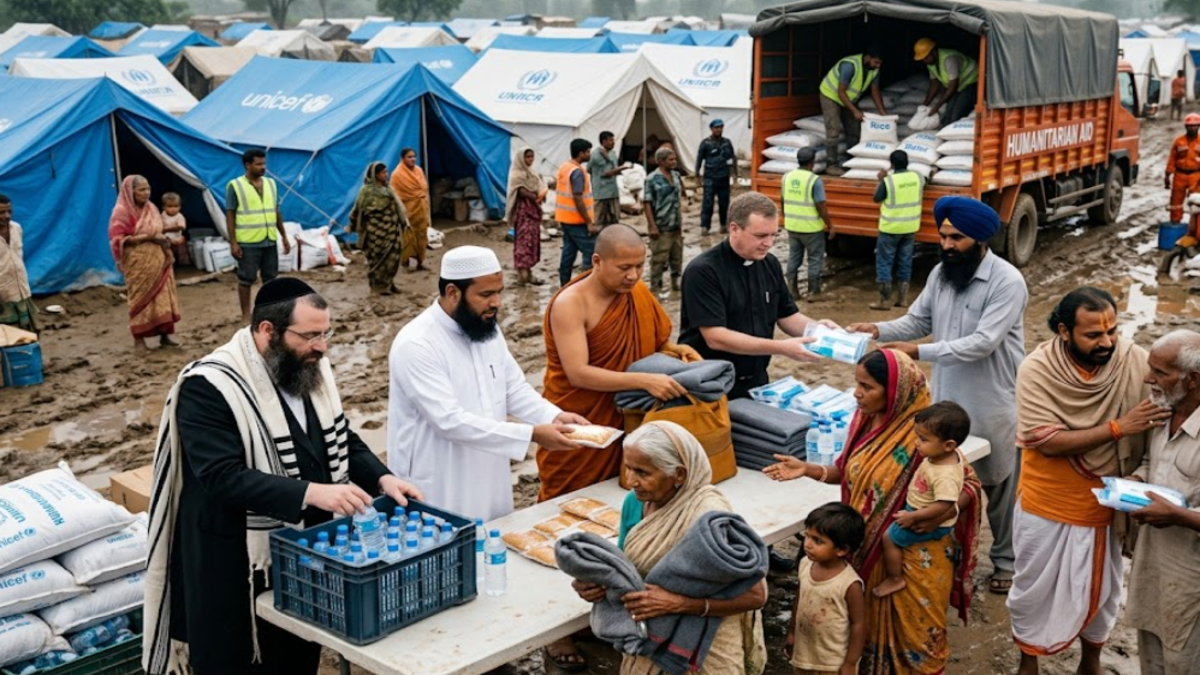
LONDON – ABN News: Interfaith Responses to Global Crises are gaining renewed attention as faith communities across the world strengthen cooperation to support people affected by conflicts, forced migration, and natural disasters, with humanitarian organizations warning that global needs continue to rise.

As humanitarian emergencies stretch resources and displace millions of people, religious organizations from different faith traditions are increasingly working side by side to deliver aid, protect vulnerable communities, and promote peace. What is driving this growing spirit of interfaith cooperation, and how is it making a difference on the ground?
Religious organizations have become key partners in emergency relief operations, often providing assistance long before international aid reaches affected communities. Christian, Muslim, Jewish, Hindu, Buddhist, Sikh, and other faith-based groups are collaborating with humanitarian agencies to distribute food, shelter, medical supplies, and psychological support.

Today’s humanitarian landscape is marked by overlapping crises that include armed conflicts, climate-related disasters, and large-scale migration. According to United Nations humanitarian assessments, hundreds of millions of people worldwide currently require urgent humanitarian assistance, while humanitarian funding remains under significant pressure.
Interfaith cooperation has emerged as one way to maximize available resources while reducing social tensions in crisis zones. Rather than working independently, many religious organizations are coordinating logistics, sharing volunteers, and supporting local communities regardless of religious affiliation.
Aid experts say these partnerships help build trust among affected populations because faith leaders often maintain deep relationships within local communities.
Migration continues to be one of the largest humanitarian challenges facing the international community.
The latest figures released by the United Nations High Commissioner for Refugees show that forced displacement remains at historically high levels, with millions of refugees, asylum seekers, and internally displaced people requiring protection and humanitarian support.
Faith-based organizations have expanded programs that provide temporary shelter, legal assistance, language education, trauma counseling, and employment support for displaced families.
Many local churches, mosques, synagogues, temples, and community centers have opened their facilities to receive migrants arriving after conflicts or natural disasters.
Humanitarian specialists note that interfaith initiatives frequently reduce barriers between host communities and newcomers by organizing joint volunteer programs and community events.
In several regions, religious leaders have also advocated for policies that protect vulnerable migrants while encouraging peaceful coexistence between different cultural and religious communities.
One of the defining characteristics of today’s humanitarian response is the growing reliance on local organizations.
Faith communities often possess established volunteer networks capable of responding immediately after floods, earthquakes, or other disasters. Their local knowledge allows assistance to reach isolated communities more rapidly than would otherwise be possible.
International humanitarian agencies increasingly recognize these local partnerships as essential components of emergency planning and disaster preparedness.
Recent flooding emergencies reported across parts of Asia have once again demonstrated the importance of coordinated humanitarian action.
Emergency updates published through international humanitarian monitoring systems show that flooding has affected communities in several countries, prompting relief operations involving governments, humanitarian organizations, and local faith-based groups.
In disaster situations, religious institutions frequently serve as temporary shelters, food distribution centers, and collection points for emergency donations.
Volunteers from different religious backgrounds often work together to distribute clean water, hygiene supplies, clothing, and emergency medical assistance.
Humanitarian organizations emphasize that cooperation across religious lines can improve operational efficiency while reinforcing social solidarity during recovery efforts.
Beyond emergency relief, many interfaith networks also participate in rebuilding schools, homes, and healthcare facilities after disasters have passed.
Although religions differ in beliefs and traditions, humanitarian experts point to shared values such as compassion, dignity, and care for vulnerable people as the basis for growing cooperation.
These common principles have encouraged faith leaders to collaborate on disaster preparedness, peacebuilding initiatives, refugee support, and community resilience programs.
International organizations have repeatedly highlighted the important contribution of faith-based organizations in reaching populations that may otherwise remain underserved.
The United Nations continues to coordinate humanitarian responses with governments, civil society organizations, and faith communities as global humanitarian needs continue to expand.
For more information about global humanitarian coordination, visit the official United Nations humanitarian response page: United Nations Crisis and Emergency Response
As humanitarian emergencies become increasingly complex, experts believe interfaith cooperation will remain an essential part of international relief efforts, demonstrating that collaboration across religious traditions can help save lives while promoting dialogue and mutual understanding.
What are interfaith responses to global crises?
They are cooperative humanitarian efforts involving different religious communities working together during emergencies.
Why are faith organizations important during disasters?
They often have trusted local networks that can deliver aid quickly and reach vulnerable communities.
How do interfaith groups support migrants?
They provide shelter, food, legal assistance, counseling, education, and community support regardless of religious background.
Who coordinates global humanitarian responses?
Governments, United Nations agencies, humanitarian organizations, and local faith-based groups work together during major emergencies.
… Read more
Contact: info@abnnews.net