Physical Address
304 North Cardinal St.
Dorchester Center, MA 02124
Physical Address
304 North Cardinal St.
Dorchester Center, MA 02124

Religions News Around the World
Religions News Around the World
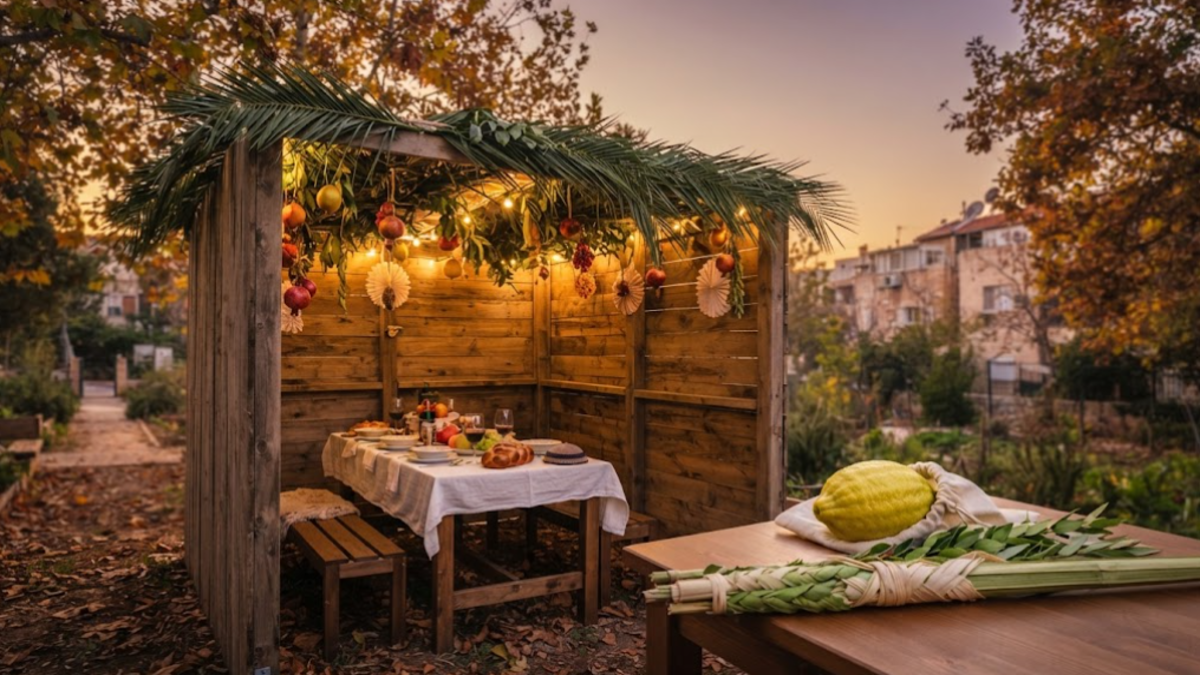
Sukkot 2026 began at sundown on Friday, September 25, and the seven-day festival ends at nightfall on Friday, October 2. Known as the Feast of Booths or Feast of Tabernacles, Sukkot is one of Judaism’s major pilgrimage festivals and is marked by time spent in a temporary sukkah, the use of the Four Kinds, festive meals and communal prayer.

The holiday is observed in Israel and Jewish communities around the world, although some details differ between Israel and the Jewish diaspora. Its biblical roots connect the festival with both the autumn harvest and the Israelites’ experience after the Exodus from Egypt.
Sukkot falls on the 15th day of the Hebrew month of Tishrei. In 2026, the festival begins at sundown on September 25 and concludes at nightfall on October 2.

The dates are:
| Date | Sukkot observance |
|---|---|
| September 25 | Erev Sukkot — festival begins at sundown |
| September 26 | First day of Sukkot |
| September 27 | Second day in the diaspora |
| September 28–October 1 | Chol Hamoed, the intermediate days |
| October 2 | Hoshana Rabbah and final day of Sukkot |
The precise religious status of individual days depends on location. In Israel, the first day is the main yom tov day, followed by intermediate days. In the diaspora, the first two days are yom tov, followed by Chol Hamoed.
The Israeli government’s 2026 calendar also lists September 25 as Erev Sukkot and October 2 as Hoshana Rabbah.
Sukkot is a seven-day Jewish festival whose biblical observance is described in Leviticus 23. The Torah places the festival on the 15th day of the seventh month and instructs the Israelites to celebrate for seven days, dwell in booths and take specific plants as part of the celebration.
The holiday has two closely connected themes.
One is agricultural. The biblical text associates Sukkot with the gathering of the year’s produce and calls for rejoicing after the harvest. The other is historical and religious: dwelling in temporary booths recalls the Israelites’ experience after leaving Egypt.
Sukkot is also one of Judaism’s three traditional pilgrimage festivals, alongside Passover and Shavuot.
The sukkah is the most visible symbol of the festival.
A sukkah is a temporary structure with walls and a roof made from natural vegetation. During the holiday, many Jews eat their meals there and spend as much time as practical in the structure. Some also sleep in the sukkah, although practices vary according to community and circumstances.
The practice reflects the biblical command to dwell in booths and serves as a reminder of the Israelites’ experience after the Exodus.
The temporary nature of the sukkah is central to the holiday’s symbolism. Rather than celebrating only inside a permanent home, the festival deliberately moves part of everyday life into a structure that exposes its occupants to the elements.
Another central Sukkot practice involves four types of plants, traditionally known as the Four Kinds, or arba minim:
The Torah describes taking a fruit of a beautiful tree together with palm, leafy-tree and willow branches and rejoicing during the festival.
In traditional practice, the four species are brought together and used in a prescribed ritual. The Four Kinds are generally taken each day of Sukkot except on Shabbat, according to the customary observance described by Chabad’s 2026 holiday guide.
Sukkot combines religious services with meals, hospitality and communal celebration.
Common observances include:
Festive and ordinary meals may be eaten in the sukkah throughout the holiday. The practice turns the temporary structure into a central part of daily life for the week.
The lulav, myrtle, willow and etrog are used during the holiday’s rituals. Their use is rooted in the biblical description of Sukkot.
Special prayers are added to the daily liturgy during Sukkot. Hallel, a collection of Psalms traditionally recited on Jewish festivals, forms part of the holiday’s worship.
The seventh day of Sukkot is known as Hoshana Rabbah. In 2026, it falls on Friday, October 2.
One of the most useful distinctions for anyone checking a Sukkot calendar is the difference between Israel and communities outside Israel.
The festival itself remains seven days, but the number of full festival days differs. In Israel, Sukkot has one yom tov day at the beginning. In the diaspora, the first two days are observed as yom tov. The intermediate period is known as Chol Hamoed.
This distinction affects work restrictions, prayer practices and other aspects of observance.
For readers planning around public services, religious services or family celebrations, checking a calendar for the relevant location is therefore more useful than relying on a generic Sukkot date alone.
Shemini Atzeret follows Sukkot but is technically a separate festival.
In the diaspora, Shemini Atzeret and Simchat Torah are observed over October 3 and 4 in 2026. In Israel, they are observed together on October 3.
That distinction matters because calendars sometimes group the holidays together as the broader Tishrei festival period, even though Sukkot itself ends before Shemini Atzeret begins.
The biblical passages concerning Sukkot emphasize several themes: harvest, rejoicing, temporary dwelling and remembrance.
Leviticus 23 says the festival should be observed after the produce of the land has been gathered. It also commands dwelling in booths so that future generations remember the experience of the Israelites leaving Egypt.
The connection between harvest and temporary shelter gives Sukkot a distinctive place in the Jewish calendar. It is simultaneously an agricultural festival, a historical remembrance and a period of religious celebration.
For people searching for the practical essentials, the key points are straightforward:
For anyone observing the holiday, local synagogue calendars and community guidance should be used for precise service times, candle-lighting times and local customs.
Sukkot begins at sundown on Friday, September 25, 2026.
The seven-day festival ends at nightfall on Friday, October 2, 2026.
Sukkot commemorates the Israelites’ experience after the Exodus and celebrates the autumn harvest. The Torah specifically connects the festival with dwelling in booths and rejoicing after the gathering of the land’s produce.
They are the lulav, myrtle, willow and etrog, four plant species used in Sukkot observance.
No. Shemini Atzeret follows Sukkot as a separate festival, although the holidays are closely connected in the Jewish calendar. In 2026, it begins at sunset on October 2 outside Israel and is observed on October 3 in Israel.
….Read More
Contact: info@abnnews.net