Physical Address
304 North Cardinal St.
Dorchester Center, MA 02124
Physical Address
304 North Cardinal St.
Dorchester Center, MA 02124
Religions News Around the World
Religions News Around the World
LONDON – ABN News: Religion and Social Media reshape the way faith communities connect with millions online

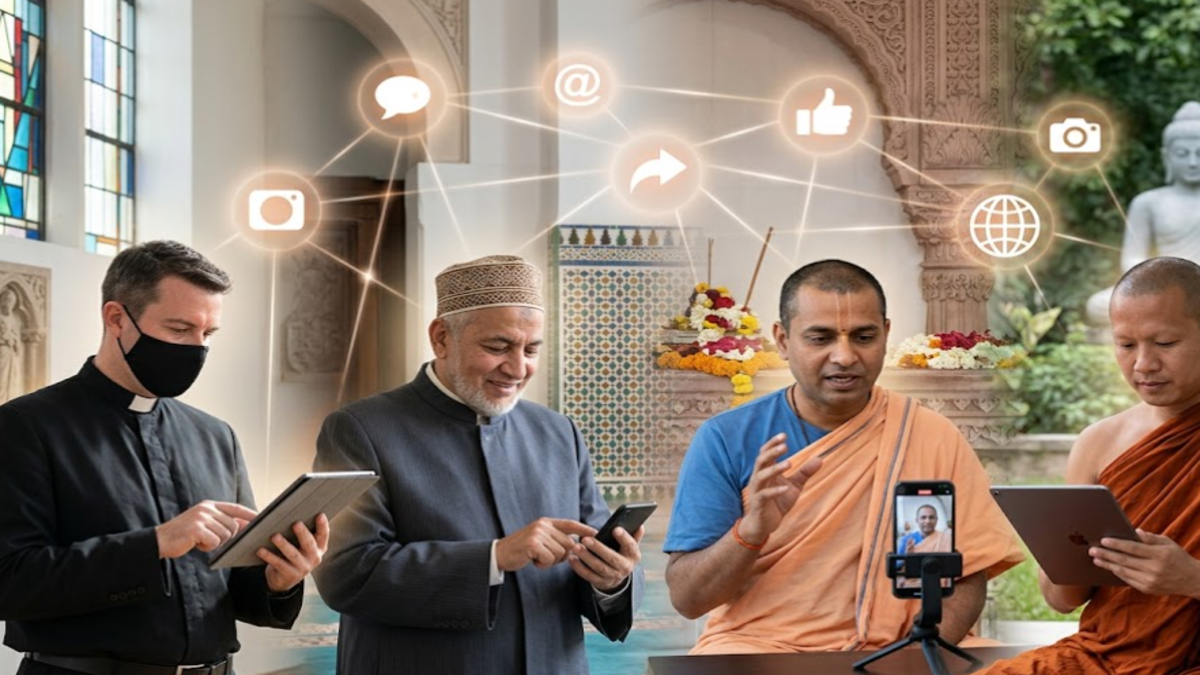
The rapid growth of digital platforms has transformed how people discover, discuss and practice religion around the world. Religion and Social Media have become closely connected as religious leaders, communities and individual believers increasingly use online networks to share messages, organize events and build global audiences.
From live-streamed services to religious influencers creating content for younger generations, social media has opened new opportunities for faith communication. At the same time, it has raised concerns about misinformation, online conflicts and the spread of extreme interpretations of religious ideas.

As billions of people spend a significant part of their daily lives on digital platforms, how is social media changing the modern religious experience?
Religious institutions that once depended mainly on physical gatherings, television broadcasts and printed publications are now expanding their presence through platforms such as YouTube, Facebook, Instagram and other digital networks.
Churches, mosques, temples and other places of worship have adopted online tools to reach followers who cannot attend services in person. Many organizations now provide live broadcasts, online discussions and digital education programs.
The trend became especially visible after global health restrictions forced many religious communities to move activities online. Although many believers returned to physical gatherings later, digital services remained an important part of religious outreach.
Religious leaders have also discovered that social media allows direct communication with audiences without traditional media barriers. A message from a faith leader can now reach thousands or even millions of people within minutes.
Young believers have played a major role in this transformation. Many religious discussions that previously happened inside communities are now taking place publicly through videos, podcasts and online conversations.
Religious content creators, often described as faith influencers, have become important voices in digital spaces. They explain religious traditions, answer questions and discuss spiritual topics in formats designed for younger audiences.
However, experts warn that online popularity does not always represent religious authority. A large following does not necessarily mean that a person has formal training or recognition from a religious institution.
The rise of religious influencers has changed the relationship between faith and communication. Individuals with strong online personalities are attracting followers who may never visit a traditional religious institution.
Many influencers focus on personal stories, motivation, spirituality and everyday applications of religious teachings. Their content often combines traditional beliefs with modern communication styles.
This approach has helped religious messages reach people who are less connected to organized religious institutions. Social media algorithms can introduce users to religious ideas based on their interests, searches and online interactions.
For some communities, this has created a new form of digital evangelism and religious education. Religious speakers can now communicate across borders, languages and cultural differences.
At the same time, critics say social media can encourage simplified versions of complex religious teachings. Short videos and viral posts often prioritize emotional reactions over deeper discussions.
Religious scholars have highlighted the importance of checking sources and understanding the background of online religious claims. False information about religious practices, history and beliefs can spread quickly through digital platforms.
While social media has created opportunities for religious dialogue, it has also become a place where disagreements can become intense.
Religious debates online sometimes lead to harassment, hate speech and conflicts between different communities. Platforms have faced pressure to improve moderation systems and address content that promotes discrimination or violence.
Misinformation remains one of the biggest challenges. False religious claims, manipulated videos and misleading quotes can circulate widely before they are corrected.
Religious organizations have increasingly focused on digital literacy, encouraging followers to verify information before sharing content online.
Governments and international organizations have also examined the role of digital platforms in spreading harmful narratives. The challenge is balancing freedom of expression with preventing content that encourages hatred or violence.
The United Nations has emphasized the importance of promoting tolerance, dialogue and respect between different religious and cultural communities. More information about international efforts to support peaceful communication can be found through the official website of the United Nations.
Traditional religious leadership models are also being influenced by digital communication.
In the past, religious leaders usually communicated with followers through formal institutions and local communities. Today, many leaders maintain online profiles where they publish messages, respond to questions and participate in public discussions.
This change has created both opportunities and challenges. Religious leaders can provide guidance to wider audiences, but they must also manage the speed and pressure of online communication.
Some religious organizations have created dedicated digital teams responsible for social media strategy, video production and online engagement.
The use of technology has also changed religious education. Online courses, digital libraries and virtual discussions allow people to learn about faith traditions from anywhere in the world.
For people living in areas with limited access to religious institutions, online resources can provide valuable connections.
The connection between religion and digital technology is expected to continue developing as new communication tools emerge.
Artificial intelligence, virtual reality and advanced digital platforms may create new ways for people to explore religious ideas and participate in spiritual experiences.
Some religious communities are already experimenting with virtual gatherings and digital environments that allow participation from different locations.
However, many religious leaders emphasize that technology should support human connection rather than replace personal relationships and community life.
Faith traditions across the world continue to place importance on shared experiences, physical gatherings and interpersonal relationships.
The future of digital religion will likely depend on finding a balance between online opportunities and traditional forms of worship.
Social media has already become a major part of modern religious communication. It has created new possibilities for spreading messages of faith, encouraging dialogue and connecting communities across borders.
At the same time, the digital environment requires responsibility, critical thinking and respect to ensure that religious discussions remain constructive.
Social media has allowed religious communities and leaders to reach wider audiences through online services, videos and discussions.
Religious influencers are online creators who share faith-related content and communicate with followers through digital platforms.
Yes. False claims and misleading religious content can spread quickly online, making verification important.
Most religious communities see technology as a tool that supports, rather than replaces, physical gatherings and personal connections.