Physical Address
304 North Cardinal St.
Dorchester Center, MA 02124
Physical Address
304 North Cardinal St.
Dorchester Center, MA 02124

Religions News Around the World
Religions News Around the World
WASHINGTON – ABN News: Why Are Some Young People Leaving Religion?

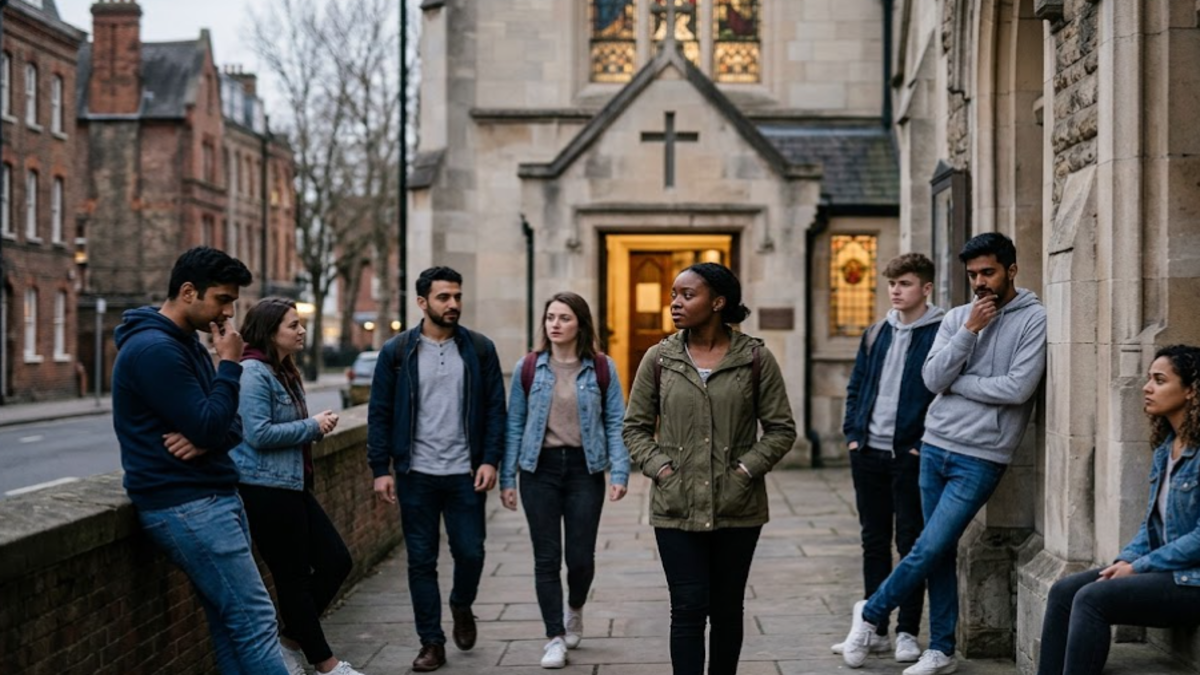
For generations, religion was closely connected to family life, community, identity and social traditions. But among many young adults, that connection is weakening. Across the United States and other parts of the world, increasing numbers of younger people describe themselves as having no religion, while others continue to believe in God or spirituality but no longer want to belong to a formal religious institution. So, why are some young people leaving religion, and does turning away from organized religion necessarily mean turning away from faith?
Recent research and news reports suggest the answer is more complicated than a simple decline in belief. Young adults are questioning institutions, reassessing inherited identities and, in some cases, looking for forms of spirituality that feel more personal and less connected to established religious structures.

One of the clearest signs of change comes from research into religious switching. Pew Research Center found that 35% of U.S. adults say they were raised with a different religious identity from the one they have today. That represents roughly 90 million adults who have changed their religious identity, including people who moved from one faith to another and those who became religiously unaffiliated.
The change is especially visible among younger generations. Pew has found that young adults are considerably less religious than older Americans. In its recent analysis, only about 55% of the youngest adults tracked by the research identified with a religion, a level broadly similar to what researchers found several years earlier.
That does not mean every young person is abandoning belief. Instead, the data points toward a growing separation between religious belief and formal religious membership.
Some young adults may still pray, believe in God, meditate or describe themselves as spiritual while choosing not to attend services or identify with a particular denomination.
This distinction has become increasingly important as researchers try to understand what is happening among Generation Z and younger adults. Leaving a church, mosque, synagogue or other religious institution is not necessarily identical to becoming atheist.
In some cases, the decision is about the institution rather than faith itself.
For many young people, religious identity is no longer automatically inherited from parents. Previous generations were often expected to remain within the faith tradition in which they were raised. Younger adults have grown up in a much more religiously diverse and connected environment.
The internet has exposed them to different religions, philosophies and worldviews from an early age. Social media has also made it easier to encounter people who openly discuss doubts and disagreements that might once have remained private.
As a result, questioning religious traditions can feel less unusual.
Pew’s international research shows that religious switching is occurring in many parts of the world. In a study covering dozens of countries, Christianity and Buddhism recorded some of the largest losses through religious switching, while religiously unaffiliated populations have often gained people who leave childhood religions.
The pattern is not universal, however.
Religious retention remains very high in some communities. Pew reported that among adults raised Hindu or Muslim in the countries included in its analysis, about 99% continued to identify with those religions. By comparison, about 83% of adults raised Christian continued to identify as Christian.
That contrast shows why there is no single global explanation for religious change.
Culture, family expectations, social conditions and the strength of religious institutions all play a role.
For some young adults, the problem is not necessarily belief but trust.
Religious institutions have faced criticism over issues ranging from sexual-abuse scandals and political involvement to disagreements over gender roles, sexuality and the place of religion in public life.
Young people who disagree with an institution’s position may decide that they can maintain personal beliefs without remaining members.
This has created a new challenge for religious organizations: young adults may be interested in questions of meaning, morality and spirituality while remaining skeptical of traditional authority.
Recent research has even described this phenomenon as a form of “DIY faith” — people constructing personal approaches to spirituality rather than following a single institutional model. A recent study reported by Phys.org found that many young adults who are leaving organized religion are not necessarily abandoning spirituality or belief.
That finding complicates the idea that secularization simply means that younger generations have stopped thinking about religion.
In reality, some may be thinking about it more independently.
Politics is another factor that increasingly overlaps with religious identity.
In the United States, religion has become closely associated with political debates over abortion, gender, education, immigration, sexuality and the role of Christianity in public life.
For young adults who disagree with the political positions associated with particular religious groups, religious identification can sometimes feel like a political statement rather than simply a matter of personal faith.
Recent reporting has highlighted this tension among young women in particular.
Religion News, reporting on research involving younger Americans, noted that the traditional gender roles promoted by some conservative religious groups can be particularly unpopular among young women. The report cited Pew findings showing almost no difference between young women’s and young men’s rates of religious identification.
The issue is therefore not simply whether young people believe in God.
For some, it is also whether the religious institution reflects the social values they consider important.
The trend has become especially notable among young Latino Americans.
Recent reporting by Axios found that the proportion of Hispanic Americans who are religiously unaffiliated increased from 18% to 23% between the two periods examined by the Public Religion Research Institute. The report said young Latinos are leaving organized religion at a faster rate than other demographic groups, with the change particularly visible among Catholics.
The development is significant because Latino communities have historically been an important part of the Catholic population in the United States.
Researchers cited in the report pointed to generational change and cultural assimilation as important factors. Younger Latinas, in particular, were described as less receptive to traditional gender messaging associated with some religious institutions.
The shift challenges an assumption that demographic growth will automatically translate into religious growth.
A younger generation may retain elements of its cultural heritage while becoming less connected to the religious institution historically associated with that heritage.
That distinction can have major consequences for churches, schools, charities and other organizations that have traditionally depended on younger generations to sustain their communities.
Perhaps the most important point emerging from recent research is that religious disaffiliation should not automatically be interpreted as the disappearance of spirituality.
Some young people who stop attending services continue to believe in a higher power. Others describe themselves as spiritual rather than religious. Some engage in meditation, personal prayer or other practices outside traditional institutions.
The difference is increasingly about authority and belonging.
A young person may believe that religious institutions can offer valuable teachings but still decide that no institution should determine every aspect of personal belief.
This approach gives individuals greater freedom, but it also changes the way communities transmit religious traditions.
Instead of receiving religious identity primarily through family and institutions, young people can assemble ideas from several sources and decide which beliefs they consider convincing.
The result is a more fluid religious landscape.
The story is not entirely one of decline.
Recent news reports from the United States and Europe have also highlighted pockets of renewed interest in religion among young adults.
The Associated Press recently reported on young Spaniards returning to Catholic practices and described youth movements, music and community activities as factors attracting some young adults. The report also noted growing numbers of adult baptisms in France and Spain, although the overall proportion of young people actively practicing Catholicism remains relatively small.
A similar development has been reported in parts of New York, where some Catholic parishes have seen large numbers of young adults attending Sunday Mass and participating in social activities connected with churches. The Wall Street Journal reported that some young attendees are seeking community, tradition and spiritual grounding.
These developments suggest that young adults are not necessarily moving in one direction.
Some are leaving organized religion, while others are actively searching for it.
The common factor may be the search for meaning and community.
Young adulthood has always involved questions about identity, purpose and belonging. Today’s young adults face those questions amid rapid technological change, economic uncertainty, political polarization and social isolation.
Religion can offer answers to questions that remain difficult to resolve through material success alone.
At the same time, institutions that fail to connect with younger generations can struggle to retain them.
Recent reporting from France has described young people turning toward religion partly because they are searching for identity, stability and meaning in an uncertain environment. Researchers cited in that coverage said some young adults are attracted to the structure and sense of purpose offered by religious traditions.
That creates an apparent contradiction.
The same generation can contain people who reject organized religion because they see it as outdated and others who embrace religion precisely because they believe modern society lacks structure.
Both responses can come from the same underlying desire: finding a meaningful way to understand life.
For churches and other religious institutions, the challenge is therefore more complicated than simply persuading young people to attend services.
Young adults increasingly have alternatives.
They can participate in online communities, follow religious teachers through social media, explore different traditions, or develop private spiritual practices without becoming members of a congregation.
Religious organizations therefore face questions about how they communicate, how they build trust and how they respond to changing social expectations.
The evidence also suggests that simply describing young adults as “anti-religious” misses an important part of the story.
Many are questioning institutions rather than abandoning every religious or spiritual idea.
Pew’s research shows that religious switching is widespread, but it also demonstrates that religious change varies significantly according to country, religious tradition and social environment.
For institutions hoping to retain younger members, understanding those differences may be more useful than assuming that all young people are becoming secular.
The future of religion among younger generations is unlikely to be a simple story of disappearance.
The evidence points instead toward fragmentation.
Some young people are becoming firmly secular. Others remain religious but move between denominations. Some maintain belief without belonging to an institution, while another group is rediscovering traditional religious practices.
This means the central question may no longer be whether young people believe.
It may be where, how and why they choose to express that belief.
For religious institutions, that distinction could determine whether today’s young adults eventually return, remain outside organized religion or create new forms of religious community.
Research points to several factors, including generational change, changing social values, distrust of institutions, political divisions and greater exposure to alternative worldviews.
No. Some people leave organized religion while continuing to believe in God or practice spirituality privately.
No. Recent reports also show renewed religious interest among some young adults, particularly in certain Catholic and other faith communities.
The evidence does not support such a simple conclusion. Religious affiliation is changing, but young people are responding in different ways, from secularization to renewed religious commitment.
… Read more
Contact: info@abnnews.net