Physical Address
304 North Cardinal St.
Dorchester Center, MA 02124
Physical Address
304 North Cardinal St.
Dorchester Center, MA 02124

Religions News Around the World
Religions News Around the World
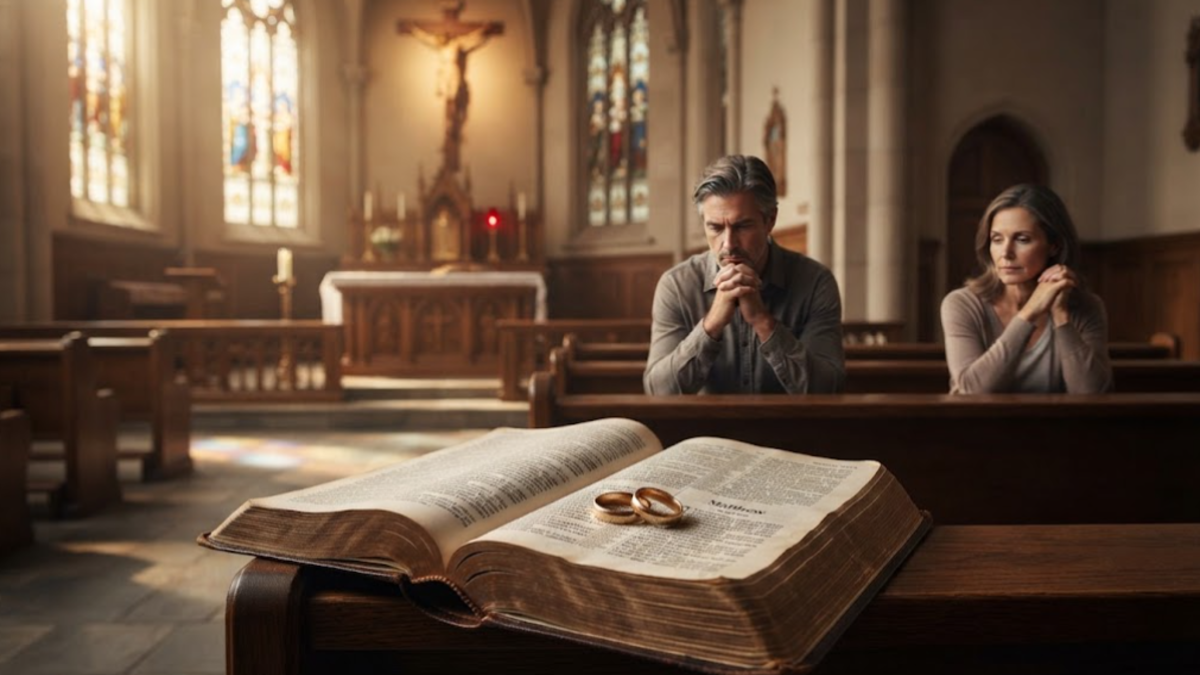
The Catholic Church teaches that sacramental marriage is a lifelong commitment that cannot be ended simply by obtaining a civil divorce. However, Catholic teaching distinguishes between civil divorce, separation between spouses and a declaration of nullity, commonly known as an annulment. Understanding these differences is essential for Catholics facing marital difficulties, considering remarriage or seeking guidance about their place in the Church.

The Church’s position is rooted in the permanence of the marriage bond, but its official teaching also recognises that some marriages become impossible to sustain safely or peacefully. Its rules therefore address both the religious meaning of marriage and the practical circumstances faced by couples and families.
According to the Catechism of the Catholic Church, marriage is a permanent covenant between spouses. For a valid, ratified and consummated marriage between two baptised people, the Church teaches that the bond cannot be dissolved by human authority or for any reason other than death.

This principle is set out in Canon 1141 of the Code of Canon Law and is central to the Catholic understanding of marriage as a sacrament.
The Church’s position differs from civil law in many countries, where a divorce legally ends a marriage and may allow either person to remarry. A civil divorce determines the couple’s legal status under the applicable national law; it does not, by itself, establish that a sacramental marriage was invalid or that its bond has ended under Catholic canon law.
The distinction matters because a person may be legally divorced while still being considered married in the eyes of the Church.
Yes. Catholics may obtain a civil divorce under the laws of their country. The Church does not treat every civil divorce as a moral offence in every circumstance.
The Catechism explains that civil divorce may be tolerated when it is the only practical way to protect legitimate rights, safeguard children or defend property. A separation may also be justified when living together becomes seriously harmful or practically impossible.
This distinction is particularly important in situations involving abuse, threats, serious conflict or the protection of children. Catholic teaching does not require a person to remain in an unsafe household to demonstrate fidelity to marriage.
A civil divorce, however, does not automatically release a person from a valid sacramental marriage or grant permission to marry someone else in the Catholic Church.
A civil divorce and a declaration of nullity serve different purposes.
A divorce ends a marriage under civil law. A declaration of nullity, issued by a competent Catholic Church tribunal, determines that a marriage was invalid from the beginning under the Church’s law because an essential requirement for a valid marriage was absent.
An annulment is therefore not a Catholic version of divorce. It is a formal judgment about the validity of the original marriage.
A tribunal may examine matters such as whether the spouses gave valid marital consent, whether a legally recognised impediment existed or whether a required form of marriage was observed. The outcome depends on the evidence and the applicable canon law; separation, conflict or the subsequent breakdown of a relationship does not automatically prove that the marriage was invalid.
People who believe their marriage may have been invalid can contact their local diocesan marriage tribunal for information about the process.
Generally, the process involves:
Pope Francis’s 2015 reform of the marriage-nullity process sought to make procedures more accessible and efficient while preserving the requirement to establish the truth of each case.
An annulment is not guaranteed, and the time required varies according to the circumstances, evidence and tribunal handling the case.
Being divorced does not, by itself, automatically exclude a Catholic from receiving Holy Communion.
The Catechism explicitly encourages pastoral care for divorced Catholics who remain faithful to the Church. A person who is divorced but has not entered another relationship that conflicts with a continuing valid marriage bond is not automatically barred from the sacraments because of the divorce alone.
Questions become more complex when a divorced Catholic enters a new civil marriage while the first marriage is still recognised as valid by the Church.
The Catechism addresses this situation in paragraphs 1650–1651. It teaches that the Church cannot recognise a new union as valid if the first marriage was valid, while also calling priests and the wider Christian community to provide pastoral care to those affected.
The practical implications for sacramental participation require careful consideration of the person’s circumstances and the Church’s applicable teaching. Catholics in this situation should speak confidentially with a qualified priest or diocesan pastoral adviser rather than assume that every case has the same outcome.
A Catholic whose valid sacramental marriage remains in force generally cannot enter another marriage recognised by the Church while the former spouse is alive.
There are, however, circumstances in which a person may become free to marry. For example, a competent Church tribunal may issue a declaration of nullity establishing that the earlier marriage was invalid. Other situations may be governed by specific provisions of canon law, depending on the type and circumstances of the original marriage.
A civil divorce alone does not provide this permission.
Anyone considering a new Catholic marriage after divorce should consult the diocesan tribunal or parish priest before making wedding arrangements. The Church must establish whether the person is free to marry under canon law.
Yes. Catholic teaching recognises that separation can be legitimate when serious circumstances make living together impractical or unsafe.
The Code of Canon Law addresses separation in Canons 1151–1155. These provisions concern circumstances in which spouses may live apart while the marriage bond remains in place.
The Church encourages reconciliation where possible, but that does not mean every couple must continue living together regardless of the consequences. Personal safety, the welfare of children and the seriousness of the circumstances must be taken into account.
For people experiencing domestic abuse or threats, seeking safety and appropriate professional assistance should take priority. A priest or diocesan service can help explain the Church’s position, but immediate danger requires appropriate emergency or protective support.
Catholics facing marital difficulties can take several practical steps without assuming that civil divorce settles every religious question.
These steps recognise that the breakdown of a marriage can involve legal, emotional, financial and spiritual challenges that cannot be resolved through a single decision.
The Catholic Church’s teaching on marriage rests on the conviction that a sacramental bond is intended to be permanent. Its distinction between civil divorce and a declaration of nullity follows from that principle, rather than from a claim that every relationship can or should continue under all circumstances.
For couples facing separation, clarity about the Church’s rules is essential. Equally important is access to compassionate pastoral guidance, especially when children, abuse or serious family difficulties are involved.
The Church’s own teaching recognises both the permanence of marriage and the need to support people whose relationships have broken down. A responsible pastoral response should explain the rules accurately without treating every divorced person as though their circumstances were identical.
For Catholics seeking a way forward, the most useful first step is to obtain advice suited to their particular situation from a diocesan tribunal or a qualified pastoral adviser. This can help distinguish civil legal rights from the Church’s judgment about marital status and identify the options available under canon law.
The Church regards divorce as contrary to the permanence of marriage, but it recognises that civil divorce may be tolerated when necessary to protect legitimate rights, children or property. The circumstances and purpose of the divorce matter when assessing the moral question.
No. A declaration of nullity means that the Church has determined that a valid marriage bond was not established from the beginning. It does not mean that the relationship, shared life or family never existed.
Yes. Divorce alone does not prevent a Catholic from attending Mass or participating in parish life. Questions about Holy Communion or other sacramental matters may depend on additional circumstances, particularly whether the person has entered a new union while a previous valid marriage remains in force.
A Catholic may generally marry in the Church after a declaration of nullity, provided there are no other impediments or restrictions affecting the proposed marriage. The relevant Church authority can confirm whether the person is free to marry.
The usual starting point is the diocesan marriage tribunal or the parish priest, who can explain the local procedure, documentation and requirements. The tribunal determines the case according to canon law and the evidence presented.
1. The Holy See — Catechism of the Catholic Church, paragraphs 1643–1654: The Goods and Requirements of Conjugal Love https://www.vatican.va/content/catechism/en/part_two/section_two/chapter_three/article_7/v_the_goods_and_requirements_of_conjugal_love.html
2. The Holy See — Catechism of the Catholic Church: Offences Against the Dignity of Marriage https://www.vatican.va/content/catechism/en/part_three/section_two/chapter_two/article_6/iv_offenses_against_the_dignity_of_marriage.index.html
3. The Holy See — Code of Canon Law, Book IV, Canons 1137–1165: The Separation of Spouses and Dissolution of the Bond https://www.vatican.va/archive/cod-iuris-canonici/eng/documents/cic_lib4-cann998-1165_en.html
….Read More
Contact: info@abnnews.net