Physical Address
304 North Cardinal St.
Dorchester Center, MA 02124
Physical Address
304 North Cardinal St.
Dorchester Center, MA 02124

Religions News Around the World
Religions News Around the World
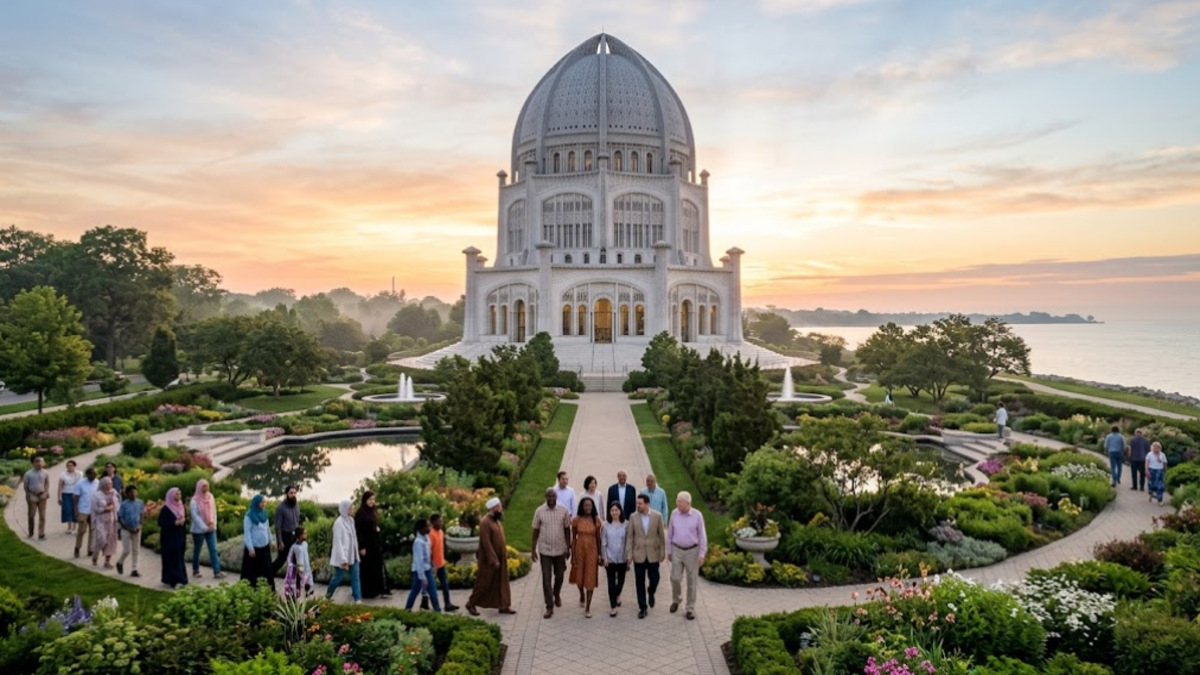
The Bahá’í Faith is an independent monotheistic religion founded in 19th-century Persia, present today in communities across virtually every country. Its central message is the unity of humanity, the oneness of God and the belief that the world’s major religions represent successive stages of divine guidance. Founded by Bahá’u’lláh, the religion promotes equality between women and men, freedom from prejudice, universal education, social justice and world peace.

Although less widely known than Christianity, Islam, Hinduism or Buddhism, the Bahá’í Faith has developed into a global religious community. Its teachings address not only spiritual questions but also practical challenges facing modern societies, including education, cooperation, poverty and international relations.
The Bahá’í Faith is a religion that teaches that humanity belongs to one human family and that all people share a common spiritual origin.

Its followers, known as Bahá’ís, believe in one God and recognize a succession of divine messengers who have guided humanity throughout history. These include Abraham, Moses, Krishna, Buddha, Jesus Christ and Muhammad. Bahá’ís regard Bahá’u’lláh as the most recent of these messengers.
One of the religion’s distinctive concepts is progressive revelation. According to this teaching, God’s guidance is revealed progressively through different religious founders, whose teachings respond to the needs and circumstances of particular periods in human history.
The Bahá’í Faith does not consider the world’s major religions to be fundamentally competing traditions. Instead, it emphasizes their common spiritual foundations and their contribution to humanity’s development.
The official Bahá’í teachings identify several central principles:
The oneness of humanity.
The unity of God and religion.
The equality of women and men.
The elimination of racial, religious and other forms of prejudice.
The harmony between science and religion.
Universal education.
Independent investigation of truth.
Social justice and the reduction of extreme poverty and wealth.
The establishment of lasting world peace.
These principles form the foundation of Bahá’í spiritual life and community activities.
bahai.org+2
The founder of the Bahá’í Faith was Bahá’u’lláh, whose name means “Glory of God” in Arabic. He was born in Tehran, Persia, in 1817 and died in 1892 in the area of Acre, then part of Ottoman Palestine.
His teachings became the foundation of the Bahá’í religion and its vision of a united humanity.
Before Bahá’u’lláh publicly declared his religious mission, another figure, known as the Báb, announced a new religious message in Persia in 1844.
The Báb, whose title means “the Gate”, prepared his followers for the arrival of a further divine messenger. Bahá’ís recognize him as an independent messenger of God and as the forerunner of Bahá’u’lláh.
Bahá’u’lláh declared his mission in 1863, in Baghdad. His teachings attracted followers but also brought opposition from religious and political authorities. He experienced imprisonment and successive exiles, eventually being sent to the prison city of Acre.
Despite these restrictions, his writings continued to circulate and became the basis of a religious movement that gradually spread beyond Persia and the Middle East.
Bahá’í World News Service (BWNS)+1
The Bahá’í Faith combines spiritual teachings with principles intended to guide individual behaviour and the organization of society. Its beliefs cover several areas.
The unity of humanity is arguably the most recognizable principle of the Bahá’í Faith.
Bahá’ís believe that racial, national, cultural and religious differences should not divide people. Humanity is viewed as one interconnected family, and cooperation is considered essential to achieving lasting peace.
This principle also shapes the community’s approach to social development, education and relationships between different groups.
Bahá’ís believe that the major world religions share a common divine source.
Rather than treating religious traditions as entirely separate or incompatible, the Faith teaches that religious revelation is progressive. Each divine messenger brings teachings suited to the needs of humanity at a particular stage of its development.
This does not mean that all religions have identical doctrines, practices or laws. Instead, Bahá’ís emphasize their shared spiritual foundations.
Gender equality is a fundamental principle of the Bahá’í Faith.
Its teachings maintain that women and men have equal spiritual worth and should enjoy equal opportunities to develop their abilities and contribute to society.
Bahá’í institutions and educational activities place considerable emphasis on women’s participation in social progress.
There is, however, a specific distinction within its administrative structure: membership of the Universal House of Justice, the Faith’s international governing institution, is restricted to men under the current Bahá’í interpretation of its founding texts. This is an acknowledged exception within the community’s institutional arrangements.
bahai.org+2
Another central teaching is that science and religion should not be treated as enemies.
Bahá’í writings encourage the independent investigation of truth and reject blind acceptance of superstition. Science provides methods for understanding the physical world, while religion addresses spiritual development and moral questions.
From this perspective, both forms of knowledge can contribute to human progress.
The Faith considers education essential to individual development and the advancement of society.
It also advocates reducing extreme poverty and wealth, promoting justice and creating conditions in which everyone can contribute meaningfully to community life.
These principles extend beyond religious observance into practical activities involving education, social development and community building.
bahai.org+1
Bahá’í religious life includes prayer, meditation, study of sacred writings, fasting and participation in community activities.
Unlike religions organized around ordained priests or ministers, the Bahá’í Faith has no professional clergy. Believers are encouraged to develop their spiritual lives independently while participating in collective community activities.
Prayer is an important part of everyday Bahá’í life.
Bahá’ís have access to obligatory prayers and other devotional writings revealed by Bahá’u’lláh, the Báb and ‘Abdu’l-Bahá. These prayers are intended to strengthen the individual’s spiritual relationship with God.
Private prayer and reflection are encouraged, while collective devotional gatherings provide opportunities for people to pray, read sacred texts and reflect together.
The Bahá’í calendar includes a nineteen-day fasting period immediately before Naw-Rúz, the Bahá’í New Year.
During this period, eligible adult believers abstain from food and drink between sunrise and sunset. The fast is intended to encourage spiritual reflection, self-discipline and renewed commitment to religious principles.
The obligation generally applies to believers aged 15 to 70, with exemptions for certain circumstances, including illness, travel and other specified conditions.
What Bahá’ís Believe+1
The Nineteen Day Feast is a regular gathering held at the beginning of each Bahá’í month.
It brings together three important elements:
Devotional: prayers and readings from sacred writings.
Consultative: discussion of community affairs and plans.
Social: fellowship, hospitality and interaction among participants.
The gathering helps maintain communication and cooperation within local Bahá’í communities.
The Kitáb-i-Aqdas, Page 202+1
The Bahá’í Faith has a distinctive administrative system based on elected institutions rather than a traditional clergy hierarchy.
Its principal international institution is the Universal House of Justice, based at the Bahá’í World Centre in Haifa, Israel.
The institution consists of nine members elected every five years by delegates representing National Spiritual Assemblies around the world.
At the national and local levels, elected Spiritual Assemblies oversee community affairs.
| Institution | Main responsibility |
|---|---|
| Local Spiritual Assemblies | Coordinate activities and affairs within local communities |
| National Spiritual Assemblies | Guide and administer national Bahá’í communities |
| Universal House of Justice | Provide international guidance and oversee the worldwide community |
Elections are conducted without electioneering or campaigning for individual candidates. The system emphasizes consultation, collective responsibility and service.
The Universal House of Justice was first elected in 1963 and continues to guide the international Bahá’í community.
universalhouseofjustice.bahai.org+2
The Bahá’í Faith has spread far beyond its Persian origins.
According to figures published by the Bahá’í World News Service, the religion has more than five million followers worldwide and is established in virtually every country and numerous territories. Its followers live in more than 100,000 localities.
The same source reports that approximately 2,100 Indigenous tribes, races and ethnic groups are represented in the community. These figures are published by the Bahá’í community itself and should therefore be understood as its own reported statistics rather than an independent census.
Bahá’í World News Service (BWNS)+1
One of the most visible expressions of the Faith is its network of Houses of Worship, also known as Mashriqu’l-Adhkár.
These temples are dedicated to the worship of God and are intended to welcome people regardless of their religious background.
The architecture varies considerably between locations, reflecting different cultural and artistic influences. However, the underlying purpose remains the same: creating places for prayer, reflection and spiritual gathering.
The Bahá’í World News Service lists 14 established Houses of Worship around the world, including those in India, Germany, Chile, the United States, Australia and Kenya.
Bahá’í World News Service (BWNS)+1
The Bahá’í Faith shares certain spiritual concepts with other monotheistic religions but has several distinctive characteristics.
| Feature | Bahá’í Faith |
|---|---|
| Belief in God | One God |
| Religious founders | The Báb and Bahá’u’lláh |
| View of other religions | Successive expressions of divine guidance |
| Religious leadership | No professional clergy |
| Central principle | Unity of humanity |
| Religious practice | Prayer, meditation, fasting and community service |
| International institution | Universal House of Justice |
| Sacred writings | Writings of the Báb, Bahá’u’lláh and ‘Abdu’l-Bahá |
One important distinction is its emphasis on the relationship between personal spiritual development and collective social progress.
The Faith does not regard religion as exclusively a private matter. Its teachings encourage believers to contribute to the well-being of their communities through education, cooperation, service and the promotion of justice.
Despite its international presence, the Bahá’í community has experienced serious restrictions and persecution, particularly in Iran, where the religion originated.
Bahá’ís in Iran have faced discrimination and restrictions affecting education, employment, property ownership and religious practice. Human rights organizations and international institutions have repeatedly raised concerns about their treatment.
The situation is particularly significant because Iran remains home to a substantial Bahá’í population.
The Bahá’í International Community has also made human rights, religious freedom and equality central themes of its international advocacy work.
Bahá’í International Community+1
These circumstances illustrate the difference between the religion’s teachings on unity and the difficulties its followers can encounter in societies where their beliefs are not accepted.
The Bahá’í Faith addresses several questions that remain important in contemporary society: religious coexistence, discrimination, gender equality, education, poverty and international cooperation.
Its emphasis on humanity’s shared identity offers a particular perspective on conflicts involving national, ethnic and religious divisions.
Its approach to science and religion also contributes to discussions about how societies can combine technological progress with ethical and spiritual considerations.
The global network of Bahá’í communities provides an example of how a religious movement can organize educational, devotional and social activities across different cultures.
The Bahá’í Faith deserves attention not only because of its historical development but also because of the social principles it promotes.
Its emphasis on human unity, education, religious coexistence and equality addresses challenges that extend beyond the boundaries of any particular religion.
At the same time, an objective understanding requires acknowledging the differences between its stated ideals and certain aspects of its institutional structure, including the restriction on women’s membership of the Universal House of Justice.
Our assessment is that the Bahá’í Faith is best understood as both an independent world religion and a movement with an explicit vision for social transformation. Learning about it can help readers better understand religious diversity, interfaith relations and the continuing discussion about the role of spirituality in modern society.
No. Although it originated in 19th-century Persia and emerged from a religious environment influenced by Islam, the Bahá’í Faith is an independent religion with its own founder, sacred writings, teachings and institutions.
Yes. Bahá’ís recognize Jesus Christ as a divine messenger of God, alongside other religious figures such as Moses, Buddha, Krishna and Muhammad. They also believe that Bahá’u’lláh is the latest divine messenger for the present age.
The Bahá’í Faith has no professional clergy. Instead, it has elected administrative institutions and Houses of Worship where people can gather for prayer and reflection.
The Bahá’í World News Service reports more than five million followers worldwide, living in over 100,000 localities. These are figures provided by the Bahá’í community itself.
Yes. Bahá’í devotional gatherings and many community activities welcome people from different religious and cultural backgrounds. Participation does not generally require someone to become a Bahá’í.
1. The Bahá’í Faith — What Bahá’ís Believe
https://www.bahai.org/beliefs
2. Bahá’í World News Service — Key Terms and Facts
https://news.bahai.org/media-information/key-terms-and-facts
3. Bahá’í World News Service — Statistics
https://news.bahai.org/media-information/statistics
4. The Universal House of Justice — Official Website
https://universalhouseofjustice.bahai.org/
5. The Bahá’í Faith — The Universal House of Justice
https://www.bahai.org/the-universal-house-of-justice
6. The Bahá’í Faith — Fasting
https://www.bahai.org/beliefs/life-spirit/devotion/fasting
7. The Bahá’í Faith — Walking a Spiritual Path
https://www.bahai.org/action/response-call-bahaullah/walking-spiritual-path
8. Bahá’í Reference Library — The Kitáb-i-Aqdas
https://www.bahai.org/library/authoritative-texts/bahaullah/kitab-i-aqdas/12
9. Bahá’í International Community — Focus Areas
https://www.bic.org/focus-areas