Physical Address
304 North Cardinal St.
Dorchester Center, MA 02124

Religions News Around the World
Religions News Around the World
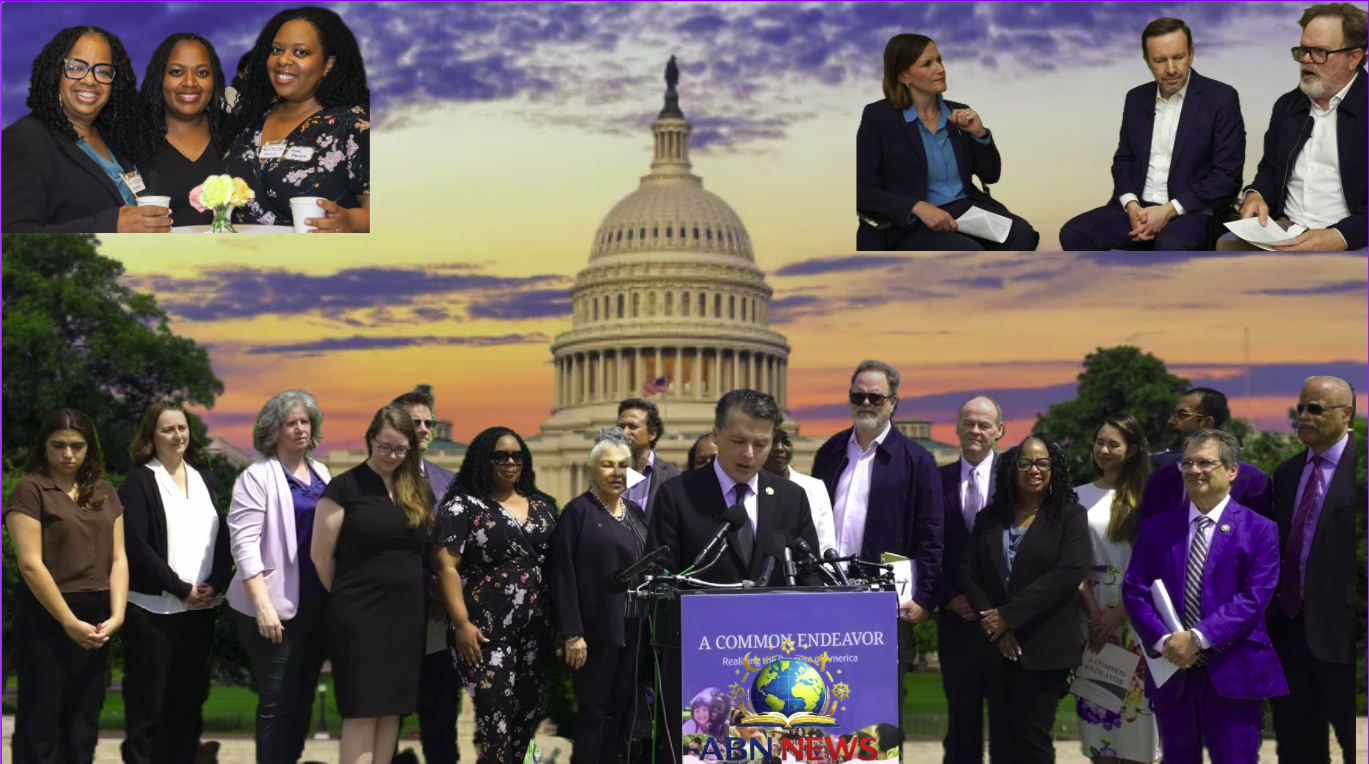
WASHINGTON, D.C. — ABN NEWS: The latest Bahá’í message on America’s future arrives at a critical juncture as the United States approaches the historic 250th anniversary of the Declaration of Independence. While many citizens look forward to this milestone with a sense of pride, others view the current national landscape through a lens of profound uncertainty and deep political polarization. Decades of civic struggle have expanded the reach of foundational ideals, yet contemporary public life remains heavily burdened by exhaustion, systemic anger, and widespread institutional disillusionment. The American Bahá’í community recently issued an open letter that shifts the national conversation away from typical partisan debates and toward an overlooked dimension of societal health. By reframing core principles like freedom, equality, and justice as inherently spiritual values rather than mere legislative targets, the message challenges leaders and citizens alike to reconsider how a diverse nation can heal its fractured bonds. How can a society deeply divided along ideological lines rediscover a genuine sense of shared purpose and mutual trust?

The core philosophy driving this movement centers on an open letter titled “A Common Endeavor: Realizing the Promise of America.” The American Bahá’í community addressed this document specifically to everyone who holds the ultimate promise of the nation within their hearts. Rather than offering another political platform or a set of policy demands, the message serves as an open invitation to explore the spiritual underpinnings necessary for long-term social progress. It suggests that institutional fixes alone cannot salvage a democracy if the underlying moral fabric—defined by trust, love, and moral courage—continues to decay.
According to information obtained by the ABN NEWS team, the U.S. Bahá’í Office of Public Affairs launched a series of high-level public forums to bring these abstract concepts into real-world discussions. These gatherings successfully brought together prominent thinkers from federal government agencies, grassroots community organizations, academic institutions, and major media outlets. By gathering representatives from highly diverse faith traditions alongside secular advocates, the forums created a rare space for collaborative reflection. Each session systematically unraveled the specific themes presented in the letter, challenging participants to look beyond superficial differences.

The initiative deliberately avoids the standard trap of partisan bickering by focusing heavily on human capacity and shared responsibility. It treats the upcoming national anniversary not merely as a historical milestone, but as a dynamic mirror reflecting both past achievements and current systemic deficiencies. This reframing forces a deeper examination of how everyday citizens interact with each other across cultural and economic divides.
Translating spiritual ideals into tangible public discourse requires courage from both political leaders and secular thinkers. During a dedicated briefing on Capitol Hill, Representative Brendan Boyle of Pennsylvania addressed this exact dynamic by highlighting the absolute necessity of recovering a shared national identity. Standing alongside leaders from a vast array of religious traditions, Boyle highlighted a foundational Bahá’í teaching which states that all human beings resemble the fruits of a single tree and the leaves of one branch.
This specific perspective argues that political affiliations, ethnic backgrounds, and socioeconomic statuses must become secondary to a foundational recognition of shared humanity. When policymakers view their constituents through this unified lens, the nature of governance shifts from a zero-sum struggle for power into a collaborative effort to uplift the entire community.
Simultaneously, Representative Gus Bilirakis of Florida expanded on this concept by analyzing the true trajectory of the American narrative. He noted that the historic journey of the country does not point toward a future of forced uniformity, but rather toward a profound realization of unity amid diversity. True spiritual renewal does not demand that citizens think identically or adopt identical modes of worship.
Instead, this framework operates by encouraging a collective rediscovery of timeless values that naturally bind communities together, such as:
Humility when engaging with opposing viewpoints.
Compassion for marginalized populations experiencing systemic hardships.
Gratitude for shared civic freedoms and historical progress.
An unwavering commitment to public service and the common good.
The current sociopolitical environment often feels designed to maximize division, making the Bahá’í message on America’s future an essential alternative narrative. Modern public discourse heavily rewards outrage, causing institutional systems to fray and citizen trust to erode at an alarming rate. Without a conscious effort to rebuild social trust, communities risk falling into perpetual gridlock where collective action becomes entirely impossible.
ABN NEWS has learned that these panel discussions brought together highly diverse figures, ranging from tech critics to medical professionals, to dissect how localized relationships can combat nationwide alienation. During these sessions, participants observed that the systemic hostility people frequently anticipate from political opponents often turns out to be an illusion manufactured by digital algorithms and media echoes. When individuals actually sit down face-to-face, they quickly discover that their core human desires align much closer than modern political commentary suggests.
To understand how trust frays, society must examine the foundational structures where human habits first develop. Panelists highlighted the traditional family unit as the primary environment where children learn essential moral habits and emotional intelligence. Consequently, if the domestic sphere remains chaotic or digitally isolated, the broader community suffers a direct loss in social cohesion.
Modern technological choices must also face scrutiny under this spiritual framework. Instead of allowing digital platforms to erode face-to-face human interactions, society must intentionally design and implement technologies that support genuine human flourishing. This requires moving away from attention economies that monetize anger, shifting instead toward systems that protect local relationships.
Historical analysis reveals that intense periods of national division are not entirely unique to the contemporary era. During a detailed dialogue, Senator Chris Murphy of Connecticut noted that previous eras of profound fragmentation eventually sparked highly creative waves of civic innovation. For example, the severe economic and social disruptions of the early twentieth century directly inspired everyday citizens to form localized service clubs and community alliances.
The primary challenge today involves creating the exact structural and cultural conditions that allow people to turn toward one another with genuine generosity. True political efficacy occurs when lawmakers actively consider whether their policy decisions help citizens feel spiritually fulfilled and socially connected. The pursuit of happiness, therefore, transforms from an individualistic material chase into a collective experience of community well-being.
Shifting public consciousness also requires a complete overhaul of how modern media outlets select and frame national stories. Renowned journalist and author Amanda Ripley pointed out that a healthy democracy does not require an absolute absence of disagreement. Rather, a resilient culture excels at exchanging conflicting ideas with immense honesty, empathy, and technical skill.
"Telling different stories that give us a fuller picture of what’s actually happening can help us create the world we want to live in."
— Amanda Ripley, Author and Journalist
The media must learn to elevate quiet narratives of community repair and localized connection with the same creative energy typically reserved for stories of violence or political scandal. A narrative detailing a older teenager mentoring a vulnerable young child carries immense journalistic value when told with precision. These constructive accounts provide audiences with a tangible sense of agency, dignity, and hope, proving that positive transformation occurs daily.
True justice extends far beyond the fair distribution of material resources or the legal protection of civil rights. According to academic insights offered by Professor Derik Smith, genuine justice manifests when a society creates conditions that allow the hidden talents of every single person to emerge. This release of human potential happens most effectively through consistent community service, deep friendships, and joint local action.
When communities prioritize these spiritual dynamics, they protect themselves against the loneliness epidemic currently plaguing the nation. Former U.S. Surgeon General Vivek Murthy emphasized that the capacity for deep love and mutual care remains vibrant within local neighborhoods. Everyday citizens who quietly look after aging neighbors or support struggling families serve as living proof that the foundational building blocks of national renewal are already intact.
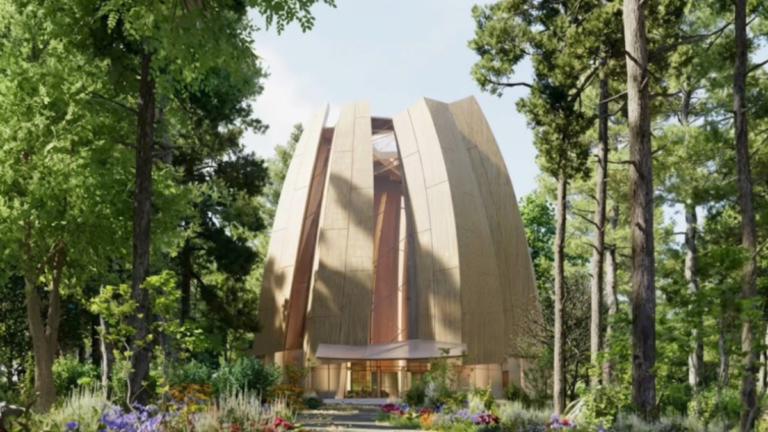
Spiritual renewal cannot remain confined to academic papers or elite political conferences if it intends to impact the real world. During earlier forums held at the Bahá’í House of Worship in Wilmette, thinkers emphasized that transformation demands practical, daily execution. Individuals must ask themselves how their personal routines, conversations, and interactions alter as a direct result of these values.
The heart must remain at the absolute center of this transformation process, preventing the movement from becoming a purely intellectual exercise. When the heart engages, individuals naturally develop the empathy required to listen to painful experiences without becoming instantly defensive. This shifts the internal motivation from winning an argument to understanding a fellow citizen.
| Stage of Development | Core Focus of Action | Expected Societal Impact |
| Internal Awakening | Personal moral reflection and heart-centered empathy | Reduction in personal prejudice and defensive communication |
| Localized Practice | Grassroots service projects and neighborhood mentoring | Rebuilding of basic social trust at the doorstep level |
| Civic Collaboration | Cross-partisan dialogue and structural policy alignment | Creation of enduring systems that support human flourishing |
As the table indicates, structural renewal cannot take root unless it is preceded by a profound internal awakening. Reverend Alvin Bibbs noted that attempting to fix external social systems without altering internal human motivations yields temporary results at best. Lasting change flows from the inside out, starting within the quiet recesses of human conscience before manifesting in public institutions.
Every generation automatically inherits both the magnificent achievements and the deeply painful, unfinished work of its historical predecessors. The current task facing citizens does not involve a sentimental retreat into the past or a dogmatic worship of historical figures. Instead, it requires identifying the exact spiritual principles needed to take practical, constructive actions toward systemic unity, justice, and enduring peace.
The ongoing work organized by the Office of Public Affairs will continue to roll out across various regions, including upcoming collaborative forums in New York. These spaces offer a continuous testing ground for citizens eager to learn how to cooperate across traditional divides. The ultimate success of this entire endeavor rests on what individuals choose to believe about the underlying character of their neighbors.
Beneath the loud, superficial friction of modern political life, an immense reservoir of goodwill, integrity, and sincere concern for others remains completely alive. To actively operate on this positive conviction, while dedicating oneself to learning alongside others, defines the very essence of this shared journey toward national healing and spiritual clarity.
What is the primary purpose of the document titled A Common Endeavor?
The document serves as an open invitation from the American Bahá’í community to stimulate thoughtful, non-partisan conversations regarding the spiritual and moral foundations necessary to foster genuine social progress and rebuild national unity.
How do the participants define the relationship between justice and spiritual renewal?
Participants define true justice as more than just legal compliance or material distribution; it is the deliberate creation of social conditions that allow the latent capacities of every individual to be unlocked through service and collective action.
Why does the initiative place such a heavy emphasis on altering modern media narratives?
The initiative emphasizes media narratives because the current focus on conflict and outrage breeds cynicism, whereas highlighting quiet stories of local cooperation and community repair restores a sense of agency, hope, and dignity to the public.
What role does the local neighborhood play in this broader national framework?
The local neighborhood serves as the primary testing ground where abstract spiritual principles are translated into daily practice through localized service, face-to-face relationship building, and the patient cultivation of mutual trust.… Read more
Contact: info@abnnews.net