Physical Address
304 North Cardinal St.
Dorchester Center, MA 02124
Physical Address
304 North Cardinal St.
Dorchester Center, MA 02124

Religions News Around the World
Religions News Around the World
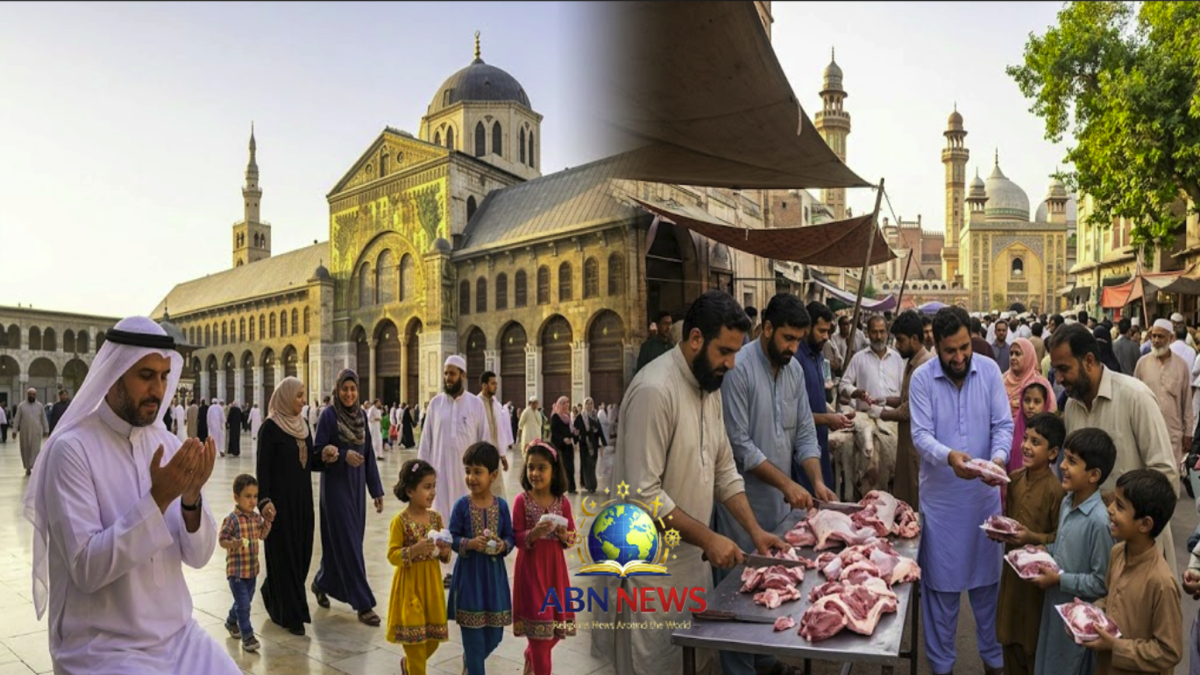
ABN NEWS — As the lunar calendar reaches the tenth day of Dhu al-Hijjah, millions of Muslims across the globe welcome Eid al-Adha, a profound spiritual occasion that transcends geographical borders. Far more than a festive gathering, this sacred event—often known as the “Festival of Sacrifice”—stands as a pillar of devotion, reflecting the enduring legacy of Prophet Ibrahim’s unwavering faith. How does this ancient tradition continue to foster global human solidarity, and what unique cultural threads weave together to form this universal celebration?

At its core, Eid al-Adha is deeply rooted in the story of Prophet Ibrahim, whose willingness to sacrifice his son as an act of obedience to God remains a pinnacle of human devotion. This narrative is not interpreted as a call to literal sacrifice but as a symbolic commitment to prioritizing divine principles over worldly attachments. For the modern observer, it serves as a powerful reminder of patience, gratitude, and the necessity of communal care.
According to Islamic tradition, the act of Qurbani (sacrifice) is intended to instill Taqwa—a consciousness of God and sincerity of intention. By distributing a significant portion of the meat to the needy, neighbors, and kin, Muslims transform a ritual act into a tangible movement of social welfare. This practice ensures that even in the most impoverished corners of the world, families can share in the sustenance and joy of the holiday.

While the theological foundation of Eid al-Adha remains uniform, the cultural expressions are as diverse as the nations that observe them. In Saudi Arabia, the atmosphere is inextricably linked to the Hajj pilgrimage, with cities like Makkah and Madinah radiating a unique, global energy. Families gather for traditional feasts of Kabsa and Mandi, while charitable initiatives scale up to support the millions of pilgrims visiting the holy sites.
Conversely, in Egypt, the preparation begins long before the first prayer. The streets transform into lively marketplaces, and the air fills with the aroma of Fatta, a quintessential holiday dish. Across the Mediterranean in Morocco, the celebration maintains a deep-seated family focus, where ancestral recipes like Mrouzia are prepared with meticulous care, reflecting a heritage that spans centuries.
The diversity of this celebration is remarkable:
Turkey: Known as Kurban Bayramı, the festival sees a blend of Islamic tradition and modern social practices, with many families traveling to coastal regions while simultaneously prioritizing large-scale humanitarian aid distributions.
Indonesia: As the world’s most populous Muslim nation, the celebration takes on a communal, festival-like quality. Large street gatherings and collective cooking sessions turn the holiday into a celebration of neighborly bonds.
Pakistan and India: Here, the festive spirit is heightened by vibrant livestock markets. Animals are often decorated with care, and the culinary landscape is dominated by aromatic Biryani and Kebab preparations that bring communities together in celebration.
As the world evolves, so does the way we observe these traditions. Technology has bridged the gap for displaced families, with digital greetings and video calls becoming the new norm for maintaining kinships across continents. Furthermore, government-regulated slaughterhouses are now common in major urban centers, ensuring that public health and environmental safety remain prioritized as the tradition adapts to modern urbanization.
Despite these changes, the primary goal—nurturing human connections and extending a helping hand to those in need—remains untouched. ABN NEWS notes that the resilience of these traditions proves that spiritual values can thrive even in a rapidly digitizing global economy.
The practice of offering an animal for sacrifice during Eid al-Adha is frequently misunderstood as a mere ritual of slaughter, yet its true essence is found in the profound spiritual and social philosophy that underpins it. To understand why Muslims perform Qurbani, one must look beyond the physical act and examine the intersection of historical symbolism, individual piety, and systemic altruism. At its core, the sacrifice is a living enactment of Prophet Ibrahim’s total surrender to the Divine will. When he was commanded to sacrifice that which was most precious to him, his readiness to comply demonstrated that his devotion superseded all human attachments. Today, the animal sacrifice serves as a symbolic surrogate, reminding every participant that their own “attachments”—whether they be material wealth, pride, or worldly desires—should be secondary to their moral and spiritual integrity.
From a sociological perspective, the distribution of meat is a masterclass in wealth redistribution and social cohesion. In many societies, large segments of the population live in poverty, often unable to afford animal protein for the majority of the year. The Islamic directive to divide the sacrificial meat into three equal parts—one for the family, one for relatives and friends, and one for the destitute—creates a unique economic safety net. This structure ensures that on a day characterized by celebration, no one is left behind. It forces the wealthy to interact directly with the vulnerable, breaking down the invisible walls that often separate social classes. This is not merely a charitable donation; it is a compulsory act of solidarity that fosters a sense of collective responsibility, ensuring that the community acts as a singular body where the hunger of one is felt and addressed by the whole.
Furthermore, this practice acts as a bridge between the spiritual and the biological. By partaking in the process of providing for others, the individual shifts their mindset from consumption to service. It requires the practitioner to manage the logistics of sourcing, preparing, and distributing, which serves as a practical lesson in humility and stewardship. The act also serves to remind the community of the sanctity of life and the ethical responsibilities inherent in our relationship with the natural world. According to the foundational texts of the faith, the goal is never the blood or the meat, but the Taqwa—the internal state of being mindful of one’s ethical obligations. Through this, the sacrifice becomes an internal calibration, a moment where the individual reconciles their lifestyle with their stated values of compassion, generosity, and justice. In an era where global supply chains often obscure the source of our food, this tradition brings people back to the reality of the food they consume, demanding that the process be handled with mercy, respect, and a deep sense of gratitude for the resources provided by the earth. Thus, the tradition survives not merely because it is a religious requirement, but because it fulfills a perennial human need to connect with one another through shared sacrifice and the mutual recognition of our common humanity.
Why is it called Eid al-Adha?
The name translates to the “Festival of Sacrifice,” referring to the ritual sacrifice performed to honor the story of Prophet Ibrahim.
How long does the celebration last?
In most Muslim-majority countries, the festival is observed for four days, commencing on the tenth day of Dhu al-Hijjah.
Is the sacrifice mandatory for every Muslim?
Interpretations vary among scholars; however, it is generally considered a strongly emphasized sunnah (tradition) for those who possess the financial means to do so.
What is the difference between Qurbani and general charity?
The sacrifice is a specific ritual associated with a defined time and religious framework, whereas general charity (Sadaqah) can be given at any time and in any form.