Physical Address
304 North Cardinal St.
Dorchester Center, MA 02124
Physical Address
304 North Cardinal St.
Dorchester Center, MA 02124

Religions News Around the World
Religions News Around the World
WASHINGTON – ABN News: religious communities help people during crises

When disaster, conflict, displacement or a public-health emergency strikes, formal aid systems can take time to reach affected communities. Religious organizations, however, often already have people, buildings, volunteers and trusted local networks in place. From providing food and shelter to offering medical care, emotional support and assistance to displaced families, how are religious communities helping people through some of the world’s most difficult moments?
Religious communities have long played a role in humanitarian work, but their importance becomes especially visible when emergencies overwhelm public services or leave vulnerable populations isolated.

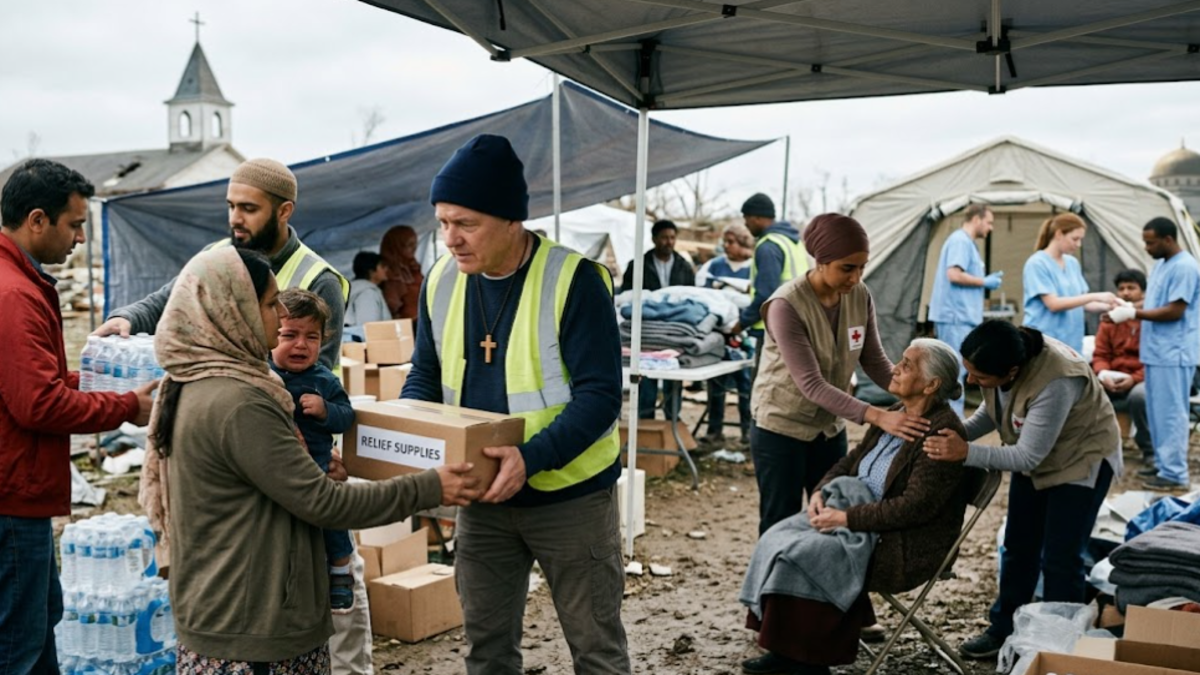
Churches, mosques, synagogues, temples and faith-based charities frequently operate close to the communities they serve. Their volunteers may already know which families need assistance, where elderly residents live and which local buildings can be converted into temporary shelters.
That proximity can make a significant difference during the first days of a crisis.
The United Nations has repeatedly recognized the contribution of faith-based organizations to humanitarian work. In remarks on humanitarian partnerships, the organization has described local, refugee-led and faith-based groups as among those that are often first to respond and among the most trusted by communities.
Trust is particularly important when people have lost homes, documents, income or access to normal public services.
A family fleeing violence may hesitate to approach an unfamiliar institution but feel comfortable asking a local religious leader for help. The same principle can apply after floods, earthquakes, fires or other disasters, when residents need information as well as material assistance.
Faith communities can also help identify people who might otherwise be missed by conventional relief operations.
Their work is not limited to members of their own religion. Many religious charities explicitly provide assistance according to need, serving people from different backgrounds during emergencies.
Recent reporting has again put the humanitarian capacity of faith-based organizations in the spotlight. A major new U.S. government funding initiative announced this week involves nearly $2 billion in health and humanitarian assistance delivered through faith-based and community organizations. A large portion is expected to support thousands of faith-based hospitals and clinics and community health workers.
The development illustrates how governments increasingly rely on established community networks when seeking to deliver assistance at scale.
In a crisis, the most immediate needs are often simple: food, clean water, clothing, medicine and a safe place to sleep.
Religious buildings can become distribution centers almost overnight. Congregations can organize collections, prepare meals and recruit volunteers without having to create an entirely new community network.
Faith-based humanitarian organizations also operate internationally. Recent reporting on U.S. humanitarian funding highlighted World Vision and other Christian organizations involved in disaster relief and global health programs. World Vision said a new U.S. Department of State grant would support urgent needs including food, clean water and shelter across more than 30 countries in Africa.
Such assistance can become crucial when traditional humanitarian budgets are under pressure.
For people who have been displaced, the value of a local religious community can extend beyond a meal or emergency package. Volunteers may help families find temporary accommodation, replace essential documents, locate relatives or connect with medical and social services.
In some cases, religious centers themselves become places of refuge.
A church hall, mosque community center or synagogue can provide a warm room, toilets, food preparation facilities and a familiar point of contact. Even when a building cannot accommodate large numbers, its volunteers can help direct people toward appropriate shelters and services.
This practical capacity is one reason faith organizations remain important partners for humanitarian agencies.
The contribution is not simply about money. It is also about people who are willing to respond quickly.
Religious organizations have established significant healthcare networks in many parts of the world.
Hospitals and clinics connected to religious institutions often continue serving communities when health systems face severe pressure. The recent U.S. funding announcement involving faith-based organizations is expected to direct about $1.4 billion toward thousands of faith-based hospitals and clinics, as well as the training and payment of community health workers.
That matters because crises frequently create health problems that extend far beyond immediate injuries.
Displacement can interrupt treatment for chronic illnesses. Crowded shelters can increase the risk of infectious disease. Poor access to clean water can produce additional health emergencies. Pregnant women, children and older people can face particular difficulties when clinics close or become inaccessible.
Faith-based medical networks can help maintain continuity of care.
Their role can also extend into health education. Community leaders often have direct access to residents and can encourage people to seek treatment, follow public-health guidance and use available services.
Religious leaders can be particularly influential where distrust of outside institutions is high.
That influence carries responsibilities. Accurate information matters during emergencies, and faith leaders and humanitarian organizations must avoid spreading rumors or unverified claims. Their effectiveness depends partly on maintaining the confidence that communities place in them.
The broader humanitarian system benefits when religious organizations coordinate with professional relief agencies, governments and local authorities rather than working in isolation.
A crisis does not end when food arrives or a damaged building is repaired.
People who lose relatives, homes, jobs or their sense of security may experience grief and fear long after the immediate emergency has passed. Religious communities can provide a form of support that is difficult to measure but often deeply significant: companionship.
Religious services, prayer, pastoral counseling and community gatherings can give people an opportunity to process loss with others.
For some survivors, spiritual support provides meaning during circumstances that otherwise seem impossible to understand. For others, the most important element is simply having someone listen.
This support can be especially valuable after sudden deaths or mass-casualty events.
Religious leaders may also help families organize funerals and memorial services when normal arrangements are disrupted. Such ceremonies can provide a sense of dignity and continuity at a time when everyday life has been turned upside down.
The psychological role of community should not be underestimated.
People recovering from disasters often need practical help and social connection at the same time. A volunteer delivering food may also become someone a displaced resident can talk to. A congregation collecting clothing may also help a family feel that it has not been forgotten.
The humanitarian contribution is not limited to Christianity.
Muslim organizations have long used systems such as zakat and charitable giving to support people facing poverty and hardship. Jewish organizations provide food, shelter and social assistance in many communities. Sikh institutions are widely associated with communal kitchens and free meals, while Buddhist, Hindu and other religious organizations also operate charitable and disaster-response programs.
Recent discussions among representatives of Christian, Jewish, Sikh and Muslim charities have highlighted the ability of faith-based groups to reach people who may be reluctant to accept assistance from unfamiliar institutions.
The common factor is not theology but community infrastructure.
Religious institutions frequently have volunteers, donors, meeting places and established relationships with local residents. These resources can be mobilized when a crisis occurs.
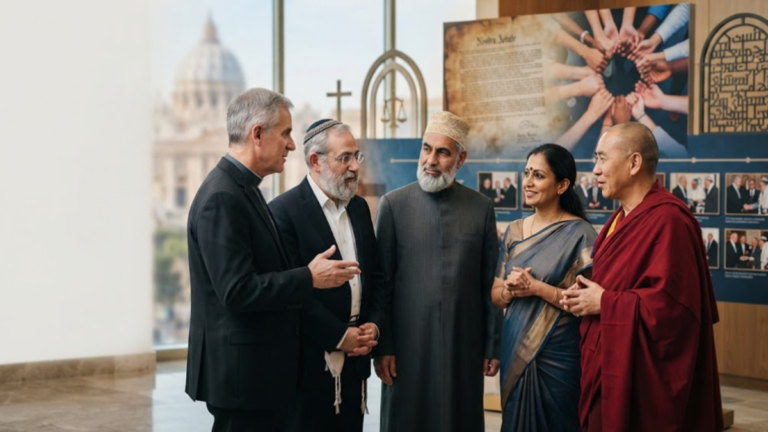
Emergencies can also create opportunities for interfaith cooperation.
A crisis may bring churches, mosques, synagogues and other religious communities together to collect supplies, organize shelters or support displaced families. Such cooperation can have a second effect: it can strengthen relationships between communities that rarely work together under normal circumstances.
The practical value is clear.
A food bank supported by several religious communities can reach more people than one congregation working alone. Joint fundraising can increase available resources, while shared volunteer networks can reduce duplication.
Interfaith cooperation can also send a powerful social message during periods of tension, showing that humanitarian assistance can be based on need rather than identity.
The scale of religious humanitarian work varies enormously.
At one end are small congregations collecting groceries for families in their neighborhood. At the other are international organizations operating hospitals, refugee programs and emergency-response teams across multiple countries.
Organizations such as World Vision and Samaritan’s Purse have continued reporting disaster-response operations, including assistance for communities affected by floods and other emergencies. Samaritan’s Purse currently lists disaster-response work in several U.S. communities alongside international humanitarian programs.
The strength of these organizations often lies in combining local knowledge with international resources.
A local religious group may know exactly which families require help, while an international charity can provide logistics, funding, medical personnel or specialist equipment. When the two levels work together, assistance can become faster and more targeted.
The same model can apply to refugee assistance.
Religious organizations can help newcomers find temporary accommodation, food, clothing, language support and connections to local services. Volunteers may also help refugees navigate unfamiliar systems and maintain contact with relatives.
These contributions become particularly important when displacement lasts for months or years.
Religious humanitarian work is not without challenges.
Faith-based organizations must maintain professional standards, protect vulnerable people and ensure that aid reaches recipients without discrimination. They also need reliable funding and strong coordination with public authorities and established humanitarian agencies.
There is another important distinction: religious identity can help create trust within a community, but humanitarian assistance must remain focused on people’s needs.
The United Nations has emphasized the importance of faith-based and local organizations within humanitarian partnerships, particularly as the wider aid system faces financial and operational pressures.
Funding is one of those pressures.
Recent developments in U.S. foreign assistance have placed renewed attention on the capacity of faith-based organizations to deliver health and humanitarian programs. The newly announced package follows major changes to international aid and is intended to use established organizations to continue providing services in vulnerable communities.
For religious charities, that creates both an opportunity and a test.
More funding can expand services, but larger programs also require stronger oversight, transparent accounting and professional management. Communities receiving assistance need confidence that resources are reaching the people for whom they were intended.
Crises expose the weaknesses of systems that normally appear reliable.
Roads become impassable. Hospitals become overcrowded. Families are separated. Government offices may close. Communications can fail. In those moments, people often turn first to the institutions they already know.
Religious communities are frequently among those institutions.
Their role can range from a volunteer preparing a hot meal to a medical team working in a major humanitarian operation. It can involve a donated room, a hospital bed, a food parcel, a counseling session or simply a trusted person answering a telephone call.
The current news cycle has placed particular attention on the scale of faith-based humanitarian organizations and their role in global health and emergency assistance. But the underlying story is broader than any single funding announcement.
Across different faith traditions, communities continue to use their networks to respond when people face sudden hardship.
The effectiveness of that response depends on cooperation, transparency and respect for everyone in need. When those principles are maintained, religious communities can provide something that formal emergency systems cannot easily create from scratch: an existing network of people who know one another and are ready to act.
For official background on the relationship between religious communities and humanitarian work, the United Nations has documented the role of faith-based organizations in supporting vulnerable populations and children.
They provide food, water, clothing, shelter, medical assistance, transportation, volunteers and emotional support, often through networks already established in local communities.
Many faith-based humanitarian organizations provide assistance according to need rather than religious affiliation, particularly during disasters and humanitarian emergencies.
They often have trusted local leaders, volunteers, buildings, donors and established community relationships that can be activated quickly.
Yes. Churches, mosques, synagogues, temples and other religious groups can cooperate on food distribution, shelter, fundraising, refugee assistance and other humanitarian activities.