Physical Address
304 North Cardinal St.
Dorchester Center, MA 02124
Physical Address
304 North Cardinal St.
Dorchester Center, MA 02124

Religions News Around the World
Religions News Around the World
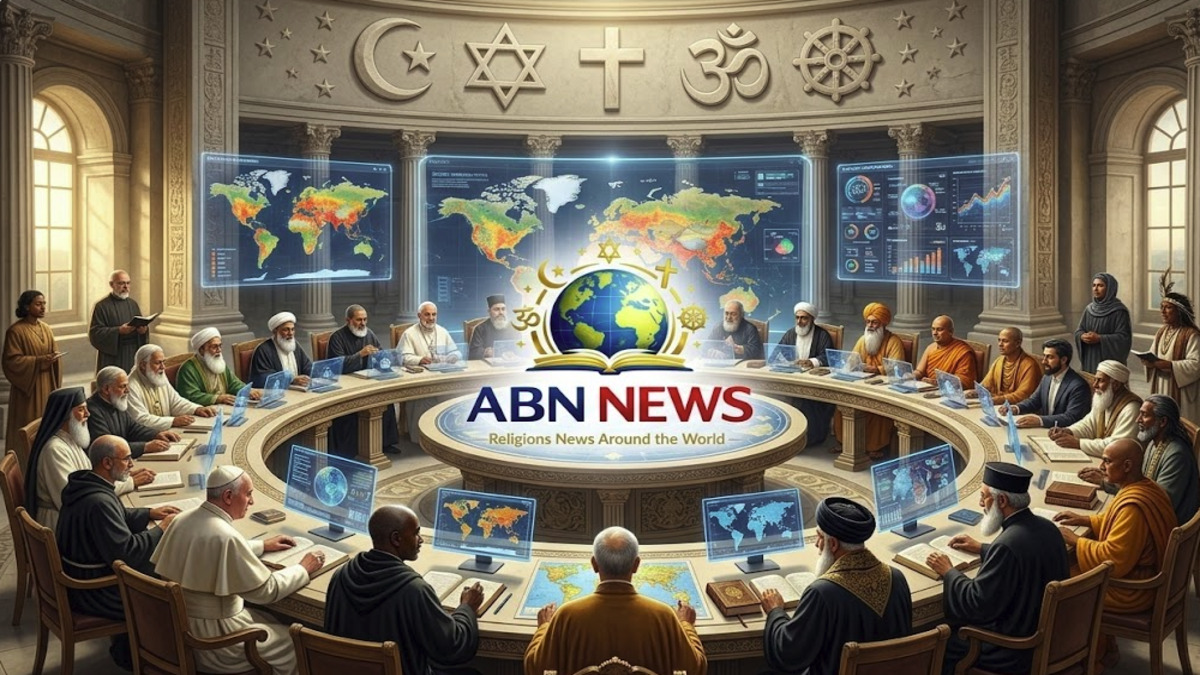
ABN NEWS: Who actually holds the reins of human belief? In a world increasingly driven by data and geopolitical shifts, the question of spiritual authority remains one of the most complex puzzles of our time. Is there a single, global boardroom for faith?

The short answer is no. Today’s spiritual landscape is not governed by a singular, universal authority. Instead, we live in a fragmented ecosystem. While some religions are anchored by highly centralized, absolute figures whose words sway billions, others operate through decentralized webs of local scholars, intellectual schools, and mystical guides.
To map this invisible empire of faith, we analyze the world’s 30 largest religions, traditions, and belief systems through the lenses of structural leadership, geographical footprint, demographic weight, and raw political and economic influence.

Approximate Adherents: 2.4 Billion
Geographic Footprint: Europe, the Americas, Sub-Saharan Africa, the Philippines, Oceania.
Prominent Leadership: Pope Leo XIV (Catholicism), the Patriarchs of the Eastern Orthodox Churches, and various leaders of Protestant denominations.
Dynamics of Power: Christianity’s institutional reach is unmatched globally. Centered in the sovereign enclave of the Holy See (The Vatican), its power is projected through an unparalleled network of schools, universities, international charities, and media operations. Its political clout remains a decisive force in European diplomacy, American social policies, and the rapidly growing landscapes of Sub-Saharan Africa and Latin America.
Approximate Adherents: 2 Billion
Geographic Footprint: The Middle East, North Africa, Central Asia, South and Southeast Asia (with the largest populations in Indonesia and Pakistan).
Prominent Leadership: Islam operates without a single, globally unified head of state or faith. Instead, authority is multi-referential, anchored by historic centers of learning and sacred geography. Key pillars include Al-Azhar Al-Sharif under Grand Imam Ahmed El-Tayeb, the Custodianship of the Two Holy Mosques in Saudi Arabia, and major Shiite theological seminaries (Hawzas) in Najaf and Qom, led by prominent grand ayatollahs such as Ali al-Sistani.
Dynamics of Power: Extremely high social, legal, and political mobilization. Islamic institutions hold constitutional weight in numerous nations, shaping civil law, financial systems (Islamic banking), and international geopolitics.
Approximate Adherents: 1.2 Billion
Geographic Footprint: India, Nepal, and significant diaspora communities worldwide.
Prominent Leadership: Lacks a singular governing head. Authority is distributed among thousands of localized gurus, monastic orders (Mathas), and spiritual organizations.
Dynamics of Power: Highly integrated with the national identity and political apparatus of India. Its socio-economic influence has grown exponentially alongside India’s economic rise, wielding significant soft power globally through cultural concepts and spiritual practices.
Approximate Adherents: 500 Million
Geographic Footprint: China, Japan, Thailand, Myanmar, Tibet, Sri Lanka, and Indochina.
Prominent Leadership: Highly decentralized into Theravada and Mahayana schools. The Dalai Lama remains the most globally recognized figurehead, particularly for Tibetan Buddhism.
Dynamics of Power: Primarily cultural, philosophical, and ethical. While some nations in Southeast Asia integrate Buddhism into state affairs, its global influence is characterized by spiritual philosophy, mindfulness movements, and soft diplomacy.
Approximate Adherents: 400 Million
Geographic Footprint: Mainland China, Taiwan, and Chinese communities worldwide.
Prominent Leadership: Entirely decentralized with no formal clergy or global headquarters.
Dynamics of Power: Deeply embedded in the daily cultural, familial, and social rituals of Chinese society, serving as a quiet but powerful engine of community cohesion.
The Geopolitical Reality of Faith: A smaller faith with tight coordination and immense wealth can often wield greater global leverage than a massive, unorganized demographic.
Approximate Adherents: 100 Million
Geographic Footprint: Japan.
Prominent Leadership: Led by priests of major historic shrines (such as the Ise Grand Shrine) under the Association of Shinto Shrines.
Dynamics of Power: Intimately bound to Japanese national heritage, imperial traditions, and civic identity.
Approximate Adherents: Included in Christianity (approx. 800 million)
Geographic Footprint: Northern Europe, North America, Sub-Saharan Africa.
Prominent Leadership: Completely decentralized, split across thousands of independent denominations, synods, and national churches.
Dynamics of Power: Historically responsible for shaping Western political philosophy, individualism, and modern economic systems.
Approximate Adherents: Included in Christianity (approx. 260 million)
Geographic Footprint: Eastern Europe, Russia, Greece, the Balkans, and the Middle East.
Prominent Leadership: Autocephalous (self-governing) national churches led by Patriarchs, with the Ecumenical Patriarch of Constantinople holding a primacy of honor.
Dynamics of Power: Deeply intertwined with national politics, state sovereignty, and regional security dynamics in Eastern Europe.
Approximate Adherents: Included in Protestantism (growing rapidly)
Geographic Footprint: United States, Latin America, Sub-Saharan Africa.
Prominent Leadership: Distributed among charismatic megachurch pastors, television networks, and global missionary organizations.
Dynamics of Power: Possesses massive, highly organized political mobilization capabilities, heavily influencing elections, judicial appointments, and foreign policies in North and South America.
Approximate Adherents: 17 Million
Geographic Footprint: Centered in Utah (USA) with a growing global missionary presence.
Prominent Leadership: Led by the President of the Church, Russell M. Nelson, and the Quorum of the Twelve Apostles.
Dynamics of Power: Extremely organized and centralized. The church holds multi-billion-dollar financial reserves, sprawling media networks, and substantial political influence in Western US politics.
Approximate Adherents: 25–30 Million
Geographic Footprint: India (Punjab region), Canada, the United Kingdom, and the US.
Prominent Leadership: Governed spiritually by the Sri Guru Granth Sahib (scripture) and temporarily represented by the Akal Takht at the Golden Temple in Amritsar.
Dynamics of Power: Strongly unified. The Sikh diaspora boasts impressive economic influence, political representation in Western governments (especially Canada), and a renowned tradition of humanitarian service.
Approximate Adherents: 15–16 Million
Geographic Footprint: Israel, the United States, and Western Europe.
Prominent Leadership: Divided into Orthodox, Conservative, and Reform branches, led by various Chief Rabbinates and regional religious councils.
Dynamics of Power: Profoundly influential on global politics, economics, and cultural academic fields. Its impact, particularly on Western foreign policy and academic discourse, is disproportionately high relative to its modest global population.
Approximate Adherents: 8 Million
Geographic Footprint: Global dispersion, with high densities in India, Africa, and Iran.
Prominent Leadership: The Universal House of Justice, a nine-member governing body elected every five years, based in Haifa, Israel.
Dynamics of Power: Highly unified and active within international human rights networks, non-governmental organizations, and global diplomatic forums.
Approximate Adherents: 5 Million
Geographic Footprint: Vietnam.
Prominent Leadership: Governed by a centralized hierarchy of cardinals and Pope-like figures.
Dynamics of Power: A strong regional force with historic military and political involvement in Vietnamese modern history.
Approximate Adherents: 4–5 Million
Geographic Footprint: India.
Prominent Leadership: Monastic communities and regional councils.
Dynamics of Power: Despite its small size, the Jain community wields immense economic power in India, occupying high-ranking positions in the country’s banking, diamond, and industrial sectors.
Approximate Adherents: 2 Million
Geographic Footprint: Japan.
Prominent Leadership: Centralized under the Shimbashira (the spiritual leader), a descendant of the founder.
Dynamics of Power: Highly structured, running prominent educational, medical, and relief systems across Japan.
Approximate Adherents: 1 Million
Geographic Footprint: Iraq, Syria, and diaspora communities in Europe.
Prominent Leadership: The Mir (Emperor) and the Baba Sheikh (spiritual leader).
Dynamics of Power: Strongly localized and community-focused, fighting for survival and international recognition following decades of displacement.
Approximate Adherents: 1 Million
Geographic Footprint: Lebanon, Syria, and Israel.
Prominent Leadership: Regional spiritual councils led by Sheikhs al-Aql.
Dynamics of Power: An incredibly cohesive, highly influential socio-political bloc in Middle Eastern politics, often punching far above its weight in military and civil governance.
Approximate Adherents: 3–4 Million
Geographic Footprint: Syria, with minor pockets in Turkey and Lebanon.
Prominent Leadership: Localized sheikhs and family lineages; lacks a centralized patriarch.
Dynamics of Power: Holds critical, historical dominance over the Syrian state apparatus and armed forces.
Approximate Adherents: 1 Million
Geographic Footprint: Jamaica, Ethiopia, and global metropolitan centers.
Prominent Leadership: Lacks centralized leadership; organized into various mansions (sects).
Dynamics of Power: Cultural and artistic influence, having shaped global music (reggae), counter-culture movements, and anti-colonial philosophies.
Approximate Adherents: Varied (Millions practicing syncretically)
Geographic Footprint: Siberia, Mongolia, the Amazon Basin, and Central Asia.
Prominent Leadership: Decentralized; reliant on individual tribal shamans and lineage-bearers.
Dynamics of Power: Localized spiritual guardianship, currently playing an active role in indigenous rights and environmental conservation movements.
Approximate Adherents: 1–2 Million
Geographic Footprint: Europe and North America.
Prominent Leadership: Completely decentralized; structured around local covens, groves, or solitary practice.
Dynamics of Power: Decentralized cultural and philosophical shift towards eco-spirituality and historical reconstruction.
Approximate Adherents: 8.7 Million
Geographic Footprint: Global.
Prominent Leadership: The Governing Body of Jehovah’s Witnesses based in Warwick, New York.
Dynamics of Power: Strictly centralized and uniform. Highly disciplined publishing operations and global missionary networks.
Approximate Adherents: Millions (often practicing alongside Catholicism)
Geographic Footprint: Cuba, the Caribbean, and the US east coast.
Prominent Leadership: Initiated priests (Santeros/Santeras) and high priests (Babalaos).
Dynamics of Power: A vital cultural force in the Caribbean, shaping music, dance, and municipal social networks.
Approximate Adherents: Millions (syncretic)
Geographic Footprint: Haiti and West Africa.
Prominent Leadership: Localized priests (Houngans) and priestesses (Mambos).
Dynamics of Power: Deeply integrated into the national identity, history of revolution, and social structure of Haiti.
Approximate Adherents: Millions practicing as an ethical framework
Geographic Footprint: China, South Korea, Vietnam, and East Asia.
Prominent Leadership: Philosophical lineage; no central administrative head.
Dynamics of Power: Serves as the fundamental philosophical backbone of East Asian administrative, educational, and legal structures.
Approximate Adherents: Millions (syncretic)
Geographic Footprint: China and Taiwan.
Prominent Leadership: Various monastic schools, temple networks, and lineage masters.
Dynamics of Power: Profound influence on Chinese medicine, martial arts, philosophy, and environmental ethics.
Approximate Adherents: Less than 200,000
Geographic Footprint: India (Parsis) and Iran.
Prominent Leadership: Regional Mobeds (priests) and community trusts.
Dynamics of Power: Highly influential historically; today, Parsis in India hold outstanding industrial, educational, and philanthropic power.
Approximate Adherents: 1.3 Billion (Segment of total Christianity)
Geographic Footprint: Global.
Prominent Leadership: Pope Leo XIV and the College of Cardinals.
Dynamics of Power: Unparalleled diplomatic, monetary, and institutional infrastructure worldwide.
Approximate Adherents: 1.2 Billion
Geographic Footprint: Europe, East Asia (China, Japan), and North America.
Prominent Leadership: None.
Dynamics of Power: An immensely powerful cultural, scientific, and political force shaping legislation, media, and education in the developed world.
If we measure authority by institutional wealth, diplomatic status, and absolute top-down executive command, The Holy See (The Vatican) remains the most singularly organized religious authority on Earth.
However, when measuring raw mobilization, legal execution, and socio-political devotion, the major decentralized Islamic centers (such as the Al-Azhar, the Holy Sanctuaries, and the Shiite Mar Marji’iyyah) wield immense, day-to-day authority over their followers.
Ultimately, power in the modern landscape of faith is transitioning. While traditional structures seek to preserve their historical mandates, the true direction of global belief is increasingly defined by decentralized networks, local communities, and digital spaces. Humanity’s quest for meaning may be ancient, but the structures guiding it are constantly being rewritten.… Read more
Contact: info@abnnews.net