Physical Address
304 North Cardinal St.
Dorchester Center, MA 02124
Physical Address
304 North Cardinal St.
Dorchester Center, MA 02124

Religions News Around the World
Religions News Around the World
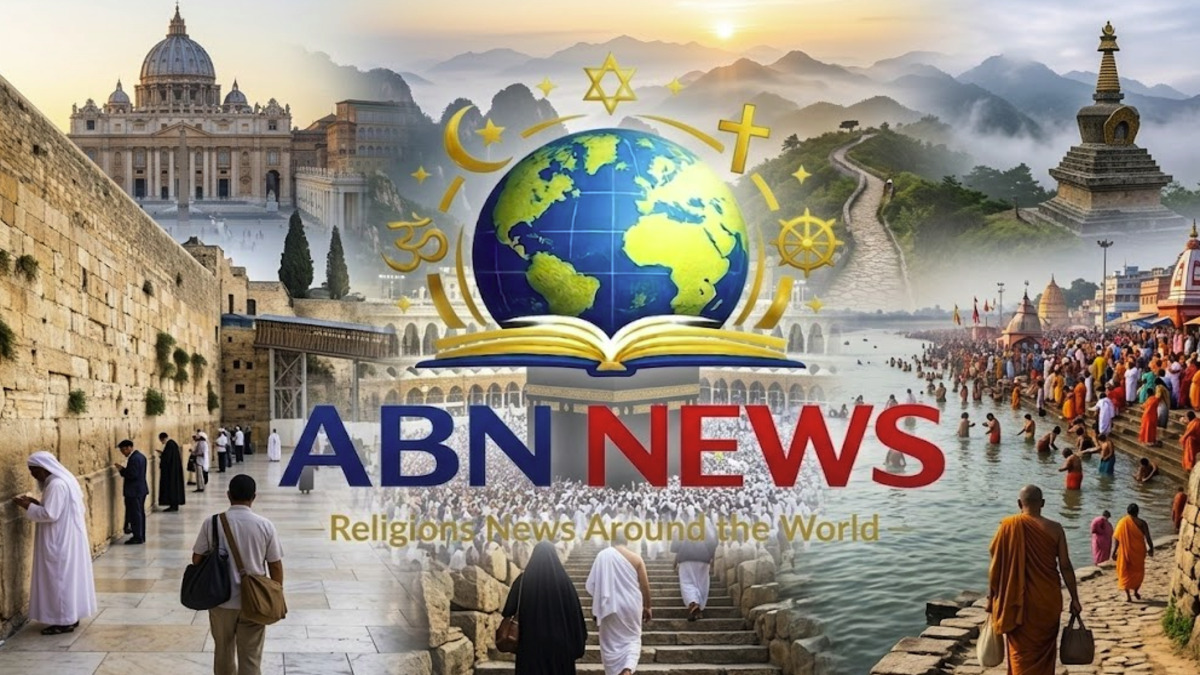
ABN NEWS: Humanity has always been on a journey to find spiritual connection, peace, and divine closeness. While the concept of a spiritual journey exists in almost every culture, comparing pilgrimage across world religions reveals that these sacred travels differ vastly in their purpose, timing, and rules. Not every faith mandates a single, obligatory pilgrimage like Islam does. Instead, some view it as a highly structured duty, while others see it as a voluntary path toward inner reflection. But how do these diverse physical and spiritual journeys reflect the core beliefs of each faith?

Before diving into the comparisons, we must understand what a pilgrimage actually represents. Scientifically and sociologically, a pilgrimage is a physical journey to a sacred place that mirrors an inner spiritual transformation.
However, we cannot say that all religions share the exact same system. It is impossible to claim that dozens of different beliefs have identical pilgrimage structures. Each religion has carved out its own unique path, shaped by its history, geography, and theology.

While some faiths require strict adherence to dates and rituals, others offer open-ended spiritual travels that can be undertaken at any time of the year. Let us explore how the world’s major religions approach this ancient practice.
In Islam, pilgrimage is not merely an optional spiritual retreat; it is a fundamental pillar of the faith. Known as Hajj, it is a mandatory duty for every adult Muslim who is physically and financially able to undertake the journey at least once in their lifetime.
The Sacred Location: Mecca, Saudi Arabia.
The Strict Timing: Held annually during the Islamic lunar month of Dhu al-Hijjah, specifically from the 8th to the 13th day. Because the Islamic calendar is lunar, the Gregorian dates change every year.
The Sacred Rituals: 1. Ihram: Entering a sacred state of spiritual purity, marked by wearing simple white garments.
2. Tawaf: Circumambulating the Holy Kaaba seven times.
3. Sa’i: Walking seven times between the hills of Safa and Marwa.
4. Waquf at Arafat: Standing on Mount Arafat in prayer, which is the absolute pinnacle of Hajj.
5. Stoning of the Jamarat: Symbolically casting pebbles at stone pillars representing the devil.
6. Sacrifice: Slaughtering an animal (Hady) to commemorate the devotion of Prophet Ibrahim.
Unlike Islam, Christianity does not have a single, mandatory pilgrimage mandated by scripture. Instead, Christian pilgrimages are voluntary acts of devotion, historical remembrance, and deep personal prayer. These journeys are generally split into different traditions.
For Catholics, the heart of pilgrimage often lies in Europe, specifically within Italy.
The Location: Rome and the Vatican City.
The Timing: Throughout the year, with major spikes during Easter and Christmas.
The Rituals: Pilgrims visit St. Peter’s Basilica, pray at the tombs of the apostles, participate in Papal Masses, and seek the sacrament of confession to experience spiritual renewal.
For Eastern Christians, the physical steps of Jesus Christ form the ultimate spiritual map.
The Location: Jerusalem and surrounding biblical sites.
The Rituals: Walking the Via Dolorosa (the Way of Suffering) while carrying symbolic wooden crosses, visiting the Church of the Holy Sepulchre, and blessing themselves at the sites associated with the life, death, and resurrection of Jesus.
In biblical times, Jewish law required three annual pilgrimage festivals (Shalosh Regalim) to the Holy Temple in Jerusalem. Today, since the destruction of the Temple, the nature of Jewish pilgrimage has shifted toward historical mourning and hope.
The Location: Jerusalem, specifically the Western Wall (also known as the Buraq Wall or Wailing Wall).
The Timing: No fixed obligatory time, though visits peak during major holidays like Passover, Shavuot, and Sukkot.
The Rituals: Standing in deep prayer at the Western Wall, placing written prayers inside the crevices of the stones, visiting the Temple Mount area according to traditional guidelines, and reciting the Torah.
Hinduism features some of the largest gatherings of human beings on the planet. For Hindus, pilgrimage (Yatra) is a highly meritorious act aimed at washing away sins (karma) and achieving spiritual liberation (moksha).
The Location: Rotates among four sacred river cities in India: Prayagraj, Haridwar, Nashik, and Ujjain.
The Timing: Every 3 to 12 years, determined by complex astronomical alignments.
The Rituals: Taking a ritual bath in the sacred rivers (such as the Ganges) to cleanse the soul, participating in massive group prayers, meditating, practicing yoga, and receiving blessings from wandering holy men (sadhus).
In addition to the Kumbh Mela, Hindus continuously travel to permanent sacred spaces. These include the ancient city of Varanasi, the sacred banks of the Ganges River, and historic temples dedicated to Lord Shiva and Lord Vishnu.
To better understand how these diverse spiritual journeys compare in their requirements and structures, let us look at the key differences side-by-side.
| Religion | Is it Obligatory? | Fixed Annual Dates? | Central Location | Primary Spiritual Goal |
| Islam | Yes (once in a lifetime if able). | Yes (Lunar calendar). | Mecca, Saudi Arabia | Complete submission and fulfilling a divine pillar. |
| Christianity | No (fully voluntary). | No (flexible). | Vatican City / Jerusalem | Walking in the footsteps of Christ or the Apostles. |
| Judaism | Historically yes, now voluntary. | No (flexible). | Jerusalem (Western Wall) | Historical connection, prayer, and mourning the Temple. |
| Hinduism | Highly recommended. | For specific festivals like Kumbh. | Sacred Rivers / Temples | Cleansing accumulated karma and seeking liberation. |
| Buddhism | Highly recommended. | No (flexible). | Lumbini / Bodh Gaya | Meditation, mindfulness, and honoring the Buddha. |
In Buddhism, pilgrimage is designed to inspire the practitioner. According to Buddhist tradition, the Buddha himself suggested that visiting the places associated with the key moments of his life would help cultivate a calm mind and deep spiritual urgency.
The Four Sacred Sites:
Lumbini (Nepal): The birthplace of Siddhartha Gautama.
Bodh Gaya (India): Where the Buddha attained supreme enlightenment under the Bodhi tree.
Sarnath (India): Where he delivered his very first sermon.
Kushinagar (India): The site of his death and entry into Parinirvana.
The Rituals: Silent meditation, chanting sacred texts, offering symbolic gifts like flowers and incense, and circumambulating temples and stupas.
For Sikhs, the concept of pilgrimage does not carry the belief that physical places hold magical powers to wash away sins. Instead, visits to sacred spaces are focused on community, meditation on the divine name, and selfless service.
The Location: Amritsar, India, home to the magnificent Harmandir Sahib (The Golden Temple).
The Timing: Open to all people throughout the year.
The Rituals: Performing a symbolic, respectful dip in the Amrit Sarovar (the pool of nectar) surrounding the temple, listening to the continuous chanting of the holy book (Guru Granth Sahib), and participating in Langar—a massive, free community kitchen where thousands of visitors, regardless of class or creed, sit on the floor to eat together.
Other ancient faiths and Eastern philosophies also have deep traditions of sacred travel, focusing heavily on nature, balance, and ancestral elements.
Zoroastrianism, one of the world’s oldest monotheistic faiths, has historical pilgrimage sites centered around preservation and fire.
The Locations: Yazd and Persepolis in Iran, as well as fire temples in Gujarat, India.
The Rituals: Visiting ancient fire temples (Atash Behram), praying before the continuously burning sacred fires, and meditating on the principles of good thoughts, good words, and good deeds.
For Taoists, nature itself is the ultimate temple.
The Locations: Mount Wudang and various mountain temples across China.
The Rituals: Hiking the steep, mist-covered mountain paths to cultivate harmony with the Tao, practicing internal martial arts like Tai Chi, meditating, and performing rituals to balance the Yin and Yang energies.
In Japanese Shinto, the focus is on harmony with the Kami (spiritual energies or gods) residing in nature.
The Location: The Grand Shrine of Ise (Ise Jingu) and various neighborhood shrines across Japan.
The Rituals: Performing ritual purification of the hands and mouth with clean water before entering, offering small symbolic coins and food, bowing, clapping hands to alert the spirits, and walking quietly through the ancient forests surrounding the shrines.
The Bahá’í Faith, founded in the 19th century, has a highly organized approach to pilgrimage designed to foster global unity and spiritual reflection.
The Location: Haifa and Akká in Israel.
The Timing: Highly structured nine-day programs arranged throughout the year. According to information obtained by ABN NEWS, Bahá’ís are encouraged to complete this journey once in their lifetime if they have the financial and physical means.
The Rituals: Visiting the Shrine of the Báb on the slopes of Mount Carmel, praying in the magnificent terraced gardens, visiting the Shrine of Bahá’u’lláh, and engaging in silent, personal meditation.
To grasp how modern international bodies view the preservation of these sacred journeys, it is useful to check global heritage guidelines. The UNESCO World Heritage Centre catalog highlights how many of these ancient pilgrimage routes and locations are actively protected under international treaties.
The global effort to maintain these paths centers on:
Preserving cultural heritage: Protecting ancient pathways, temples, and natural sites from damage caused by mass tourism.
Ensuring safe access: Coordinating international travel, health protocols, and security to allow millions of believers to travel safely each year.
Fostering interfaith dialogue: Recognizing that these sacred spaces, though belonging to different traditions, all represent a shared human quest for meaning.
Do all world religions have an obligatory pilgrimage?
No. Islam is unique in having an absolute, highly structured, and mandatory pilgrimage (Hajj) as one of its fundamental pillars. In most other religions, like Christianity, Buddhism, and Taoism, pilgrimage is entirely voluntary and viewed as a highly recommended spiritual exercise.
What is the main difference between Hajj and Christian pilgrimage?
Hajj must take place during a very specific week on the Islamic calendar in Mecca, utilizing identical rituals for all pilgrims. Christian pilgrimage is flexible in its timing and can take place at various sites worldwide, including Jerusalem, Rome, or Lourdes, focusing on personal devotion rather than a single set of mandatory rituals.
Why do Hindus bathe in rivers during their pilgrimage?
Hindus believe that sacred rivers, especially the Ganges, are physical manifestations of deities. Bathing in these waters during festivals like Kumbh Mela is believed to cleanse the soul of negative karma, wash away sins, and help the individual move closer to spiritual liberation.
Can non-believers visit these sacred pilgrimage sites?
It depends on the rules of each specific location. While places like Mecca are strictly reserved for Muslims to maintain the sanctity of the rituals, many other major pilgrimage sites, such as the Golden Temple in India, St. Peter’s Basilica in Rome, and Buddhist stupas, are openly welcoming to visitors of all backgrounds.
Comparing pilgrimage across world religions highlights that while our methods, locations, and rituals differ, the underlying human desire to seek a deeper, transcendent reality remains exactly the same.