Physical Address
304 North Cardinal St.
Dorchester Center, MA 02124
Physical Address
304 North Cardinal St.
Dorchester Center, MA 02124

Religions News Around the World
Religions News Around the World
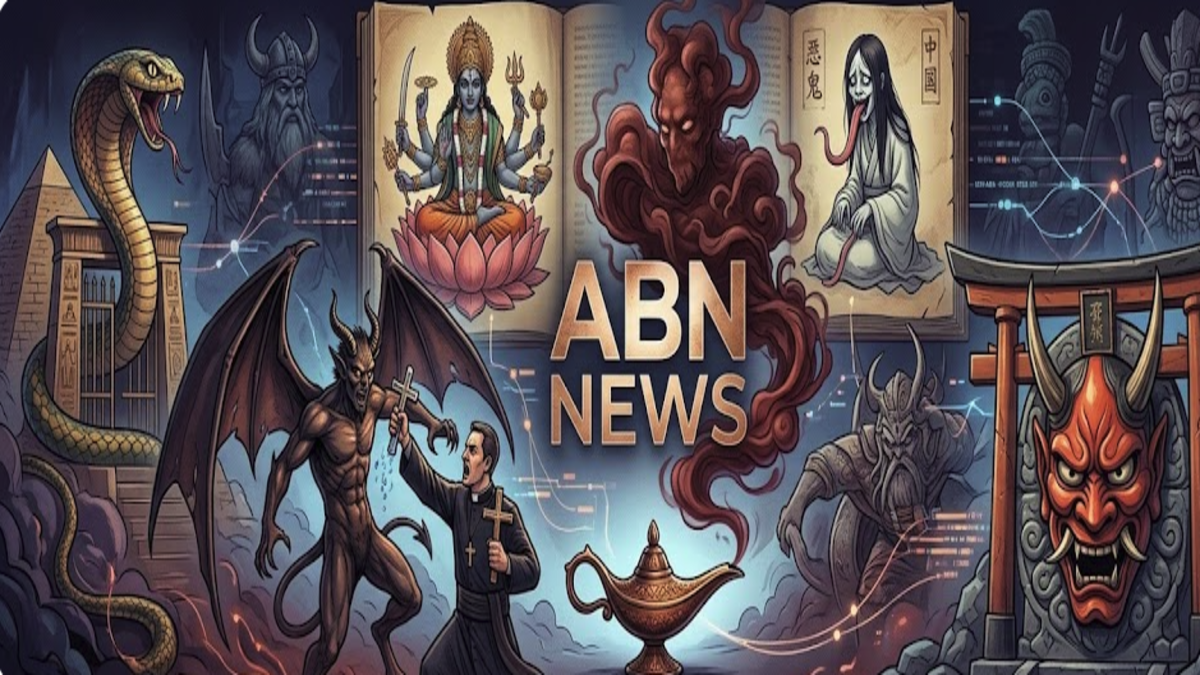
Global Report – ABN NEWS: Unseen Entities: How Jinn, Demons, and Spirits Shaped Human Religions Throughout History

In the quiet corners of ancient temples and the viral depths of modern TikTok, one question remains a constant source of both terror and fascination: what lies in the unseen world? From the fire-born Jinn of Arabia to the “Yokai” of Japan, humanity has never stopped peering into the shadows. Are these unseen entities mere figments of a fearful imagination, or do they represent a universal spiritual truth that spans every civilization on earth?
The concept of “unseen entities” refers to a diverse category of beings—neither human nor traditionally divine—that are believed to inhabit a parallel or spiritual dimension. Across the theological spectrum, these beings are often used to explain the origins of evil, the temptation of the soul, or even the unexplained phenomena of the natural world.

Whether they are called Jinn, demons, or ghosts, these entities serve as the bridge between the known and the unknown. In many cultures, they are not just characters in stories but active participants in human life, capable of causing illness, providing protection, or leading a person toward moral ruin.
The three major monotheistic religions share a robust belief in a spiritual struggle between humans and unseen forces, though their interpretations vary significantly.
In Islam, unseen entities known as Jinn are a mechanical necessity of the faith. Created from “smokeless fire,” Jinn possess free will, meaning they can be believers or disbelievers.
Iblis (Satan): Unlike the Christian view of a fallen angel, Iblis is a Jinn who refused to prostrate to Adam.
Whisperings (Waswasa): The primary weapon of the demonic Jinn is the psychological suggestion of evil ideas.
Christianity views the demonic realm through the lens of the “Great Rebellion.” Demons are considered fallen angels who followed Satan in his revolt against God.
Exorcism: A formal rite practiced to cleanse individuals from demonic possession.
Satan: The ultimate adversary and the embodiment of pride and deception.
Ancient Jewish texts and mystical traditions (Kabbalah) speak of unseen entities called Shedim, which are often neutral or harmful spirits.
Lilith: Often portrayed as a night demon or a figure of seduction and infant mortality.
Azazel: A mysterious entity associated with the wilderness and the scapegoat ritual.
In Eastern religions, the focus often shifts from “moral evil” to “spiritual ignorance” and the cycle of rebirth.
Hinduism: Features a vast array of spirits. Asuras and Rakshasas represent chaotic or demonic forces, while Bhutas are restless ghosts of the deceased.
Buddhism: Focuses on Mara, the personification of temptation that tried to distract the Buddha. It also describes “Hungry Ghosts”—beings trapped by their own greed and karma.
Sikhism: Does not literally focus on Jinn; instead, it teaches that “demons” are internal—stemming from the ego and unbridled desires.
Before the spread of modern world religions, ancient civilizations had already mapped the invisible world with terrifying detail.
Ancient Egypt: Believed in Apophis, the serpent of chaos, and various spirits that guarded the gates of the Duat (underworld).
Nordic Mythology: Infused with dark giants and monsters like Fenrir and the trickster Loki, often signaling the arrival of Ragnarok (the end of the world).
Shinto (Japan): A world teeming with Kami (spirits), but also Yokai and Oni (demons) that can be mischievous or deadly depending on how they are treated.
Despite the vast differences in geography and era, ABN NEWS has observed a striking commonality: the human need to personify the “Unknown.”
Explanation of Suffering: When medicine or logic failed to explain disease or sudden death, unseen spirits were the answer.
Moral Compass: Demons and Shaitans provide a tangible target for what a society considers “wrong.”
The Fear of Darkness: The human brain is hardwired to find patterns in the dark; the ghost in the corner is a manifestation of our primal survival instinct.
If science has mapped the world, why does “The Jinn” still trend on TikTok? The digital age has not killed the supernatural; it has given it a new platform.
The “Viral” Horror: Social media accounts dedicated to “documented” hauntings or spiritual cleansings garner millions of views, proving that fear is the most effective engagement tool.
The Spiritual Market: Online “Rukya” and spiritual healing have become a global business, capitalizing on the psychological comfort provided by ritual.
The Cinematic Devil: From Hollywood to local folk horror, the image of the demon remains the most reliable antagonist in global cinema, though its appearance varies from the red-horned Satan of the West to the pale, long-haired spirits of the East.
Do all religions believe in a literal Devil?
Not exactly. While Abrahamic faiths believe in a personal, sentient adversary (Satan/Iblis), religions like Buddhism and Sikhism often view “the devil” as a metaphor for human ego, ignorance, or attachment.
Is there a difference between a Jinn and a Demon?
In Islamic theology, a Jinn is a species with free will (some are good, some are bad). In Christian theology, a demon is strictly an evil, fallen spiritual being with no chance of redemption.
Why is the ritual of Exorcism found in so many different cultures?
Exorcism, or “cleansing,” is a universal psychological and spiritual response to the feeling of being “invaded” by a negative force. It provides the sufferer with a sense of regained control and community support.
What is the role of spirits in Voodoo and Shamanism?
In Voodoo, Loa are intermediary spirits that connect humans to the divine. In Shamanism, spirits are part of the natural world (trees, water, animals) and must be communicated with to maintain balance and health.
In conclusion, whether we view them as theological facts or cultural metaphors, unseen entities are an inseparable part of the human story. They remind us that for all our scientific progress, there is still a part of the human heart that finds wonder—and terror—in the things we cannot see.… Read more