Physical Address
304 North Cardinal St.
Dorchester Center, MA 02124
Physical Address
304 North Cardinal St.
Dorchester Center, MA 02124

Religions News Around the World
Religions News Around the World
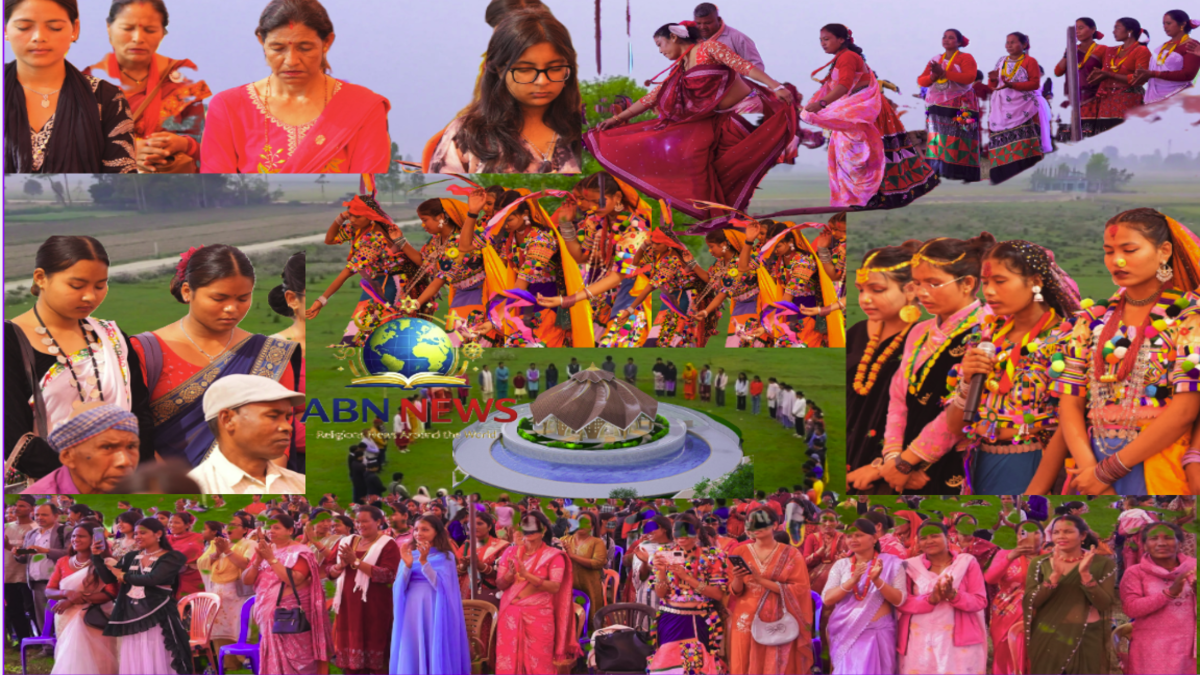
Kanchanpur – ABN NEWS: The vision for the New Bahá’í House of Worship in Nepal has finally taken a concrete, breathtaking form. For nearly three years, this parcel of land in the southwestern lowlands has served as a silent sanctuary, long before any physical structure began to rise.

Families from nearby villages have gathered here at dawn and dusk, finding strength in collective prayer. Now, the unveiling of the temple’s design gives a physical home to the spirit of unity that has been growing here for decades.
Have you ever wondered how architecture can capture the soul of a community? This project seems to have mastered that balance. Over 1,000 residents, government officials, and community leaders arrived at the site to witness this milestone, feeling the weight of a moment that has been years in the making.

The design is not merely a building; it is a narrative woven into stone and light. Project architects drew deep inspiration from the local landscape and the Tharu people who call this region home.
You can see it in the textures and layers of the structure. It echoes the patterns of traditional Tharu attire and the intricate weave of local fishing nets. It is an enclosure that feels both grounded and expansive.
Sarosh Pradhan, one of the architects behind the project, shared a poignant thought during the unveiling. He noted that, as creators, their goal was to reflect the infinite through a form that respects the daily lives of the residents.
“We met the residents, and they really touched us,” Pradhan explained. By absorbing these cultural nuances, the design team hopes the temple will serve as more than just a place of quiet reflection. It is intended to be a mirror of the community’s own spirit.
The connection between the physical site and the people is palpable. Many locals have already been volunteering here, clearing mud and planting greenery. They aren’t just building a temple; they are building a sense of belonging.
Yam Prasad Acharya, representing the Continental Board of Counsellors in Asia, emphasized how natural this development feels. In this region, prayer is not an isolated act—it is an inseparable part of rising in the morning and heading to work.
This is the beauty of the New Bahá’í House of Worship in Nepal. It formalizes a rhythm of life that was already thriving. It provides a permanent space for a culture of service that values the neighbor over the self.
You can find further details and context on this project via the official source.
As the ceremony unfolded, the atmosphere was electric. Traditional dancing and the gathering of diverse backgrounds underscored the message of the day: unity.
The temple is designed to welcome everyone, regardless of their background. It aims to be a place where distinctions fade away the moment someone walks through the doors.
For local mayors and leaders in attendance, the project brings a renewed sense of hope. One official recalled visiting a similar temple in New Delhi and feeling the immediate peace it radiated. He hopes this new site will offer the same harmony to the people of Kanchanpur.
At ABN NEWS, we have observed that while the temple structure is the headline, the real story is the facility being built alongside it. This companion building will focus on community education, ensuring that the spirit of service continues to grow long after the temple walls are finished.
It is a quiet, powerful transformation. A patch of land in a quiet corner of the country is becoming a beacon, proving that when people gather with a shared purpose, they change the very ground they stand on.
What makes the design of the temple unique?
The design is inspired by the local cultural context, specifically utilizing patterns found in Tharu attire and traditional fishing nets, ensuring the structure feels connected to the region’s heritage.
Is the New Bahá’í House of Worship in Nepal open to everyone?
Yes, the temple is designed to be an inclusive space, welcoming people of all backgrounds and faiths to gather for prayer and reflection.
What is the significance of the surrounding facility?
In addition to the temple, a facility for community education is under construction. It is designed to foster a pattern of collective life, service, and worship for the local residents.
When did the community start gathering at the site?
Community members have been gathering on the land for prayer and service for nearly three years, ever since the establishment of the temple was announced.