Physical Address
304 North Cardinal St.
Dorchester Center, MA 02124
Physical Address
304 North Cardinal St.
Dorchester Center, MA 02124

Religions News Around the World
Religions News Around the World
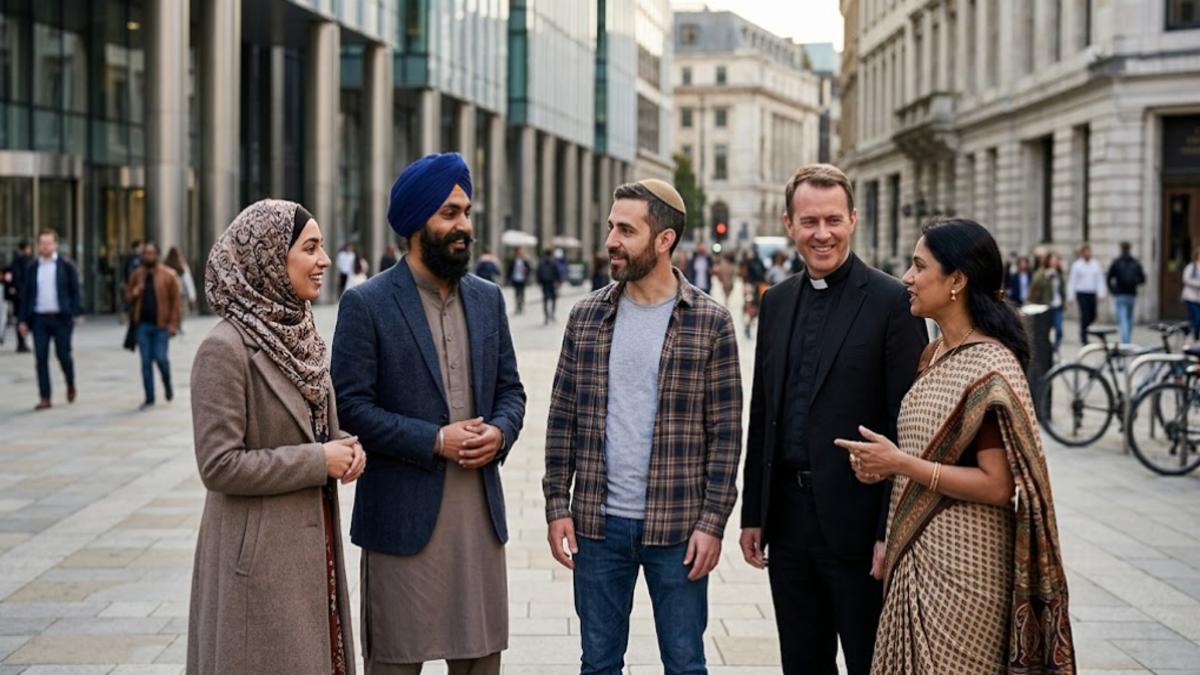
MONTREAL – ABN News: Religious Clothing Around the World is once again at the centre of public debate as new restrictions on religious practices take effect in Quebec, putting renewed attention on the way faith is expressed through clothing and personal appearance. From the hijab and Sikh turban to the Jewish kippah, Christian clerical dress and Hindu religious markings, what people wear can carry meanings of belief, identity, tradition and community — but why has religious clothing become such a sensitive issue in public life?

The latest development comes from Montreal, where the city’s public transit agency has introduced restrictions on prayer by employees on its premises under Quebec’s expanded secularism rules. The measure forms part of a wider debate about how religious practice should be treated inside public institutions and how governments should balance secular principles with freedom of religion.
The discussion is not limited to Canada. Across different societies, governments, courts, schools, employers and religious communities have wrestled with questions surrounding religious symbols and attire. In some countries, particular garments are protected as expressions of religious freedom. In others, governments have imposed restrictions on religious clothing or on face coverings.

At the heart of the debate lies a deceptively simple question: when does clothing represent a private religious choice, and when does a government have a legitimate reason to regulate it?
Religious clothing does not have one universal form or purpose. Some garments identify religious leaders, while others form part of everyday life for ordinary believers. Some are worn during worship, festivals or ceremonies; others are worn continuously as a visible expression of faith.
For Muslims, forms of modest dress can include the hijab, while some women choose garments that cover more of the body or face. Practices vary considerably between countries, communities and individuals, and there is no single pattern that describes Muslim women worldwide.
For Sikhs, the turban has a particularly visible religious and cultural significance. It is associated with the commitment to maintain uncut hair, known as kesh, one of the five articles of faith traditionally observed by initiated Sikhs. The turban can therefore communicate religious commitment as well as personal and community identity.
Jewish religious practice also includes distinctive forms of dress. The kippah, or yarmulke, is worn by many Jewish men and by some women, depending on community and practice. Its use can range from daily wear to particular religious occasions.
Christian traditions offer another wide range of clothing. Priests, ministers, bishops, monks and nuns may wear distinctive garments associated with their offices or religious communities. Clerical collars, cassocks, habits and ceremonial vestments can distinguish religious leaders from the wider population.
In Hindu communities, clothing and personal appearance can also carry religious significance, although practices differ greatly by region, tradition and occasion. Garments such as saris may be used in religious ceremonies and temple visits, while markings such as the bindi can have cultural, religious or personal meanings.
These examples demonstrate why the phrase “religious clothing” covers a remarkably broad field. A garment may be obligatory within one community, optional in another, ceremonial in one setting and everyday clothing in another.
The current debate in Quebec illustrates the tension between religious expression and state secularism.
Quebec’s legislature approved Bill 9, officially titled the Act respecting the reinforcement of laicity in Québec, after months of parliamentary consideration. The legislation received assent in April and establishes additional rules concerning secularism and religious practices in public institutions.
The law has generated controversy because religious expression can involve both conduct and appearance. Its provisions address religious practices in public institutions and establish rules concerning religious symbols and accommodation.
The issue is particularly sensitive because clothing can make religious identity immediately visible. A person wearing a turban, hijab, kippah or other religious symbol does not necessarily engage in any public religious activity beyond appearing in public.
That distinction has become important in legal and political debates. Supporters of stronger secular rules generally argue that public institutions must maintain religious neutrality. Critics counter that neutrality should apply to the state rather than requiring individuals to hide their religious identity.
The Quebec legislature’s own records show the extent of the debate surrounding Bill 9. The measure went through consultations, committee examination, amendments and parliamentary votes before receiving assent.
The discussion has also attracted submissions from religious and civil-rights organizations. Parliamentary consultation records show participation from groups including the National Council of Canadian Muslims, the Evangelical Fellowship of Quebec and other organizations representing different perspectives.
One of the biggest challenges in reporting on religious clothing is avoiding the assumption that a garment has the same meaning for everyone who wears it.
The hijab provides a clear example. Muslim women who wear it may describe it in terms of faith, modesty, identity, family tradition or personal conviction. The reasons can differ from one individual to another.
The same principle applies to the Sikh turban. It is not simply an item of ethnic clothing. For many Sikhs, it is connected to religious discipline and the preservation of uncut hair. At the same time, the turban has become a highly recognizable symbol of Sikh identity in many countries.
Jewish head coverings also demonstrate the importance of community differences. The kippah is familiar internationally, but the circumstances in which it is worn vary among Jewish communities and individuals.
Christian clothing presents a different model because distinctive garments are often associated with clergy rather than all believers. A clerical collar or religious habit can indicate a person’s role within a religious institution rather than simply identifying the person’s personal faith.
This variety matters when governments create rules about religious attire. A policy designed around one particular garment may have very different consequences for another religious community.
Research has also shown that religious clothing practices vary substantially within countries. A Pew Research Center study of religious clothing and personal appearance in India, for example, found significant differences among religious groups in practices such as head covering and the wearing of religious pendants.
The findings reinforce a point often lost in political arguments: religious communities are not internally uniform.
Europe has experienced some of the most visible political and legal disputes over religious clothing in recent decades.
France has maintained restrictions concerning face coverings in public spaces, while other European countries have considered or introduced their own rules affecting religious attire. The arguments have often focused on secularism, public safety, identification and equality.
These debates can become particularly contentious when governments distinguish between religious symbols and garments that conceal the face.
That distinction is important. A headscarf, turban or kippah generally leaves the face visible, while garments such as a niqab may cover much or all of the face. Governments that restrict face coverings frequently justify such measures using identification or public-order arguments rather than a blanket prohibition on religious clothing.
Yet critics argue that even narrowly written face-covering laws can have a disproportionate impact on Muslim women because some women choose face-covering garments for religious reasons.
The controversy has therefore developed beyond the question of what a person wears. It has become a debate over autonomy, equality, public identity and the limits of state power.
European discussions also demonstrate how differently secularism can be understood. In some political systems, secularism emphasizes the neutrality of government institutions. Elsewhere, restrictions can extend further into public life.
The result is a patchwork of national rules rather than a single European approach.
For many believers, religious clothing serves a purpose that goes beyond theology.
It can create a visible connection with a wider community. A Sikh wearing a turban, a Muslim woman wearing a hijab or a Jewish person wearing a kippah may communicate an identity that remains meaningful outside a place of worship.
Clothing can also provide continuity between generations.
Families often pass religious traditions from parents to children through practices involving food, festivals, prayer and dress. Religious garments can therefore become part of cultural memory as well as individual belief.
Migration has made these questions increasingly visible in countries with diverse populations. Religious communities have carried their traditions across borders, bringing garments and customs into schools, workplaces, universities, government offices and public transport systems.
That visibility can create both familiarity and friction.
For some members of majority communities, a religious garment may be an ordinary part of multicultural public life. For others, particularly in societies with strong traditions of secularism, visible religious symbols may raise questions about the relationship between religion and the state.
The same garment can therefore be interpreted in completely different ways depending on the social and political environment.
Schools and workplaces are among the places where disputes over religious clothing most frequently become practical rather than theoretical.
A school may need to decide whether pupils can wear religious head coverings, while an employer may have to consider whether an employee’s religious clothing can be accommodated alongside uniform or safety requirements.
The question becomes more complicated when the employee works in a public institution or performs a role involving authority.
Quebec’s secularism framework has specifically addressed visible religious symbols for certain public-sector positions. Parliamentary documents describe restrictions applying to various positions of authority and public-service roles.
Supporters say such rules reinforce the principle that government institutions must remain religiously neutral.
Opponents argue that an employee’s personal religious symbol does not necessarily compromise the neutrality of the institution. They contend that the state can remain neutral while allowing individuals to retain their religious identity.
Similar arguments appear internationally, although the legal rules vary from country to country.
The workplace debate also raises practical questions. Employers must distinguish between a genuine safety requirement and a preference for uniform appearance. In some occupations, helmets, protective equipment or facial identification may create legitimate constraints. In others, religious accommodation may be possible without affecting the essential functions of a job.
That is why religious clothing disputes often require case-by-case consideration rather than simple universal rules.
The debate over religious clothing ultimately touches a broader principle: the freedom to manifest religious belief.
Freedom of religion does not only concern what people believe privately. In many legal systems, it also concerns the ability to practice or express those beliefs.
Clothing can become one form of that expression.
At the same time, freedom of religion operates alongside other rights and public interests. Governments may regulate certain conduct for reasons such as security, identification or workplace safety, provided the applicable legal standards are met.
This creates a difficult balancing exercise.
A government that imposes no restrictions may face criticism when religious practices conflict with institutional rules. A government that imposes broad restrictions may face accusations that it is interfering unnecessarily with individual freedom.
The challenge becomes even greater when the rules affect minority communities.
A restriction that appears neutral on paper can have a disproportionate effect if one religious group relies more heavily on a particular garment as part of its religious practice.
That is why legal disputes over religious dress often extend beyond the garment itself and examine questions of equality, proportionality and freedom of conscience.
The latest developments in Montreal show that religious expression remains an active political issue rather than a question confined to religious institutions.
The immediate issue concerns religious practice in a public workplace, but the larger debate reaches into the meaning of secularism and the place of faith in modern public life. The same questions appear in different forms around the world.
Religious clothing is particularly powerful because it makes an otherwise private identity visible.
A person can carry a religious belief without anyone else knowing. A visible religious garment changes that relationship. It places an aspect of identity into the public space.
That visibility can encourage understanding, but it can also become a source of political disagreement.
For journalists, policymakers and the public, the central challenge is to recognize the diversity of religious practice without reducing complex communities to stereotypes.
The world does not have one model of religious clothing. There is no single Muslim experience of the hijab, no single Sikh experience of the turban, no single Jewish practice involving the kippah and no single Christian tradition governing clerical dress.
The same principle applies to governments. Countries have developed different legal approaches because their histories, constitutional systems and understandings of secularism differ.
As debates continue, the distinction between a religious institution and an individual believer will remain important. So will the distinction between a religious symbol, a religious practice and a genuine public-safety requirement.
The developments being reported today therefore form part of a much larger global conversation. Religious clothing is not merely about fabric, colour or style. For millions of people, it can represent faith, dignity, history, community and personal choice.
And as societies become more religiously diverse, the question is unlikely to disappear: how can public institutions protect their secular character while respecting the freedom of people to live openly according to their beliefs?
Religious clothing refers to garments, head coverings, accessories or forms of personal appearance associated with a religious belief, tradition or community.
It can become controversial when religious practices intersect with government rules concerning secularism, workplace requirements, education, identification, safety or public institutions.
No. Religious clothing practices vary significantly between countries, communities and individuals. The same garment may be required, optional or uncommon depending on the tradition and local context.
For many people, religious clothing is an important expression of identity and faith. Because it is visible, it can also become part of wider debates about religious freedom, equality and secularism.
… Read more
Contact: info@abnnews.net