Physical Address
304 North Cardinal St.
Dorchester Center, MA 02124
Physical Address
304 North Cardinal St.
Dorchester Center, MA 02124

Religions News Around the World
Religions News Around the World
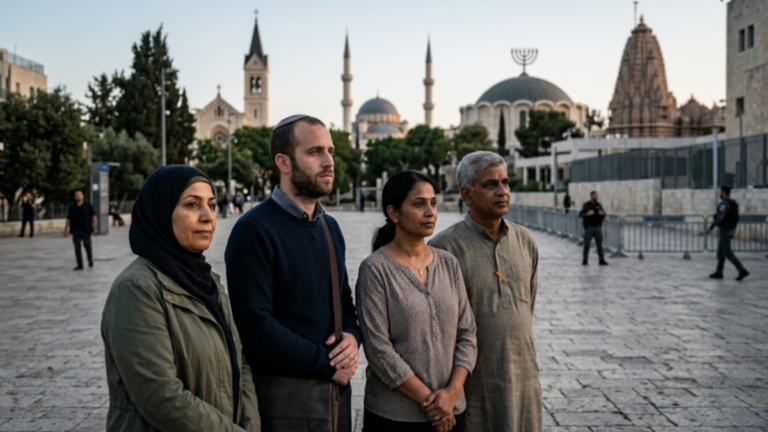
LONDON – ABN News: Charity Across Religions is gaining renewed attention as faith communities, humanitarian organisations and interfaith networks continue to turn religious principles of compassion into practical assistance for people facing poverty, displacement and crisis. But what does charity look like when different religions work toward the same humanitarian goal?

Charity has deep roots across the world’s major religious traditions. Christianity, Islam, Judaism, Buddhism, Hinduism, Sikhism, Bahá’í teachings and other faith traditions all place importance on helping people in need, although each community expresses that responsibility through its own beliefs, customs and institutions.
Current developments in the charitable sector show that these traditions do not always operate separately. In many places, religious organisations are increasingly finding practical reasons to cooperate, particularly when communities face humanitarian emergencies that affect people regardless of their faith.

One of the clearest examples comes from Religions for Peace, which supports multi-religious humanitarian projects through its Multi-Religious Humanitarian Fund. The organisation says the fund is supporting 20 multi-faith projects and has backed initiatives responding to displacement and conflict. Its projects have included humanitarian work involving Christian, Jewish and Muslim communities, as well as organisations working with displaced people in countries affected by conflict.
The significance of such cooperation is not limited to the money raised or supplies delivered. Interfaith charity can also create opportunities for communities that rarely work together to build relationships through practical service.
That matters particularly in areas where religious differences can deepen social divisions. When people from different traditions distribute food, assist displaced families, support refugees or rebuild community services together, humanitarian work can become a channel for dialogue.
The principle is straightforward: suffering does not ask people for their religion before it requires a response.
The modern charitable landscape includes thousands of faith-based organisations operating locally, nationally and internationally. Some concentrate on poverty, while others respond to disasters, conflict, food insecurity, homelessness, healthcare needs or displacement.
Their religious identities remain important, but the people receiving assistance do not necessarily share the faith of the organisation providing it.
World Relief, for example, describes itself as a global Christian humanitarian organisation working with churches to respond to major crises. Its origins date to the aftermath of the Second World War, when it emerged to address urgent humanitarian needs in war-affected Europe.
Similar principles appear across other religious traditions. Islamic charitable giving includes established concepts of obligatory and voluntary generosity. Jewish communities have long maintained charitable structures supporting people experiencing hardship. Sikh institutions are widely associated with community kitchens and free meals. Buddhist organisations often combine spiritual practice with humanitarian and social service.
The forms differ, but the practical objective frequently converges: helping people meet basic needs and protecting human dignity.
That shared objective becomes especially important during emergencies. A flood, earthquake, war or displacement crisis can overwhelm local resources within hours. Religious institutions often possess buildings, volunteers, established community networks and trusted local contacts that can help humanitarian assistance reach people quickly.
Charity is often associated with financial donations, but faith-based humanitarian work involves much more than collecting money.
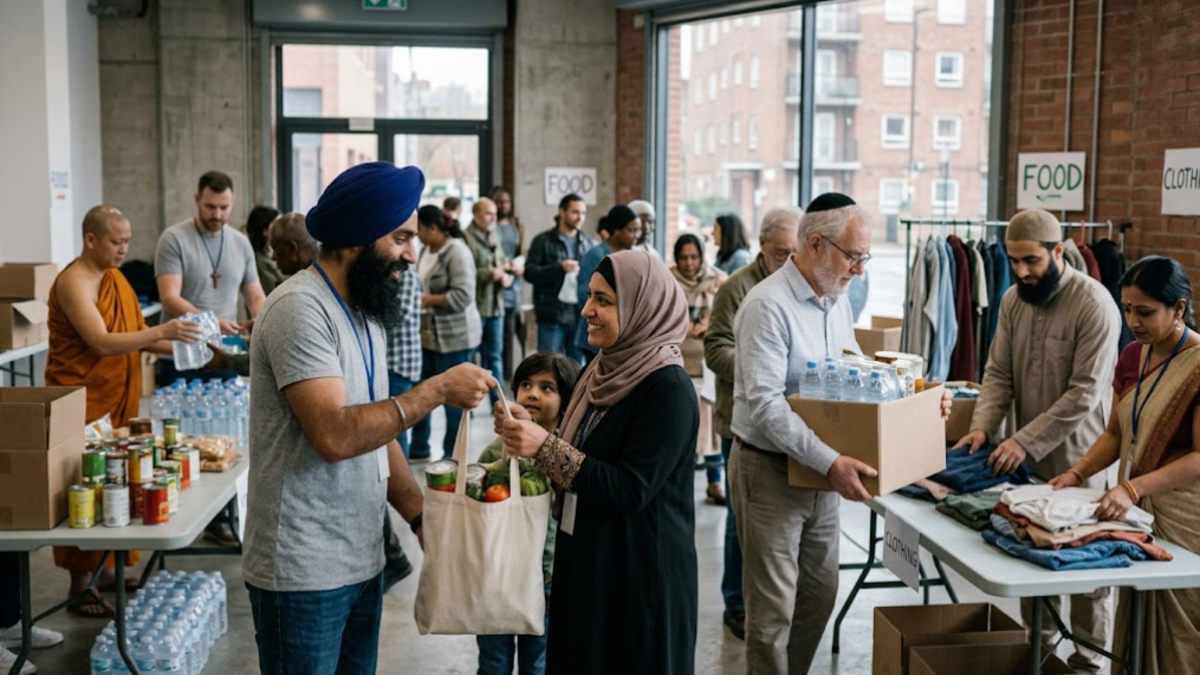
Volunteers may prepare meals, distribute clothing, visit elderly people, provide temporary accommodation, transport medical supplies or help displaced families navigate unfamiliar communities.
Religious buildings can also become practical community spaces during emergencies. Mosques, churches, synagogues, temples and gurdwaras may provide food, shelter, information or meeting places when ordinary services are disrupted.
This local infrastructure can be particularly valuable because religious communities frequently maintain relationships that extend beyond formal charitable organisations.
The work of Religions for Peace illustrates how cooperation can operate across national and religious boundaries. Its humanitarian fund has supported projects involving displaced populations in Ukraine and initiatives connected with crisis situations in countries including Syria, Yemen, Myanmar, Bangladesh, Burkina Faso, Cameroon, Haiti, Colombia and Afghanistan.
The approach also demonstrates why interfaith charity is not simply a symbolic exercise. When organisations combine networks and resources, they can address needs that would be harder for a single community to tackle alone.
Trust remains one of the most important issues in charitable giving.
People who donate to a religious organisation often want to know that their contribution reaches its intended beneficiaries. They may also expect the organisation to respect its stated religious and humanitarian principles.
For charities working across religious boundaries, accountability becomes even more important. Donors from one faith may be supporting people from another. Organisations therefore have to demonstrate that humanitarian assistance follows clear criteria and does not depend on religious conversion or membership.
This distinction is particularly important in areas affected by conflict or sectarian tension.
A charitable programme can help build confidence when it provides assistance according to humanitarian need rather than religious identity. The result can be significant: a person who receives help from a different faith community may begin to view that community not as an abstract religious group but as neighbours willing to act during a difficult moment.
That does not eliminate religious disagreements. Nor does humanitarian cooperation mean that different faiths share identical beliefs.
Instead, it creates a practical area of common ground.
The recent observance of the International Day of Charity has also placed attention on the broader role of charitable action. The United Nations created the observance to encourage awareness and mobilisation among individuals, civil society organisations and other stakeholders around charitable activity.
For religious communities, charity carries an additional dimension because generosity is often connected to moral responsibility.
Faith traditions may teach that wealth carries obligations, that neighbours deserve care, that the vulnerable should not be abandoned or that service to others represents an important expression of spiritual life.
These teachings can motivate people to give time as well as money.
The wider humanitarian sector benefits from that commitment. Volunteers who begin their work through a religious community can become part of broader charitable networks, while interfaith initiatives can introduce people to forms of cooperation that extend beyond their own congregations.
In that sense, charity can become both a service and a social bridge.
Religious charities also face significant challenges.
The demand for humanitarian assistance remains high in many parts of the world, while charities must manage rising operational costs, complex emergencies and increased expectations around transparency.
Organisations must also demonstrate that they can work professionally while retaining the values that motivate their supporters.
A faith-based charity cannot rely solely on religious goodwill. Donors increasingly expect evidence of responsible management, measurable results and appropriate safeguards for vulnerable people.
The challenge becomes more complicated for organisations operating across borders. Different countries have different regulations, cultural expectations and humanitarian conditions.
Local knowledge is therefore essential.
An organisation that understands the religious and social structure of a community can often work more effectively than an outside group arriving without established relationships. This is one reason interfaith partnerships can be valuable: local religious leaders may provide knowledge and access that international organisations cannot easily develop on their own.
Not every example of interfaith charity involves a major international organisation.
Some of the most meaningful initiatives begin with neighbours.
A church may work with a mosque to organise a food collection. A synagogue may join other community groups in supporting homeless families. A gurdwara may provide meals to people without asking about their religious background. A Buddhist or Hindu organisation may cooperate with secular charities following a local emergency.
These projects rarely make international headlines, but their social impact can be considerable.
They demonstrate that interfaith cooperation does not require people to surrender their religious identity. Participants can remain firmly committed to their own beliefs while recognising a shared responsibility toward other human beings.
That distinction is central to sustainable interfaith charity.
The purpose is not to erase differences. It is to find practical ways to work together despite them.
The humanitarian value of interfaith charity extends beyond the immediate assistance provided.
When different communities cooperate, they can reduce stereotypes and create personal relationships between people who might otherwise have little contact.
This can be particularly important in diverse cities, where religious communities may live alongside one another but remain socially separate.
A shared charitable project changes that dynamic.
Volunteers meet, organise together and solve practical problems. They discover common concerns, from food insecurity and homelessness to the needs of elderly residents and newly arrived families.
The experience can have lasting effects.
An individual who participates in a food distribution project may later become involved in another community initiative. Religious leaders who meet through humanitarian work may establish continuing channels of communication. Young volunteers can develop relationships across religious boundaries that influence how they understand other communities.
Interfaith charity therefore has the potential to create social capital as well as deliver material assistance.
One of the strongest arguments for cooperation among religious charities is that humanitarian emergencies demand a response based on need.
A displaced family needs food whether its members are Christian, Muslim, Jewish, Hindu, Buddhist, Sikh or belong to another tradition.
A child affected by poverty needs healthcare and education regardless of the beliefs of the child’s parents.
A person who loses a home in a disaster requires shelter before questions of identity become relevant.
This humanitarian principle provides a foundation for cooperation.
It also explains why organisations such as Religions for Peace emphasise multi-religious responses. Its humanitarian programmes have included assistance for displaced people and initiatives designed to bring communities together around practical support.
The model does not suggest that religious differences have disappeared. Instead, it shows that those differences do not have to prevent cooperation when people face urgent humanitarian needs.
The current discussion around faith-based charity comes at a time when communities are searching for effective ways to respond to social and humanitarian pressures.
A major charitable organisation can provide resources at scale, but local faith communities often provide something equally valuable: trust.
That combination can make partnerships particularly effective.
International organisations can contribute funding, logistics and professional expertise. Religious communities can contribute volunteers, local knowledge, buildings and established relationships.
When these strengths come together, charity can reach people more effectively.
The coming Faith Charities Forum in London is scheduled to bring together senior leaders and decision-makers from faith-based organisations to discuss the role of faith in charitable work and the challenges facing this sector. The event’s focus reflects the broader question facing religious charities: how can faith continue to inspire generosity while organisations adapt to increasingly complex social needs?
The answer may lie partly in cooperation.
Across religious traditions, charity remains one of the clearest ways in which moral principles become practical action. Whether the motivation comes from religious obligation, compassion, community responsibility or a combination of all three, the outcome can be tangible.
Food reaches a hungry family. A displaced person finds shelter. An elderly neighbour receives a visit. A community affected by disaster receives supplies.
These acts may begin within different religious traditions, but their humanitarian purpose can be shared.
For interfaith cooperation, that shared purpose may be its greatest strength.
It refers to charitable and humanitarian cooperation involving people or organisations from different religious traditions, particularly when they work together to assist people in need.
They often cooperate because humanitarian problems such as poverty, displacement and disaster affect communities regardless of religion, making shared action practical and effective.
No. Interfaith charity allows participating communities to maintain their own religious identities while cooperating around common humanitarian objectives.
Transparency helps donors and beneficiaries understand how organisations use resources and strengthens confidence that assistance reaches people according to genuine need.
… Read more
Contact: info@abnnews.net