Physical Address
304 North Cardinal St.
Dorchester Center, MA 02124
Physical Address
304 North Cardinal St.
Dorchester Center, MA 02124

Religions News Around the World
Religions News Around the World
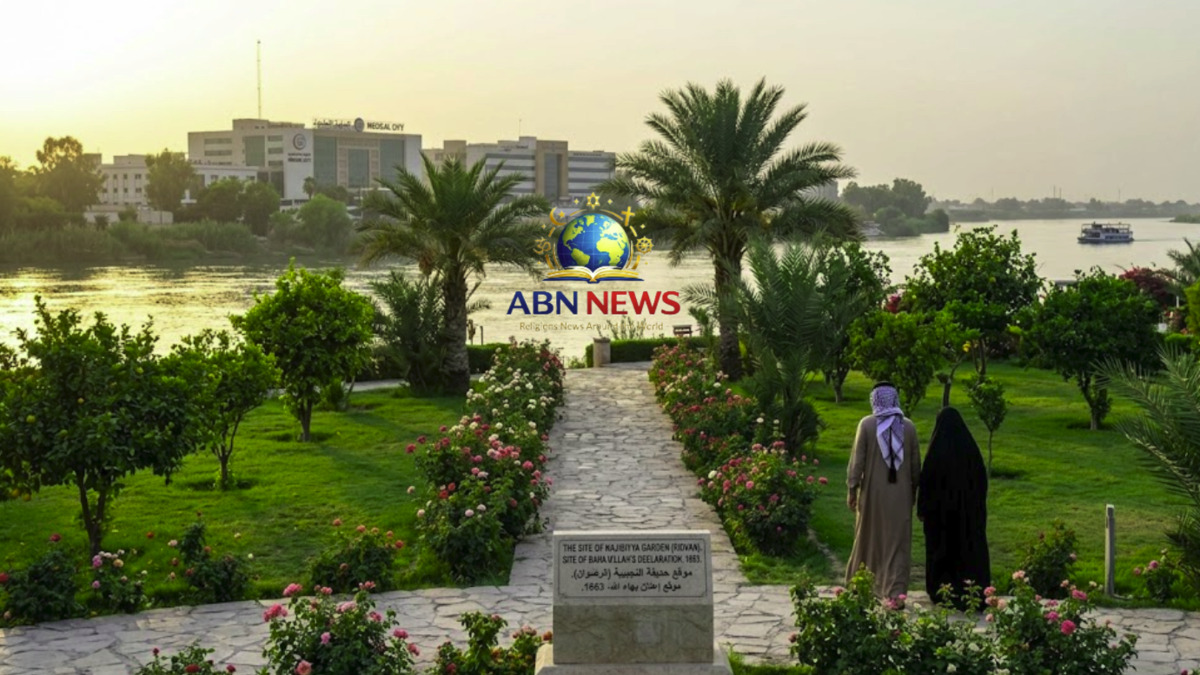
Baghdad – ABN NEWS: The Festival of Ridvan stands as the most significant event in the Baha’i calendar, marking a profound historical shift that occurred right here in the heart of Iraq. But why does a twelve-day period in a vanished Baghdad garden continue to resonate with millions of people from Tokyo to Toronto?

To understand the Festival of Ridvan, one must look back to April 1863. It was a time of immense political tension. Baha’u’llah, the founder of the faith, had been living in exile in Baghdad for a decade. However, his growing influence troubled the Ottoman authorities and the Persian government alike. This pressure eventually led to a second decree of exile—this time to Istanbul. Before departing, Baha’u’llah moved to a garden on the outskirts of the city to prepare for the journey and bid farewell to the people of Baghdad.
The Political Backdrop of the Najibiyya Garden The site, historically known as the Najibiyya Garden, was a private park belonging to Najib Pasha, a former governor of Baghdad. It was a place of respite, but for Baha’u’llah, it became the stage for a world-changing announcement. While the Ottoman Empire viewed his relocation as a strategic move to lessen his local impact, the events that unfolded within those twelve days achieved the exact opposite.

During his stay in the garden, which he later named “Ridvan” (Paradise), Baha’u’llah publicly declared his mission. He was not merely a leader of a movement anymore; he was the bearer of a new religious message. This declaration transformed his followers’ grief over his exile into a sense of purpose. According to historical records analyzed by the ABN NEWS team, this period turned a potential moment of defeat into the official birth of a global religion.
The Festival of Ridvan lasts for twelve days, representing the duration of Baha’u’llah’s stay in the garden. While the entire period is celebrated, three specific days—the first, ninth, and twelfth—are held in the highest regard. These are the days when work is suspended and the community gathers in a spirit of unity.
The first day, April 21, marks the arrival of Baha’u’llah in the garden. This is the cornerstone of the Festival of Ridvan, as it was the moment he first revealed his station. The ninth day holds a more personal significance, marking the day his family joined him, symbolizing the strength of the household and the community under pressure. Finally, the twelfth day marks the sad departure from the garden to begin the long trek toward Istanbul.
As the ABN NEWS team has learned through interviews with local historians, the transition from the Najibiyya Garden was a massive public event. Despite being an exile, Baha’u’llah was escorted by a large crowd of Baghdad’s citizens, including officials and clerics, who had grown to respect him deeply during his ten years in the city.
Today, the physical landscape of Baghdad has changed drastically. The area once occupied by the rose-filled Najibiyya Garden is now home to the Medical City (Madinat al-Tibb), one of the largest healthcare complexes in the Middle East. While the flowers and trees have been replaced by hospital wards, the spiritual geography remains intact for Baha’is worldwide.
The significance of the Festival of Ridvan lies in its message of transformation. Baha’u’llah taught that just as a garden undergoes seasons, humanity was entering a “new spring.” He called for the removal of all forms of prejudice and the establishment of world peace. In a region that has seen so much conflict, these calls for unity are particularly poignant.
Interestingly, the Festival of Ridvan also serves a practical administrative purpose. Every year during this period, Baha’is elect their Local and National Spiritual Assemblies. This process is unique because it lacks any form of nomination or campaigning. It is a quiet, meditative vote, aiming to choose individuals based on their service and integrity rather than their political ambition.
The decade Baha’u’llah spent in Baghdad was perhaps the most peaceful period of his long years of exile. It was here that he wrote some of his most important works, such as the Hidden Words and the Book of Certitude. The Festival of Ridvan is, in many ways, a celebration of the “Baghdad period” and the wisdom that emerged from it.
It is a historical irony that the very place where an empire sought to silence a voice became the megaphone for that voice to reach the world. The Ottoman exile was meant to isolate him, but the Festival of Ridvan ensured that his message would spread far beyond the borders of Mesopotamia.
Even though the garden has disappeared under the modern infrastructure of Baghdad, the city remains a point of pilgrimage in the hearts of millions. The Festival of Ridvan serves as a bridge between a specific historical moment in 19th-century Iraq and a modern, global community striving for social progress.
From small villages in Africa to metropolitan centers in Europe, the Festival of Ridvan is marked by hospitality and joy. It is a time for sharing food, music, and stories. The celebration is not a somber ritual but a vibrant “King of Festivals” that emphasizes the beauty of diversity.
In conclusion, the Festival of Ridvan is more than just a religious holiday; it is a piece of Baghdad’s rich tapestry of history. It reminds us that ideas can flourish even in the face of exile and that a single garden can leave a legacy that spans centuries. As we look at the bustling Medical City today, it is worth remembering the quiet revolution of peace that began on that same ground over 160 years ago.
Frequently Asked Questions
What is the main significance of the Festival of Ridvan?
The Festival of Ridvan commemorates the 1863 declaration by Baha’u’llah that he was a Messenger of God. It marks the official transition of the Baha’i Faith into a public religion during his final days in Baghdad.
Why was Baha’u’llah in the Najibiyya Garden?
He was staying there for twelve days prior to his forced exile from Baghdad to Istanbul. The garden provided a space to receive visitors and prepare his family for the long journey ahead.
What happens during the Baha’i elections in Ridvan?
Baha’is elect their governing councils at the local and national levels. These elections are conducted by secret ballot without any nominations, speeches, or electioneering, focusing on the character of the individuals.
Where can I find the site of the Garden of Ridvan today?
While the garden no longer exists, its historical site is located in the North Baghdad area of Rusafa, currently within the grounds of the Medical City (Madinat al-Tibb) complex near the Tigris River.
Conclusion The Festival of Ridvan remains a vital link between the history of Iraq and a global spiritual movement. It celebrates the power of resilience and the enduring hope for a unified world, born in a garden in Baghdad.