Physical Address
304 North Cardinal St.
Dorchester Center, MA 02124
Physical Address
304 North Cardinal St.
Dorchester Center, MA 02124

Religions News Around the World
Religions News Around the World
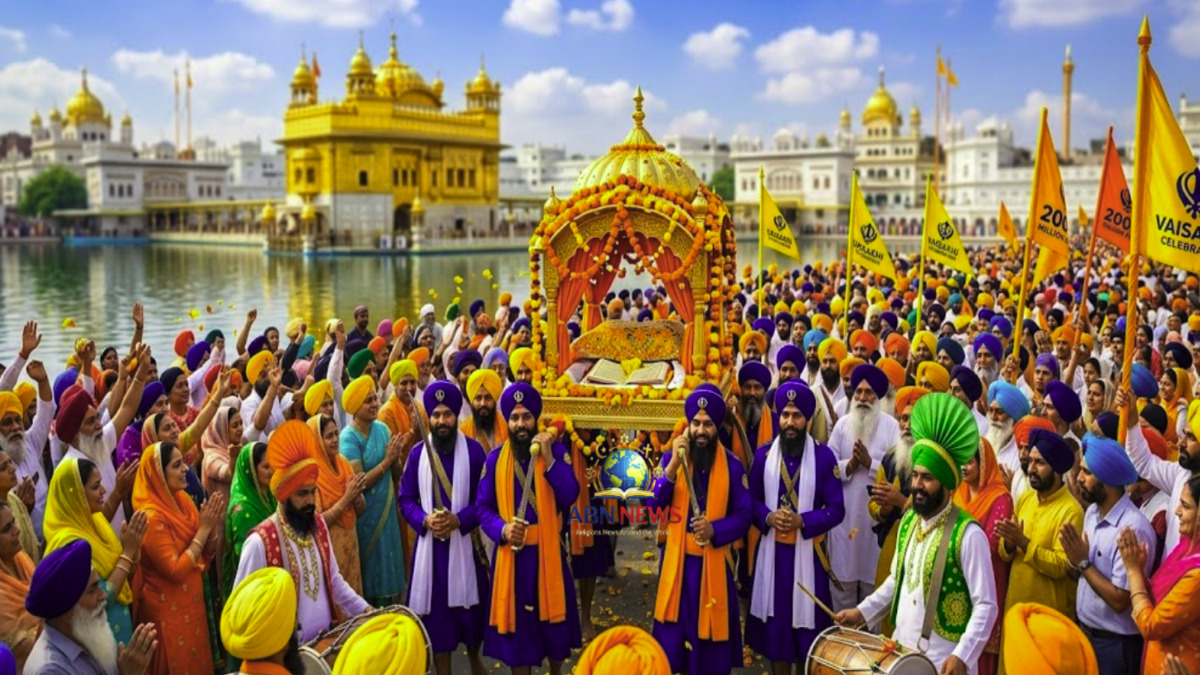
AMRITSAR – ABN NEWS: Vaisakhi celebration: 200 million people are currently uniting across the globe to mark one of the most vibrant festivals in human history. From the golden wheat fields of Punjab to the bustling streets of London and Vancouver, the air is thick with the sound of drums and the spirit of renewal. But what makes this specific date so critical that it brings a significant portion of the world’s population to a standstill?

Vaisakhi is far more than just a date on a calendar; it is a dual-purpose powerhouse of religious identity and agricultural thanksgiving. For the Sikh community, it marks the birth of the Khalsa, while for millions of Hindus, it signals the start of the solar New Year and the bountiful harvest season. It is a moment where spirituality meets the soil, and the result is a colorful explosion of life.
The historical weight of Vaisakhi is most profound within the Sikh faith. It traces back to the year 1699, a turning point where Guru Gobind Singh established the Khalsa Panth. This wasn’t just a religious gathering; it was the creation of a collective identity and a moral code that defined the Sikhs as a distinct community.

According to historical records maintained by ABN NEWS, this day is regarded as the most important in the Sikh calendar. It commemorates the “Panj Pyare” (the five beloved ones) and the formalization of the faith’s values of courage and equality. Today, 25 to 30 million Sikhs globally visit Gurdwaras to listen to the Guru Granth Sahib and participate in “Langar”—the massive community kitchens where free meals are served to all, regardless of status.
While its roots are in the Punjab region of India and Pakistan, the scale of the Vaisakhi celebration: 200 million people highlights its massive cultural reach. For Hindus, Vaisakhi (or Baisakhi) is the celebration of the Solar New Year. It is a time to thank the heavens for a successful harvest, particularly the wheat crop, which is the lifeblood of northern India’s economy.
The celebration is a sensory overload. Men perform the high-energy “Bhangra” dance, while women engage in the rhythmic “Gidda.” The vibrant yellow and orange clothing worn by participants mirrors the ripening fields of the countryside. According to information obtained by the ABN NEWS team, the economic impact is equally significant, as it marks the beginning of a new financial and agricultural cycle for millions of farmers.
The diaspora has transformed Vaisakhi into a truly international phenomenon. In cities like Toronto, London, and Melbourne, entire streets are frequently closed to accommodate massive parades known as Nagar Kirtans. It is no longer just a “home” festival; it has become a symbol of Indian and Sikh heritage on the global stage.
What is fascinating is the level of community engagement. ABN NEWS has observed that the spirit of “Seva” (selfless service) reaches its peak during this time. In Vancouver alone, thousands of volunteers prepare meals for strangers, turning a religious holiday into a masterclass in social cohesion and hospitality.
The atmosphere of Vaisakhi is a unique blend of the sacred and the celebratory. Early morning prayers in the temples provide a moment of quiet reflection before the deafening beat of the “Dhol” drums takes over the streets. The fusion of traditional music with modern celebrations ensures that the younger generation remains deeply connected to their ancestral roots.
Beyond the music, the festival serves as a vital social link. Families travel long distances to be together, reinforcing bonds that sustain the community throughout the rest of the year. For the agricultural sector, it is a period of well-earned rest and celebration after the hard labor of the harvest months.
The Vaisakhi celebration: 200 million people is a testament to the enduring power of tradition in a rapidly changing world. It is a day where history is remembered, the earth is honored, and the future is welcomed with open arms and a joyful heart. As the drums continue to beat, one thing is certain: the spirit of Vaisakhi is stronger than ever.
Do you think the global spread of Vaisakhi has helped improve the understanding of Sikh and Hindu cultures in Western countries?
What is the significance of the “Langar” during Vaisakhi?
Langar is a community kitchen that serves free food to everyone. During Vaisakhi, it symbolizes the values of equality and service that were emphasized during the founding of the Khalsa.
Is Vaisakhi celebrated on the same day every year?
It almost always falls on April 13 or 14, following the solar calendar. It marks the sun’s entry into the Mesha (Aries) Rashi.
Why is the color yellow so prominent during the festival?
Yellow represents the golden color of the ripening wheat fields ready for harvest, as well as a spirit of joy and prosperity.
What is the Khalsa established by Guru Gobind Singh?
The Khalsa is the collective body of initiated Sikhs, representing a commitment to the faith’s spiritual and ethical path, established in 1699.
The vibrant colors and rhythmic beats of Vaisakhi will continue to resonate long after the sun sets on the April celebrations, reminding the world of the power of faith and the bounty of the earth.