Physical Address
304 North Cardinal St.
Dorchester Center, MA 02124
Physical Address
304 North Cardinal St.
Dorchester Center, MA 02124
Religions News Around the World
Religions News Around the World
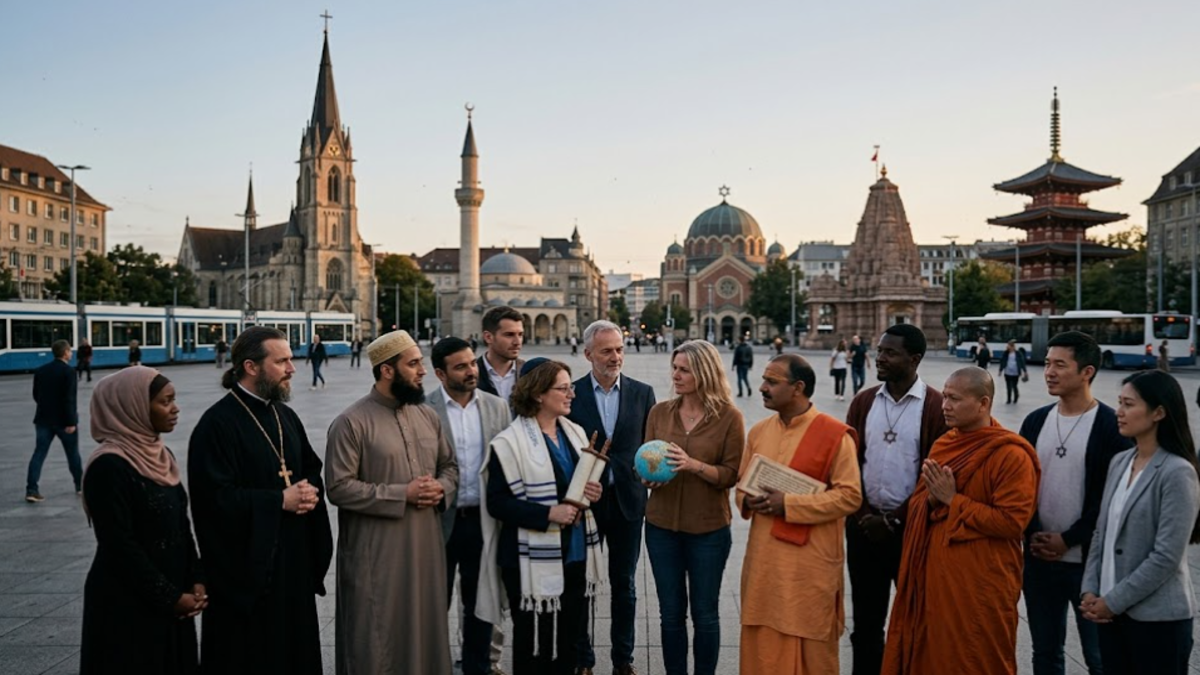
WASHINGTON – ABN News: Religious Freedom Around the World is facing growing pressure as governments, armed groups and social movements continue to restrict worship, target religious minorities and interfere with the ability of people to practice their faith freely. Recent international monitoring points to a broad deterioration in conditions, but what does the latest evidence reveal about the scale and nature of the problem?

Freedom of religion or belief is recognized internationally as a fundamental human right. It covers more than the freedom to attend a place of worship. It also includes the right to hold a religious belief, change one’s religion or belief, practice privately or publicly, and live without discrimination because of faith.
Recent findings show that this right remains under serious pressure in many parts of the world.

Research published by the Pew Research Center found that religious groups experienced harassment in 192 of the 198 countries and territories examined for its latest assessment. The figure matched the previous high recorded in the study covering the preceding period.
Pew also reported that 55 countries recorded high or very high levels of social hostilities involving religion. That represented an increase from 45 countries in the previous assessment and marked the third consecutive annual rise in the number of countries in the higher categories.
The figures do not mean that people in all 192 countries face the same level of danger. Religious harassment ranges from verbal hostility and discrimination to restrictions on worship, arrests, attacks on religious buildings and deadly violence.
The pattern nevertheless highlights the global nature of the challenge.
The United Nations treats freedom of religion or belief as a matter of human rights and maintains a Special Rapporteur dedicated to monitoring developments, examining violations and promoting measures to protect the right.
The latest international discussion has increasingly focused on the combination of government restrictions and violence carried out by non-state actors. In some countries, authorities limit religious organizations or control religious activity. Elsewhere, extremist groups attack communities because of their religious identity.
Nigeria remains one of the countries attracting particular attention from international religious-freedom monitors.
The U.S. Commission on International Religious Freedom has described the situation in Nigeria as a severe religious-violence crisis. The commission has examined violence involving extremist organizations, armed groups and other actors, while also raising concerns about the state’s ability to protect vulnerable communities.
Christian communities have been among those affected by violence in parts of Nigeria, although the country’s wider security crisis also affects Muslims and other civilians.
The distinction is important because religious persecution and broader political or ethnic conflict can overlap. A violent incident may involve religious identity without being exclusively religious in origin. International monitors therefore examine patterns rather than automatically assigning a religious motive to every attack.
The situation elsewhere in Africa has also drawn attention.
Recent assessments have identified the Democratic Republic of Congo, Burkina Faso and other countries where armed extremist organizations and instability have created serious risks for religious communities. Open Doors, which monitors persecution of Christians, says more than 388 million Christians face high levels of persecution or discrimination for their faith, while more than 315 million Christians in the 50 countries included in its latest World Watch List face very high or extreme levels of persecution.
Those figures come from an organization focused specifically on Christian persecution and should therefore be understood within that methodology. They do not constitute a measurement of persecution affecting every religious group.
The broader Pew research provides a different perspective by examining social hostilities involving religion across countries and religious communities.
Together, the different studies illustrate why religious freedom cannot be reduced to a single statistic.
Physical attacks represent the most visible form of religious persecution, but restrictions can take many other forms.
Authorities may impose limits on religious gatherings, registration requirements, religious education, conversion, public expression or the construction of places of worship.
In some states, religious minorities face discrimination under laws or administrative systems. In others, governments exercise tight control over religious institutions and organizations.
The result can be a gradual narrowing of religious freedom even when large-scale violence is absent.
Religious freedom conditions in Asia and the Middle East continue to generate international concern.
India has become a prominent subject in recent international religious-freedom discussions. The U.S. Commission on International Religious Freedom has recommended increased scrutiny of conditions affecting religious minorities and has raised concerns about laws, political rhetoric and incidents of violence.
The commission’s assessment has attracted political debate, including disagreement over the interpretation of religious-freedom conditions and the role of U.S. policy.
China presents a different model.
There, concerns have centered heavily on state control over religious activity and religious organizations. International monitors have documented restrictions affecting multiple religious communities and have repeatedly raised questions about the government’s treatment of groups whose activities it considers politically or socially sensitive.
The issue illustrates an important distinction in the global debate: religious freedom can be threatened not only by violence between communities but also by extensive state intervention in religious life.
In the Middle East, continuing conflict has placed additional pressure on religious minorities.
Christian communities in the Holy Land have faced concerns over security, displacement and attacks. In the West Bank, the Christian community of Taybeh has attracted international attention following reports of attacks and pressure affecting residents. The community is regarded as the last entirely Christian Palestinian town in the West Bank.
The wider conflict environment makes the situation particularly complicated. Religious communities can face threats from armed actors, extremist individuals, settlers, military operations, political instability and economic pressures at the same time.
For minorities, the cumulative effect can be significant even when individual incidents receive limited international attention.
Religious minorities in the Middle East also continue to confront restrictions that vary significantly from one country to another.
Iran has long been scrutinized over restrictions affecting religious minorities and converts. International religious-freedom organizations have reported cases involving Christians and other communities whose religious activities have attracted state attention.
Egypt has also remained part of the international debate, particularly regarding the security and rights of Coptic Christians.
Recent reporting has highlighted pressure on Egyptian authorities to strengthen protections for Coptic communities and address concerns about religious discrimination and violence.
At the same time, the international debate increasingly recognizes that religious freedom concerns affect Muslims as well as Christians.
The U.S. Commission on International Religious Freedom recently published an assessment specifically addressing anti-Muslim hatred and violations affecting Muslims outside their home countries.
That development reflects the broader principle behind freedom of religion or belief: protection should apply to every religious community and also to people who hold no religious belief.
One of the clearest trends emerging from recent monitoring is the interaction between religion and political power.
A recent assessment of global Christian persecution identified religious nationalism, transnational repression, state control of religious organizations, terrorism and authoritarianism among the trends contributing to worsening conditions.
Religious nationalism can create problems when governments or political movements identify national identity too closely with one faith.
Minority communities may then face pressure to prove their loyalty or may be portrayed as outsiders despite having lived in the country for generations.
Transnational repression creates another challenge. Religious or political dissidents who leave their countries can continue to face intimidation, surveillance or other forms of pressure beyond national borders.
State control can be equally significant.
Governments may attempt to decide which religious leaders can operate, which organizations may register, what religious education can be provided and what forms of religious expression are permitted.
Such measures can be presented as efforts to maintain security or public order. The central human-rights question is whether they are applied fairly, proportionately and without discriminating against particular beliefs.
Religious minorities often experience the consequences of restrictions most directly.
When a community cannot safely worship, educate its children, maintain religious institutions or express its beliefs, members may eventually consider leaving their homes.
Migration can therefore become an indirect consequence of religious restrictions.
The problem is especially serious in countries already experiencing war or political instability. A religious minority may lose homes, businesses, places of worship and community institutions during conflict, making return difficult even after violence declines.
The destruction of religious buildings also has a cultural impact.
Churches, mosques, synagogues, temples and other sacred places can represent centuries of history. Their destruction can remove important parts of a community’s cultural identity.
The consequences can extend beyond the immediate religious group.
When governments fail to protect one minority, other communities may become less confident that their own rights will be protected. This can contribute to broader social polarization.
Governments and international organizations continue to debate how best to respond.
The U.S. Commission on International Religious Freedom monitors countries and recommends policy measures, including sanctions in certain circumstances. Its current work includes country assessments covering Nigeria, Somalia, India, China and other states.
The United Nations also maintains mechanisms for investigating and reporting violations.
International pressure can take several forms, including diplomatic engagement, targeted sanctions, public reporting, humanitarian assistance and support for civil-society organizations.
However, international action also faces limitations.
Religious freedom is closely connected to national sovereignty, security policy and domestic politics. Governments frequently reject outside criticism, arguing that foreign institutions misunderstand local conditions or interfere in domestic affairs.
For that reason, credible reporting requires careful verification and a distinction between documented violations, allegations and political claims.
The debate over religious freedom is particularly vulnerable to misinformation.
Religious communities sometimes publish figures designed to emphasize the scale of persecution, while governments may minimize incidents or dispute their interpretation. Advocacy organizations also use different methodologies.
That makes independent verification essential.
The Pew Research Center, United Nations, government bodies and specialist organizations provide different datasets and approaches. Their findings should not automatically be treated as interchangeable.
For journalists, the central task is to identify what is documented, who made a particular allegation and whether independent evidence supports it.
This is especially important when reporting on violent incidents.
A killing, arrest or attack should not automatically be described as religious persecution simply because the victim belonged to a religious group. Establishing motive requires evidence.
Likewise, a government’s restrictions should be assessed through documented laws, official decisions, court records and credible reports rather than assumptions about political intent.
The most recent evidence presents a difficult picture.
Religious harassment remains widespread, with Pew documenting harassment of religious groups in 192 of 198 countries and territories. Social hostilities involving religion also increased in the latest period examined by the organization, reaching high or very high levels in 55 countries.
At the same time, the nature of the problem differs sharply from one country to another.
In some places, the principal threat comes from extremist violence. In others, it comes from government restrictions, discrimination or state control. In still others, religious tensions intersect with ethnic conflict, nationalism, war or political repression.
The global religious-freedom debate therefore cannot be reduced to one faith, one region or one political system.
Christians, Muslims, Jews, Hindus, Buddhists, members of smaller religious communities and people without religious beliefs can all face discrimination or hostility in different circumstances.
Protecting religious freedom ultimately requires equal protection rather than selective protection.
The international principle is straightforward: people should not have to choose between their safety and their conscience.
The challenge is turning that principle into effective protection on the ground.
As governments, international institutions and civil-society organizations continue to monitor conditions, the coming period will show whether the recent rise in reported social hostilities represents a temporary deterioration or part of a longer-term global trend.
What is religious freedom?
Religious freedom is the right to hold, practice, change or reject a religion or belief without discrimination or coercion.
Which countries face religious-freedom concerns?
Concerns have been documented across many regions, including parts of Africa, Asia and the Middle East. Conditions vary significantly between countries.
Does religious persecution affect only Christians?
No. Muslims, Christians, Jews, Hindus, Buddhists, other religious minorities and people without religious beliefs can face discrimination, restrictions or violence.
Who monitors religious freedom globally?
Organizations including the United Nations, Pew Research Center and national and independent religious-freedom monitoring bodies collect and analyze information about religious freedom and religious persecution.… Read more
Contact: info@abnnews.net