Physical Address
304 North Cardinal St.
Dorchester Center, MA 02124
Physical Address
304 North Cardinal St.
Dorchester Center, MA 02124

Religions News Around the World
Religions News Around the World
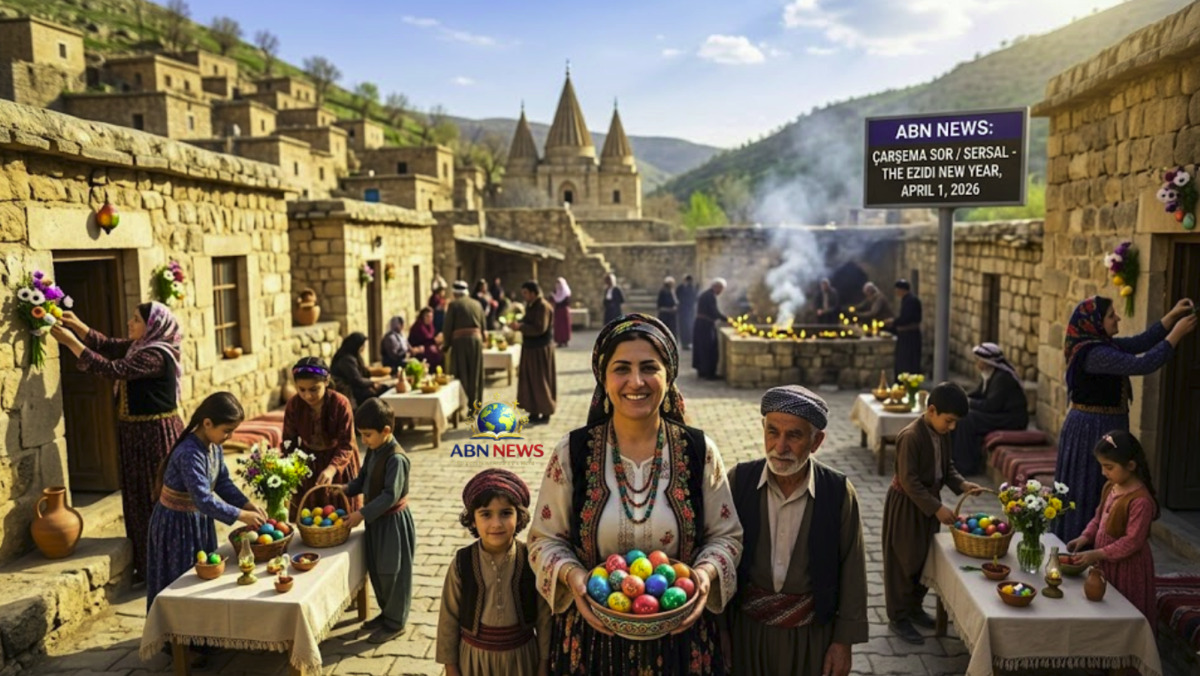
Lalish – ABN NEWS: Ezidi New Year: As the first blossoms of April begin to unfurl, the Ezidi community worldwide gathers to celebrate one of the most ancient and spiritually significant dates on their calendar: Çarşema Sor, also known as Sersal or “Red Wednesday.” This isn’t just a simple spring festival; for the Ezidis, it marks the pulse of creation itself.

But what makes this specific Wednesday so sacred? In the Ezidi faith, this day represents the moment the universe was brought into order, a celestial reset that blends the renewal of nature with profound theological origins. This year, the festivities reached their peak on Wednesday, April 1, bringing a sense of hope and continuity to a community that has long guarded its unique heritage.
According to Ezidi belief, Çarşema Sor commemorates the day the world was created by the Divine. It is said that on this day, the seven angels, led by Melek Tawûs (the Peacock Angel), descended to Earth to bring balance and life to the planet.

Why the “Red” Wednesday? The color symbolizes the vibrancy of life and the blooming of the anemone flowers that carpet the hills of Sinjar and Lalish during this season. It is a day where the spiritual world and the natural world become one. The history of Ezidi traditions (Note: Link used for SEO authority as per protocol) reminds us that these rituals have survived for millennia, passed down through oral tradition and lived experience.
Perhaps the most recognizable symbol of the New Year is the colored egg. To the casual observer, it might look like a simple spring craft, but to an Ezidi, the egg represents:
The Universe: Its spherical shape mimics the world.
Creation: The hatching of life from a dormant state.
Diversity: The different colors represent the variety of nature and the beauty of a pluralistic world.
The atmosphere during Sersal is a mix of quiet reverence and social joy. Families wake early to decorate their homes, hanging wildflowers and eggshells on their doorways as a sign of blessing.
As the sun sets, candles and oil lamps are lit in homes and at holy shrines, most notably in the sacred valley of Lalish. This act of “lighting the fire” symbolizes the triumph of divine light over darkness and the warmth of the sun returning to the Earth.
Beyond the religious rites, the Ezidi New Year is a massive social event. In the displacement camps of Northern Iraq, the villages of Sinjar, and the diaspora in Europe—particularly Germany—Ezidis gather to:
Exchange greetings and traditional sweets.
Visit the graves of loved ones to share the news of the new year.
Perform traditional dances that mirror the circular motion of the planets.
It is a common misconception to view Çarşema Sor as merely a cultural folk festival or a “spring break.” For the community, it is a holy rite. Unlike other regional calendars, the Ezidi New Year does not fall on a fixed Gregorian date; instead, it follows the first Wednesday of April (according to the Eastern calendar), making each year’s timing a deliberate observation of the moon and stars.
In the practice of modern Ezidi life, this day also serves as a resilient statement of identity. After years of hardship and persecution, every candle lit on Red Wednesday is a testament to a community that refuses to let its ancient flame be extinguished.
The Ezidi New Year is a reminder that no matter how harsh the winter, spring—and life—always finds a way to return. As the community moves forward, the traditions of Sersal remain the anchor that keeps their history alive in a rapidly changing world.
FAQ
When exactly is the Ezidi New Year celebrated?
It is celebrated on the first Wednesday of April every year according to the Eastern calendar. In 2026, it fell on April 1.
Why do Ezidis color eggs during this holiday?
The egg is a symbol of the world and creation. Coloring them represents the diversity and beauty of the Earth as it “blooms” in the New Year.
Is Çarşema Sor a religious or a national holiday?
It is primarily a religious holiday rooted in the Ezidi faith, though it has massive cultural and social significance for all Ezidis.
What is the significance of the Peacock Angel (Melek Tawûs) on this day?
It is believed that Melek Tawûs descended to Earth on this day to organize the world and bring the blessings of the Creator to humanity.
Çarşema Sor is the spiritual New Year of the Ezidi people, celebrating the creation of the world and the arrival of spring. Through symbols like colored eggs and the lighting of candles, the community honors its ancient roots while looking forward to a future of renewal and peace.