Physical Address
304 North Cardinal St.
Dorchester Center, MA 02124
Physical Address
304 North Cardinal St.
Dorchester Center, MA 02124

Religions News Around the World
Religions News Around the World
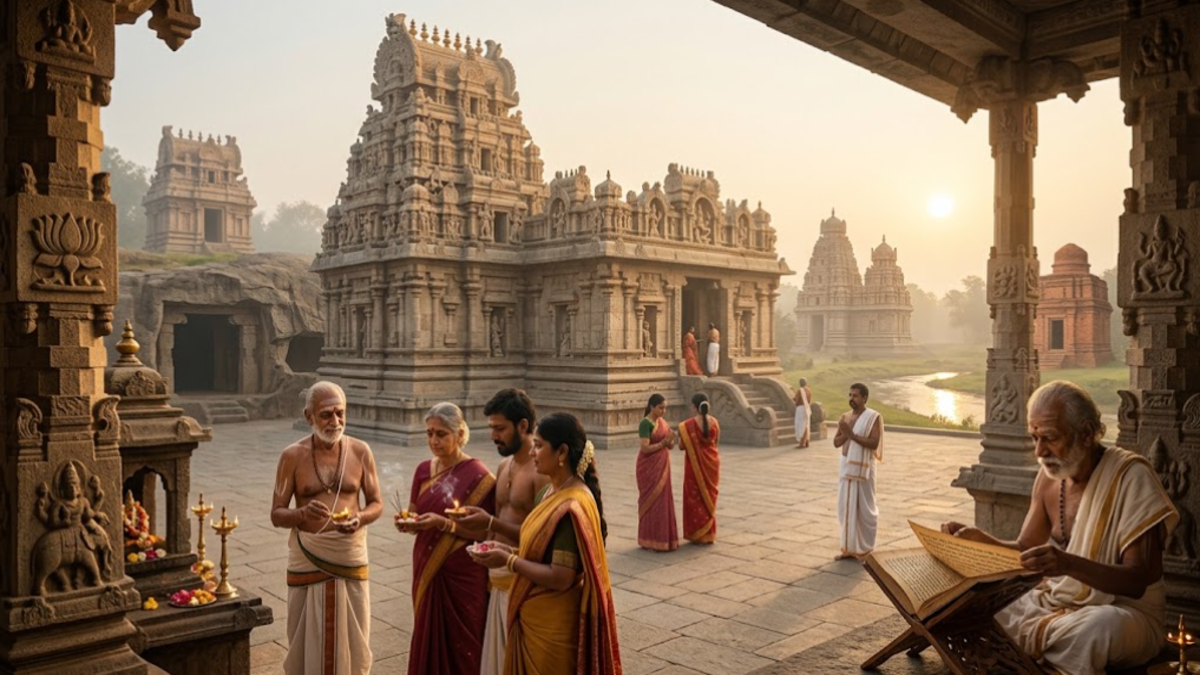
NEW DELHI – ABN News: History of Hinduism has once again drawn attention through international cultural coverage, as museums and scholars continue to examine the stories, images and traditions that shaped one of the world’s most diverse religious traditions. A recent exhibition devoted to Vishnu and his avatars has brought figures such as Rama and Krishna into the spotlight, offering a contemporary window into a religious heritage built over many centuries. But how did the History of Hinduism develop from ancient Vedic traditions into the broad and varied faith known today?

Unlike religions that traditionally trace their beginnings to a particular prophet or founder, Hinduism developed through a long process involving different communities, religious practices, philosophical ideas and regional traditions. The Metropolitan Museum of Art notes that Hinduism has no single founder, spokesman or prophet and that its origins remain complex. One important strand comes from the Vedas, while other elements emerged from indigenous traditions of the Indian subcontinent.
This point remains central to understanding the History of Hinduism. There was no single moment when Hinduism suddenly appeared as a fully formed religion. Instead, beliefs and practices developed, interacted and changed over long periods.

The Vedas represent one of the earliest major bodies of Hindu sacred literature. They consist of Sanskrit hymns and ritual material associated with ancient religious communities in South Asia. Museum chronology places the composition of the Vedas from around 1500 BCE, during a period of major cultural and linguistic change in the region.
The Vedic world differed considerably from the Hindu traditions familiar today. Religious life placed considerable emphasis on ritual, sacred formulas and offerings to deities associated with natural and cosmic forces.
Fire rituals played an important role. Priests preserved and transmitted sacred verses, while ritual knowledge became closely connected with social organization and religious authority.
Over time, however, religious thought moved beyond ritual questions. Philosophers began to explore the nature of reality, the self and the relationship between human existence and the universe.
That intellectual transformation would become one of the defining characteristics of Hindu thought.
The Vedic tradition developed over centuries rather than remaining static. The early hymns focused heavily on ritual and relationships between humans, gods and the forces of nature. Later texts introduced increasingly philosophical questions.
The Upanishads became particularly important in this development. Their discussions shifted attention toward concepts such as the self, ultimate reality and knowledge.
This period also witnessed the emergence of other influential religious movements in South Asia. Buddhism and Jainism developed in response to, and alongside, existing Brahmanical traditions. The first millennium BCE therefore became a period of intense religious and philosophical debate.
The interaction among these traditions influenced the development of Hindu thought. Ideas were debated, adopted, challenged and reinterpreted.
This helps explain why Hinduism contains apparently different approaches to religious life. Some traditions emphasize ritual, others devotion, meditation, philosophical inquiry or disciplined practice.
The concept of dharma also became central to Hindu traditions. Although the term has a broad range of meanings depending on context, it can refer to duty, moral order, appropriate conduct or the principles that sustain social and cosmic life.
Karma became another important concept. In broad terms, it connects actions with their consequences and became deeply embedded in Hindu philosophical and religious thought.
The idea of samsara, or repeated cycles of birth and death, also became influential, while moksha came to represent liberation from that cycle in many Hindu philosophical traditions.
These ideas did not emerge as a single package at one particular moment. Their meanings developed across texts and schools of thought.
As centuries passed, the religious landscape of India became increasingly diverse. Epic literature played a major role in shaping popular religious imagination.
The Ramayana and Mahabharata became foundational works for Hindu culture. Their stories circulated in different languages and forms, reaching communities far beyond the Sanskrit literary world.
The Mahabharata contains the Bhagavad Gita, a dialogue between the warrior Arjuna and Krishna. The text addresses questions of duty, action, devotion and spiritual knowledge.
Krishna’s role became particularly significant in later devotional traditions. Rama, meanwhile, emerged as one of the most influential divine figures associated with the Ramayana.
The Puranas further expanded Hindu mythology and religious storytelling. They presented narratives involving gods, goddesses, cosmic cycles, sacred places and heroic figures.
These texts helped connect philosophical concepts with stories that communities could transmit through oral traditions, festivals, art and religious ceremonies.
The result was a religious culture that could operate simultaneously at several levels: philosophical, ritual, devotional, artistic and popular.
This flexibility became one of Hinduism’s enduring characteristics.
Modern Hinduism includes numerous traditions, but three major devotional orientations have had enormous influence: those centered on Shiva, Vishnu and Shakti.
Shaiva traditions focus on Shiva and developed distinctive philosophical, ritual and devotional practices.
Vaishnava traditions center on Vishnu and his various manifestations, including Rama and Krishna.
Shakta traditions emphasize the divine feminine, often understood through the concept of Shakti, or divine power.
The Metropolitan Museum of Art identifies Shiva, Vishnu and Shakti among the most prominent figures in later Hindu traditions and notes that devotees may identify with Shaiva, Vaishnava or Shakta traditions.
These categories should not be treated as completely separate religious systems. Hindu religious life often allows people to honor several deities and participate in multiple traditions.
A family might have a particular household deity while also visiting temples dedicated to other gods and goddesses.
This coexistence helps explain the extraordinary variety found within Hindu practice.
The growth of temple culture marked another major stage in the History of Hinduism.
Between roughly the fifth and tenth centuries, Hinduism took increasingly recognizable institutional and artistic forms in many parts of South Asia. Regional kingdoms supported large temple complexes, while temples became centers of religious, social and political life.
Temples were not simply places where people gathered for worship. They could serve as centers for festivals, artistic production, education, donations and community activity.
Rulers also used temples to express political legitimacy. Monumental architecture connected royal authority with religious symbolism.
The artistic record from this period demonstrates the growing importance of Hindu iconography.
Sculptors created detailed representations of Shiva, Vishnu, Devi and other divine figures. These images did more than decorate temples. They formed part of devotional practice and communicated religious ideas through recognizable symbols.
Vishnu, for example, frequently appears holding attributes such as the conch, discus, mace and lotus. His different manifestations allowed artists and worshippers to explore ideas about divine intervention and the restoration of cosmic order.
A recent international exhibition dedicated to Vishnu’s avatars demonstrates how these traditions continue to attract attention from museums and the wider public. The exhibition brings together representations of Rama and Krishna with sculptures and paintings from India and Southeast Asia, showing how Hindu stories traveled across cultural boundaries.
One of the most important developments in Hindu religious history was the growth of bhakti, or personal devotion.
Bhakti traditions emphasized an intimate relationship between the devotee and the chosen deity. Worship could involve singing, prayer, poetry, pilgrimage, storytelling and personal acts of devotion.
This approach helped Hindu religious ideas reach wider populations and flourish in regional languages.
Poets and saints composed devotional works that expressed love, surrender and longing for the divine. Their traditions developed differently across India.
In southern India, devotional movements associated with the Alvars and Nayanars helped establish powerful traditions devoted to Vishnu and Shiva.
Later devotional movements spread across northern and western regions as well.
Bhakti did not eliminate philosophical Hinduism. Instead, devotional traditions existed alongside systems of philosophical inquiry.
That combination remains visible in Hindu life today, where a person may participate in a highly personal form of worship while also studying sophisticated philosophical texts.
There is no single Hindu practice followed by all Hindus.
Religious customs vary according to region, family, community, language and chosen tradition.
Festivals provide a clear example. Diwali, Holi, Navaratri, Durga Puja, Janmashtami, Rama Navami and other celebrations carry different meanings and customs.
Food traditions also vary. So do marriage ceremonies, funeral rites, pilgrimage practices and forms of temple worship.
Even representations of the same deity can differ substantially from one region to another.
This diversity is not a recent development. Regional variation has been part of Hindu history for centuries.
The expansion of Hindu traditions into Southeast Asia also left a major cultural legacy. Stories involving Rama and Krishna became part of artistic traditions beyond the Indian subcontinent.
Recent museum coverage of Vishnu’s avatars illustrates this international dimension. Works connected with India, Cambodia, Southeast Asia and the Mughal artistic world demonstrate how Hindu stories were repeatedly adapted by different societies.
The history of Hinduism, therefore, cannot be understood solely through the borders of modern India.
Hindu philosophical traditions developed into several major schools.
Among the best known are Samkhya, Yoga, Nyaya, Vaisheshika, Mimamsa and Vedanta.
They do not all answer fundamental questions in the same way. Some focus on knowledge, others on logic, ritual interpretation, metaphysics or spiritual discipline.
Yoga became particularly influential beyond India, although its historical meaning extends far beyond modern physical exercise.
Classical Hindu traditions understood yoga as a disciplined path involving the body, mind and consciousness.
Vedanta, meanwhile, developed through interpretations of the Upanishads, Bhagavad Gita and Brahma Sutras. Different Vedanta schools reached different conclusions about the relationship between the individual self and ultimate reality.
This philosophical plurality remains a defining feature of Hindu intellectual history.
The long history of Hinduism includes periods of political transformation, the rise and decline of kingdoms, interactions with Buddhism and Jainism, Islamic rule, European colonialism and the emergence of modern nation-states.
Hindu communities responded to these changes in different ways.
Temples, pilgrimage centers, monasteries, household shrines and devotional movements preserved traditions while also adapting them to changing circumstances.
The introduction of printing technology during the modern period transformed the circulation of religious images and texts. The Metropolitan Museum has documented how devotional prints helped bring images of Hindu deities into homes on a much larger scale.
This development was significant because Hindu worship does not depend exclusively on public temples.
Household shrines have long played an important role. Devotees may maintain images of a chosen deity at home and use them as part of daily worship.
The practice of darshan, broadly understood as seeing and being seen by the deity, remains an important aspect of Hindu devotional life.
The continued international interest in Hindu art and mythology shows that the subject remains relevant well beyond religious communities.
Museums increasingly present Hindu sculpture, painting, manuscripts and ritual objects as part of the wider history of Asian art and civilization.
The current interest in Vishnu’s avatars provides a useful example. Rama and Krishna are not merely characters from ancient stories. They remain central to religious devotion, literature, theatre, visual art and popular culture.
The exhibition coverage also highlights the geographical reach of these traditions, with Hindu stories appearing in artistic forms across South and Southeast Asia.
For historians, such material provides evidence of continuity and change.
A sculpture from a medieval temple, a manuscript illustration, a devotional print and a contemporary artwork may depict the same deity while expressing very different artistic and social contexts.
That contrast makes Hindu history particularly rich for researchers.
The greatest challenge for historians is that Hinduism does not fit easily into a single timeline.
Some Hindu traditions emphasize the eternal nature of dharma. Historians, meanwhile, examine manuscripts, inscriptions, archaeological evidence, artistic remains and linguistic developments to understand how religious practices changed.
These approaches answer different questions.
Traditional believers may describe their faith as ancient and continuous, while academic historians often emphasize the gradual formation of what is now called Hinduism.
Both perspectives form part of the wider story, but they should not be confused.
The historical record shows a long process of interaction among Vedic traditions, local religious practices, philosophical schools, devotional movements and regional cultures.
The result was not a uniform system imposed everywhere. It was a broad religious civilization capable of absorbing new ideas while retaining older practices.
That capacity for adaptation helps explain why Hinduism continues to exist in many forms across the world.
The History of Hinduism is ultimately not only a story about ancient texts and monuments. It is also the history of communities that have preserved, challenged and reinterpreted religious traditions across generations.
The Vedas provided an early textual foundation. The Upanishads expanded philosophical inquiry. The epics and Puranas gave religious ideas memorable narratives. Temples turned those traditions into powerful public institutions, while bhakti movements brought personal devotion to the center of religious life.
Shiva, Vishnu, Shakti, Rama and Krishna became focal points for different devotional traditions, while philosophical schools developed competing explanations of reality and liberation.
At the same time, local customs ensured that Hindu practice remained diverse.
Modern exhibitions and cultural institutions continue to examine this legacy because Hindu religious art provides a record of how communities understood divinity, morality, kingship, devotion and the universe.
The story is therefore still being studied, interpreted and debated.
Understanding Hinduism requires more than memorizing dates or names. It requires recognizing a civilization in which religion, philosophy, literature, architecture, art and everyday life have remained closely connected for centuries.
For readers seeking an authoritative institutional introduction to Hindu art and its historical development, the Metropolitan Museum of Art’s overview of Hinduism and Hindu art provides additional background.
Hinduism developed gradually from multiple religious and cultural traditions in South Asia rather than beginning with one founder.
The Vedas are ancient Sanskrit sacred texts containing hymns and ritual material and form an important foundation of Hindu religious traditions.
Shiva, Vishnu and Shakti are among the most prominent focuses of Hindu devotion, alongside many other deities and divine manifestations.
Its traditions developed across different regions, communities, languages, philosophical schools and devotional movements, allowing many forms of worship to coexist.… Read more
Contact: info@abnnews.net