Physical Address
304 North Cardinal St.
Dorchester Center, MA 02124
Physical Address
304 North Cardinal St.
Dorchester Center, MA 02124

Religions News Around the World
Religions News Around the World
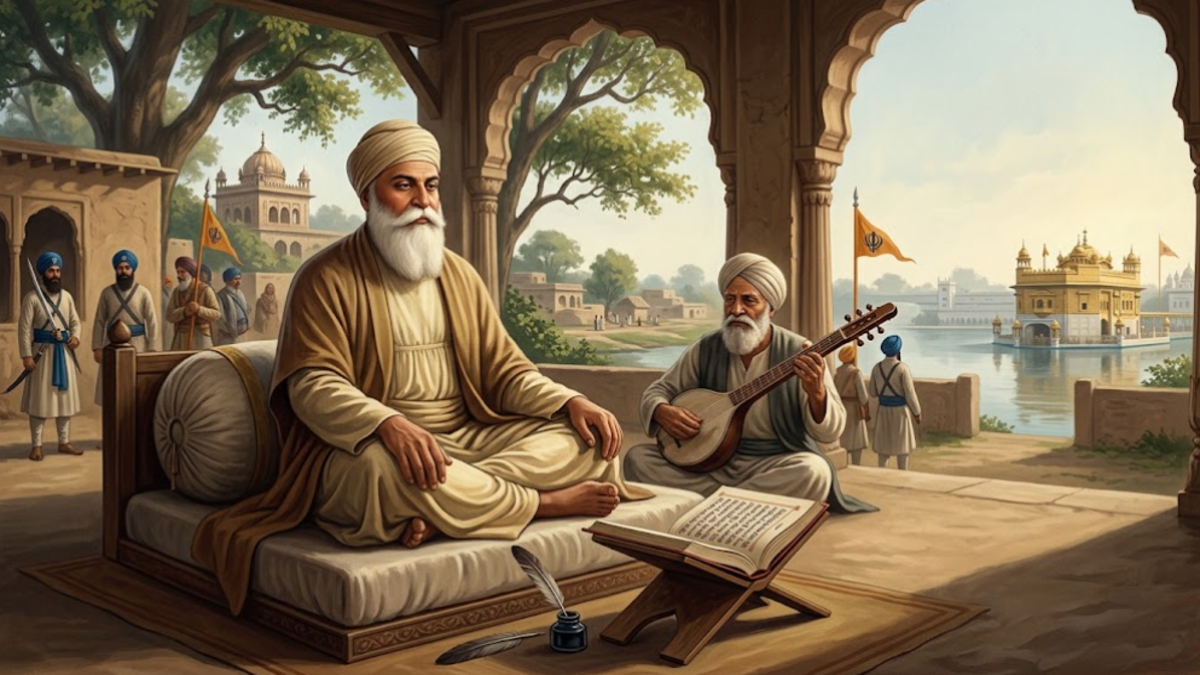
New Delhi – ABN News: History of Sikhism traces the emergence of one of the world’s major faith traditions from the teachings of Guru Nanak in the Punjab to the formation of the Khalsa and the establishment of a distinct Sikh community across continents. A recent report about Nepal-issued commemorative coins being donated to four Indian universities has once again brought attention to Guru Nanak’s journeys, legacy and the importance of preserving Sikh historical material. But how did a spiritual movement founded in the Punjab develop into a global religious tradition?

The history of Sikhism begins in the Punjab in the late 15th century, when Guru Nanak emerged as a spiritual teacher whose message challenged religious formalism, social inequality and divisions based on caste and religious identity.
According to the Shiromani Gurdwara Parbandhak Committee, Guru Nanak was born at Rai-Bhoi-di Talwandi, now Nankana Sahib in Pakistan, in 1469. Historical and religious traditions differ over his precise birth date, although Sikh communities traditionally observe his birth anniversary on the full moon of the month of Kartik.

Guru Nanak grew up in a society where Hindu and Islamic traditions shaped everyday life. Punjab also stood at an important crossroads of trade, political power and religious exchange. His teachings developed within this environment but did not simply reproduce the doctrines of the communities around him.
The Harvard Pluralism Project describes Guru Nanak as a spiritual teacher who preached the oneness of God, equality among people and the rejection of empty ritualism. It records that he worked for a period at Sultanpur and later began a life devoted to teaching and travel.
Sikh tradition associates the beginning of Guru Nanak’s public mission with a profound spiritual experience near Sultanpur. After that experience, he began travelling and preaching through hymns, known as shabads.
His message placed devotion to one God at the centre of religious life. At the same time, he connected spirituality with ordinary responsibilities. Honest work, service to others, sharing with the community and remembrance of God became important elements of the path he taught.
Guru Nanak did not advocate withdrawal from society. Instead, he presented the life of a householder as a legitimate spiritual path. This emphasis helped distinguish the developing Sikh tradition from forms of religious practice that placed renunciation at the centre of spiritual achievement.
The Sikh tradition also remembers Guru Nanak as a traveller who crossed religious and geographical boundaries. Accounts of his Udasis describe journeys across the Indian subcontinent and into regions associated with Tibet, the Middle East and Central Asia. Some details of these journeys remain matters of historical discussion, while Sikh tradition preserves them as an important part of his missionary legacy.
A key feature of these journeys was dialogue. Guru Nanak is remembered as meeting people from different religious and social backgrounds and questioning practices that he considered empty when they lacked ethical and spiritual substance.
His companion Bhai Mardana, traditionally described as a Muslim by birth and a musician, accompanied him on many journeys. Their partnership has become an enduring symbol of the inclusive character of Guru Nanak’s message.
Guru Nanak eventually established himself at Kartarpur, a settlement in present-day Pakistan. There he created a community in which worship, work and communal life became closely connected.
The community gathered for singing, prayer and discussion. The tradition of langar, the communal kitchen where people eat together regardless of social status, became an important expression of equality.
Kartarpur therefore represented more than a place where Guru Nanak lived. It provided a practical model for the community he was building.
Guru Nanak also established preaching centres and appointed followers to help spread his teachings. The movement gradually developed structures that could survive beyond the lifetime of its founder.
Before his death in 1539, Guru Nanak appointed Bhai Lehna as his successor. Bhai Lehna became Guru Angad Dev, the second Sikh Guru. This decision established a principle of spiritual succession that allowed the community to continue developing after Guru Nanak’s death.
The succession also showed that leadership did not depend simply on family inheritance. Guru Nanak selected a devoted disciple who had demonstrated commitment to his teachings.
That decision became one of the defining moments in the early history of Sikhism.
Guru Angad continued Guru Nanak’s work and strengthened the developing community. He is closely associated with the development and promotion of the Gurmukhi script, which became central to the written expression of Sikh teachings.
The use of a script accessible to the community helped preserve and transmit the hymns of the Gurus. Written scripture would later become one of the foundations of Sikh religious identity.
The third Guru, Guru Amar Das, further developed Sikh institutions. The fourth, Guru Ram Das, became closely associated with the development of Ramdaspur, the settlement that grew into Amritsar.
These successive Gurus transformed a small spiritual movement into an increasingly organized community.
The fifth Guru, Guru Arjan Dev, played a decisive role in the development of Sikh religious institutions.
Guru Arjan oversaw the compilation of the Adi Granth, bringing together the compositions of earlier Gurus along with devotional poetry from a number of Bhagats. The resulting scripture reflected a broad spiritual outlook and included compositions from figures belonging to different backgrounds.
The Shiromani Gurdwara Parbandhak Committee records that Guru Arjan installed the scripture at Harmandir Sahib in Amritsar in 1604.
Harmandir Sahib, commonly known as the Golden Temple, became a central place of Sikh worship. Its location in Amritsar helped establish the city as a major centre of Sikh religious and cultural life.
The compilation of scripture also gave the Sikh community a permanent body of religious literature. The Guru Granth Sahib contains hymns arranged according to musical ragas, reflecting the strong connection between Sikh worship and devotional music.
The scripture contains compositions attributed to several Sikh Gurus as well as Bhagats. This diversity remains significant because it demonstrates that the Sikh scriptural tradition did not define spiritual authority solely through social or hereditary status.
Guru Arjan’s period also marked a turning point in Sikh political history. His execution under Mughal authority became a defining episode in Sikh memory and contributed to a transformation in the community’s relationship with political power.
His martyrdom was followed by a greater emphasis on the community’s ability to defend itself.
The sixth Guru, Guru Hargobind, developed the principle of Miri and Piri, traditionally understood as the integration of temporal responsibility with spiritual authority.
This period saw the Sikh community become more prepared to confront political persecution and defend its religious freedom.
The ninth Guru, Guru Tegh Bahadur, later became one of the most important figures in Sikh history because of his martyrdom in Delhi.
According to the SGPC historical account, Guru Tegh Bahadur responded to an appeal from Kashmiri Pandits who sought protection against religious persecution. He travelled toward Delhi and was executed in 1675 after refusing to abandon his principles.
His death became a powerful symbol of religious freedom and resistance to coercion.
Guru Tegh Bahadur’s son, Guru Gobind Singh, became the tenth Guru. Under his leadership, Sikh identity underwent another major transformation.
In 1699, at Anandpur Sahib, Guru Gobind Singh established the Khalsa. The event took place during the Baisakhi gathering and introduced a new collective identity for initiated Sikhs.
The five Sikhs who volunteered during the historic initiation ceremony became known as the Panj Pyare, or Five Beloved Ones. Guru Gobind Singh initiated them and then received initiation from them himself, creating a powerful statement about collective authority and equality.
The Khalsa adopted distinctive symbols known as the Five Ks. These are kesh, uncut hair; kangha, a comb; kara, a steel bracelet; kachera, a specific form of short garment; and kirpan, a ceremonial sword.
The Khalsa also introduced the surnames Singh for men and Kaur for women, reinforcing a shared identity that challenged caste distinctions.
Guru Gobind Singh’s reforms created a disciplined community that combined spiritual devotion with a commitment to justice and defence of the vulnerable.
One of the most important developments in the history of Sikhism came after the death of Guru Gobind Singh.
Sikh tradition recognizes ten human Gurus, beginning with Guru Nanak and ending with Guru Gobind Singh. After the tenth Guru, spiritual authority passed to the Guru Granth Sahib rather than to another human successor. The SGPC describes Guru Granth Sahib as the continuing Guru of the Sikh community.
This principle remains central to Sikh religious life.
The Guru Granth Sahib is not simply regarded as a historical collection of poems. Sikhs treat it as the living spiritual authority of the community.
Its hymns address questions of God, morality, humility, equality, suffering and the human search for truth.
The scripture also reflects the musical character of Sikh worship. Hymns are arranged according to ragas, and kirtan remains central to services in gurdwaras.
The emphasis on the written Guru also helped Sikh communities preserve their religious identity across changing political circumstances.
After Guru Gobind Singh, Sikh history entered a period marked by political conflict, persecution, military resistance and the growth of Sikh political power.
Banda Singh Bahadur emerged as an important military leader in the early 18th century. Sikh groups subsequently developed systems of collective organization that eventually contributed to the rise of the Sikh misls.
By the late 18th and early 19th centuries, Sikh political power had expanded considerably in Punjab.
Maharaja Ranjit Singh established the Sikh Empire, with Lahore serving as its political centre. His rule brought large parts of Punjab and neighbouring territories under a powerful Sikh state.
The period associated with Ranjit Singh remains important not only for political history but also for architecture, art, military organization and the development of Sikh institutions.
The Sikh Empire eventually came into conflict with the British East India Company. Following the Anglo-Sikh wars, Punjab was annexed by the British.
British rule brought profound changes to Punjab’s political and social structures. It also contributed to new forms of Sikh religious organization and reform.
The Singh Sabha movement, which emerged in the late 19th century, sought to strengthen Sikh religious identity, promote education and clarify Sikh beliefs and practices.
These reform efforts helped shape modern Sikh institutions and contributed to the preservation of Sikh literature and historical memory.
The 20th century brought another major turning point. Sikh communities faced political change, migration and the upheaval surrounding the partition of British India.
The partition of Punjab caused enormous displacement and violence. Sikh communities on both sides of the new border experienced the loss of homes, businesses, shrines and ancestral connections.
Many Sikh families moved to Indian Punjab and other parts of India. Others later migrated to Britain, Canada, the United States, East Africa, Australia and other parts of the world.
This migration transformed Sikhism into a global faith.
Gurdwaras became centres not only of worship but also of community support. Langar continued to provide a practical expression of Sikh principles by feeding people without discrimination.
Sikh communities also established schools, cultural organizations, charitable institutions and professional networks.
The turban and uncut hair became important visible markers of Sikh identity, particularly for members of the Khalsa.
At the same time, Sikh communities outside Punjab adapted to new social environments while maintaining links with major historical sites such as Amritsar, Anandpur Sahib, Kartarpur and Nankana Sahib.
The result is a religious tradition with deep roots in Punjab and a substantial international presence.
The continuing relevance of Sikh history has been highlighted by a recent development involving commemorative coins issued by Nepal.
A report from Chandigarh said Sikh businessman Ravinder Singh Sethi plans to donate Nepalese commemorative coins to four Indian universities for archival preservation. The institutions are Panjab University in Chandigarh, Guru Nanak Dev University in Amritsar, Punjabi University in Patiala and Punjab Agricultural University in Ludhiana.
The coins were issued by the Government of Nepal to commemorate Guru Nanak’s 550th birth anniversary. They came in denominations of 100, 1,000 and 2,500 Nepalese rupees and feature the Sikh symbol Ek Onkar alongside commemorative inscriptions.
The donation has significance beyond numismatics.
By placing the coins in university archives, the initiative turns a commemorative object into a potential research resource. Students and scholars can study the way Nepal publicly recognized Guru Nanak and examine the historical connections between the Sikh tradition and the Himalayan region.
Sikh tradition associates Guru Nanak with journeys through Nepal. A historic gurdwara in Kathmandu, Guru Nanak Math, is traditionally connected with his visit. The recent coin donation therefore provides a tangible object through which researchers can explore that wider historical relationship.
The development also illustrates how the history of Sikhism continues to intersect with contemporary heritage preservation.
Historical memory does not survive only through books. Coins, manuscripts, buildings, gurdwaras, paintings, letters and oral traditions can all contribute to an understanding of how communities remember their past.
The decision to preserve the Nepalese coins at universities reflects that broader approach.
For readers seeking an institutional reference on Sikh history and the Sikh Gurus, the Shiromani Gurdwara Parbandhak Committee’s official historical resources provide detailed material on the ten Gurus and Sikh traditions.
The history of Sikhism is not simply a chronology of religious leaders and political events. It is also a history of ideas.
Guru Nanak’s emphasis on the oneness of God, equality, honest work and service established principles that later Sikh Gurus developed in different historical circumstances.
The Gurus created institutions that gave those principles practical form. Langar challenged social hierarchy through shared meals. Sangat created a community of worshippers. Gurdwaras became centres of spiritual and social life.
The Khalsa added a disciplined collective identity and placed responsibility for justice at the heart of Sikh life.
The Guru Granth Sahib preserved the spiritual teachings of the tradition and became the central authority for Sikhs.
These developments explain why Sikh identity survived periods of persecution, political upheaval, colonial rule and international migration.
The history also demonstrates the importance of Punjab as a meeting ground of cultures and traditions. Sikhism emerged in a region where different religious communities interacted, and its historical development remained closely connected to the wider political history of South Asia.
Today, Sikh heritage extends far beyond Punjab. Historic gurdwaras, universities, museums and community organizations around the world contribute to the preservation and transmission of Sikh history.
The recent decision to place Nepal’s Guru Nanak commemorative coins in Indian university archives is one example of this continuing effort.
Small historical objects can preserve large stories. In this case, the coins connect Guru Nanak’s memory with Nepal, Indian universities, Sikh scholarship and the wider international Sikh community.
That connection reflects a central feature of Sikh history itself: a tradition that began in the Punjab but developed through travel, dialogue, community building and engagement with a changing world.
Guru Nanak is recognized as the founder of Sikhism and the first of the ten Sikh Gurus.
Sikhism emerged in the Punjab region of the Indian subcontinent during the late 15th century.
Guru Gobind Singh established the Khalsa at Anandpur Sahib in 1699.
The Guru Granth Sahib is the central scripture and eternal Guru of Sikhism.… Read more
Contact: info@abnnews.net