Physical Address
304 North Cardinal St.
Dorchester Center, MA 02124
Physical Address
304 North Cardinal St.
Dorchester Center, MA 02124

Religions News Around the World
Religions News Around the World
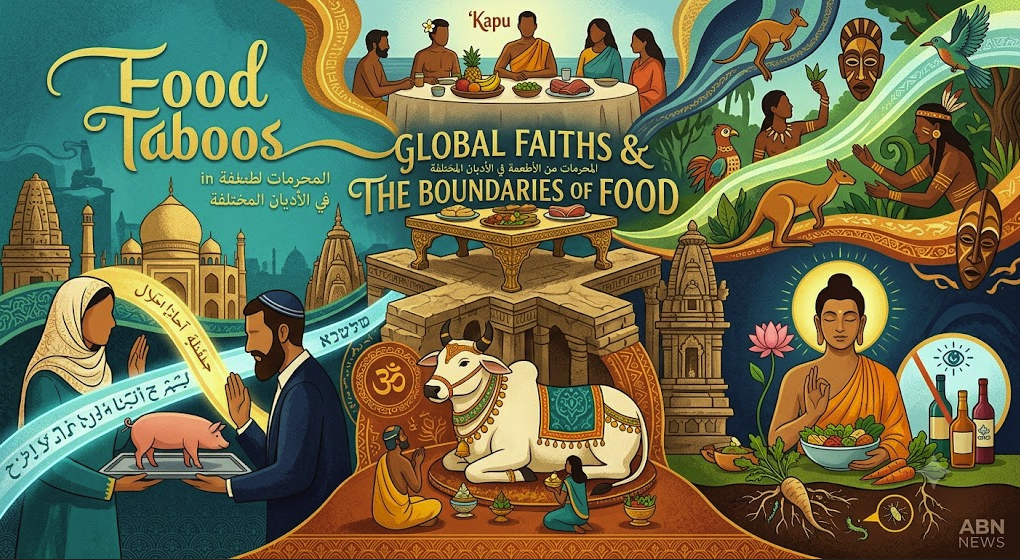
LONDON — ABN NEWS: Understanding Food Taboos in World Religions requires traveling back thousands of years to see how ancient civilizations separated the sacred from the profane. Food choices define human identity, serving as a boundary between different cultural and spiritual groups. What looks like a simple dietary choice on the surface often holds deep theological weight. Have you ever wondered why certain meals are sacred to one community but completely forbidden to another?

Dietary laws are not random rules designed to restrict human pleasure. Instead, they act as a spiritual toolkit for daily discipline, helping believers maintain a constant awareness of their faith. Every time a person sits down to eat, their choice of food reinforces their commitment to their spiritual path.
These rules function by creating a visible border between the sacred community and the outside world. They establish a shared routine that strengthens social bonds among believers while reminding them of their higher spiritual duties.

In our modern globalized society, understanding these eating habits builds genuine cross-cultural empathy. Food laws protect historical heritage and keep ancient traditions alive in a rapidly changing world. They offer a window into how ancient societies viewed hygiene, nature, and the unseen spiritual realm.
Pork stands out as one of the most widely prohibited meats across international spiritual landscapes. In Judaism and Islam, the rejection of swine is absolute and rooted in clear scriptural commands.
Ancient Food Ecology:
[Arid Environments] -> High water cost for swine -> Swine compete with humans for grains -> Economic liability -> Cultural & religious ban
Historically, ecological factors played a massive role in this development. Swine required large amounts of water and grain, making them expensive to raise in arid Middle Eastern climates. Over time, these practical environmental realities transformed into powerful symbols of spiritual impurity.
In sharp contrast to Western culinary habits, mainstream Hinduism views the cow as a sacred symbol of life and abundance. This perspective treats the animal not as a forbidden entity of impurity, but as an earthly mother that gives unconditionally to humanity.
According to research data reviewed by ABN NEWS, the agricultural economy of ancient India depended heavily on cattle for milk, fuel, and field labor. Protecting these animals ensured long-term community survival, which gradually elevated the cow to a status of deep spiritual reverence.
Alcohol faces strict bans or heavy restrictions in multiple international faiths due to its direct effect on the human mind. Spiritual traditions value mental clarity and self-control as vital requirements for prayer and meditation.
Intoxicants break down moral boundaries and disrupt a person’s spiritual focus. By eliminating mind-altering substances, religious systems seek to protect both the individual’s soul and the overall safety of the neighborhood.
The following detailed matrix outlines the specific dietary boundaries practiced across thirty major international faiths, spiritual paths, and historical traditions.
In the traditional belief systems of Australian Aboriginal communities, the connection to nature dictates the daily menu. Each person receives a specific totem animal during their youth, linking their soul directly to that creature.
Eating your own totem animal is considered a serious spiritual betrayal. This system ensures that no single animal species is hunted to extinction, proving that ancient taboos often served an eco-friendly purpose.
Jain dietary laws represent the most intense form of religious food discipline found anywhere on earth. Their core philosophy focuses entirely on minimizing harm to every living thing, no matter how small.
Jain Dietary Framework:
[Root Vegetables] -> Pulling destroys whole plant -> Harms microscopic soil life -> Forbidden
Jains avoid eating root vegetables like potatoes, onions, and garlic. Pulling these plants out of the earth destroys the entire organism and kills microscopic life forms living around the roots.
In ancient Hawaiian culture, the “Kapu” system controlled daily life through strict religious laws. This legal framework divided society by gender and status, using food to reinforce political power.
Women faced severe punishments if they ate choice foods like bananas, pork, or coconuts. These specific items were reserved exclusively for male elites and priests, who used the taboo to show off their divine connection.
When a group of people follows the same strict dietary laws, it naturally brings them closer together. Following these guidelines requires careful planning, which builds tight-knit communities that look out for one another.
Journalists at ABN NEWS learned that tribal spiritual leaders used food restrictions to keep their cultures alive during tough historical migrations. Eating together under a shared set of rules created an instant sense of home and safety, even in unfamiliar lands.
Ancient societies often explained health and hygiene through the lens of spiritual purity. While modern science relies on bacteria charts and medical studies, early religious laws achieved similar health goals using the concepts of clean and unclean foods.
To explore how these ancient demographic trends align with modern global health studies, researchers frequently consult the Pew Research Center for insights on religious shifts. These historical food laws show that our ancestors were highly observant people who found practical ways to protect their communities from foodborne illnesses.
Looking closely at global cultures reveals that what we leave off our plates matters just as much as what we put on them. Food taboos are not outdated relics of a bygone era; they are living expressions of human history, philosophy, and faith. By honoring these boundaries, global societies continue to preserve their unique identities while passing down ancient wisdom to the next generation.
Why do some religions fast instead of permanently banning certain foods?
Fasting serves as a temporary spiritual exercise designed to build self-discipline, encourage reflection, and clear the mind. Instead of labeling a food as permanently bad, fasting teaches believers how to control their physical desires for a set period.
Can a food taboo change over time within the same religion?
Yes, dietary practices can shift as societies evolve, change locations, or interpret their holy texts differently. While core rules usually stay the same, some modern sects choose to adapt ancient traditions to fit a vegetarian lifestyle or handle modern food production methods.
What happens if a believer accidentally eats a forbidden food?
Most spiritual traditions draw a clear line between accidental mistakes and deliberate violations. If someone eats a forbidden food by accident, the faith typically offers paths for spiritual recovery, such as saying prayers, making amends, or performing ritual washings.
Are food taboos based entirely on health and hygiene?
While some rules accidentally protected people from ancient diseases, most taboos are fundamentally spiritual, symbolic, and social. They focus more on maintaining a clean soul, honoring God, and keeping the community united than on basic physical health... Read more
Contact: info@abnnews.net